
FGG TIMES
సుపరిపాలనే ధ్యేయంగా
Vol. No. I | Issue No. 10 | Monthly News Letter | October 2025
IN FOCUS
అవినీతిని పెంచి పోషిస్తున్న ప్రభుత్వ విధానాలు
దేశంలో అవినీతి అన్ని రంగాలలోనికి పాకిపోయింది. హిరణ్యకశపుడు ప్రహ్లాదుని శ్రీహరి ఎచ్చట ఉన్నాడు చూపించమనగా “ఇందుగలడందు లేడని సందేహము వలదు – ఎందెందు వెదికినా అందందుగలడు“ అన్న చందాన నేడు అన్నింటా అవినీతి రాజ్యమేలుతుంది. రాజకీయాలు అవినీతిమయమైనప్పుడు దుర్మార్గులు, అల్పులు, శాసన మరియు పార్లమెంటులో కూచొని పాలనను భ్రష్టు పట్టిస్తారు. ఇక ఆర్థిక రంగంలో అవినీతి ఉన్న ఆర్థిక వ్యవస్థ కుప్పకూలి పోతుంది. పాలనలలో అవినీతి ఉన్న చట్టబద్ధ పాలన కుంటుపడుతుంది. ఈవిధంగా రాజ్యాంగంలోని అన్ని వ్యవస్థలపై ప్రజలకు నమ్మకం పోతుంది. లంచం ఇవ్వనిదే పనికాదని ఒక నమ్మకంతో సమాజం అవినీతిని చూసీ చూడనట్లుగా ఉంటూ, లంచం అన్నది ఒక అదనపు పన్నుగా భావిస్తారు.
అవినీతి రెండురకాలు. ఒకటి పెద్ద స్థాయి అవినీతి అంటే బొగ్గు కుంభకోణం, 2జి కుంభకోణం వంటివి. ఇక క్రిందిస్థాయి అవినీతి అంటే ప్రతిదినము మామూలుగా (ఒక హక్కుగా) కావలసిన పనులకు కూడ లంచాలా ఇవ్వవలసిన పరిస్థితి. అది తాలూకా ఆఫీసులో కావచ్చు, ఆసుపత్రిలో కావచ్చు, మునిసిపాలిటీలలో కావచ్చు. ఈవిధంగా రెండవరకం అవినీతితో ప్రజలు ప్రతిదినము ఇబ్బంది పడుతున్నారు.
ప్రస్థుతము అవినీతి అన్నది ఒక విషవలయం. ఇది ఎచ్చట మొదలవుతుంది. ఎచ్చట సమాప్తి అవుతుంది తెలియదు. అయితే అన్నింటికి మూలమైన రాజకీయాలు అవినీతికి ఊతమిస్తున్నాయి. స్వాతంత్య్రం వచ్చేనాటికి రాజకీయాలలో అప్పటి స్వాతంత్య్ర సమరయోధులు ఉన్నారు. రాను రాను రాజకీయమంటే డబ్బు సంపాదనగా మారిపోవడంతో రాజకీయాలు భ్రష్టుపట్టినాయి. అందరు రాజకీయనాయకులు అవినీతి పరులు కాకపోవచ్చు. . కాని కేవలం డబ్బు ఒక్కటే కాక ఆశ్రిత పక్షపాతం, బంధుప్రీతి, పార్టీ కార్యకర్తలకు చట్టవిరుద్ధంగా సాయం చేయుట వంటివి పరిగణలోనికి తీసుకుంటే నూటికి నూరు శాతం రాజకీయనాయకులను అవినీతిపరుల క్రింద జమకట్టవచ్చు. రాజకీయాల తరువాత, పాలనలో అవినీతి. నేడు ఏ శాఖ చూసిన అవినీతిమయమైంది. ముఖ్యంగా రెవెన్యూ, పోలీసు, రిజిస్ట్రేషన్, మునిసిపల్, వైద్యశాఖ వంటివి అవినీతిమయమైనాయి. ప్రభుత్వ ఉద్యోగస్థులలో తప్పు చేస్తే శిక్ష పడుతుందన్న భయం లేకపోవడంతో ఉద్యోగస్థులు ఎటువంటి భయం లేకుండా అవినీతికి అలవాటు పడ్డారు.
రాజకీయ అవినీతికి అడ్డుకట్ట వేయాలంటే ప్రజా ప్రాతినిధ్య చట్టంలో మార్పులు అవసరం. ప్రస్థుతం రాజకీయనాయకుల క్రిమినల్ కేసులు మాత్రమే పరిగణనలోనికి తీసుకుంటున్నాము. అలా కాక ఆర్థికనేరాలైన బ్యాంకుల అప్పులు చెల్లించకపోవడం, ఆదాయపు పన్ను వంటివి ఎగవేయడం, నల్లధనం పోగుచేయడం వంటివి కూడ తీవ్ర నేరాలుగా పరిగణించాలి. ఎన్నికల సమయంలో అభ్యర్థి యొక్క ఆర్థికనేరాలను కూడ దృష్టిలో ఉంచుకొని ఓటువేయాలి. ఎన్నికలలో పెద్ద ఎత్తున డబ్బు ఖర్చు చేసి గెలిచిన తరువాత అంతకు పదిరెట్లు సంపాదించడం లేదా లెక్కకు మించి కూడబెట్టిన నల్లధనాన్ని కాపాడుకోవడానికి అధికార దుర్వినియోగం వంటి వాటిని అరికట్టాలి. అధికార పార్టీలో ఉంటే చాలు, ఆర్థికనేరాలను కప్పిపెట్టవచ్చు అన్న వాతావరణం మారాలి. బ్యాంకులలో అప్పు ఎగవేసిన వారికి రాజకీయపార్టీలు టికెట్లు ఇవ్వరాదు. అయితే శాసనమండలి, రాజ్యసభ సభ్యుల ఎంపికపై ప్రజల తీర్పు అవసరం లేనందున అక్రమార్కులు దొడ్డిదారిన శాసనసభ్యులు, పార్లమెంటు సభ్యులుగా చెలామణీ అవుతున్నారు. రాజకీయ ప్రక్షాళన జరిగినప్పుడే అవినీతికి కళ్ళెం పడుతుంది. మంత్రులు, శాసనసభ్యులు, కార్పోరేషన్ల అధిపతులు అవినీతికి పాటుపడిన ప్రభుత్వ యంత్రాంగం కూడ అదే తోవలో నడుస్తుంది. పైవారు నీతిమంతులైన ఉద్యోగస్థులలో అవినీతి తగ్గుతుంది.
ఇక ఉద్యోగస్థులు చేసే అవినీతి రెండురకాలుగా చూడవచ్చు. ప్రజలు, ఉద్యోగస్థులు, కుమ్మకై చేసే అవినీతి. ఉదాహరణకు ప్రభుత్వ భూములను ఆక్రమించి భవనాల నిర్మాణం, ఇందులో ప్రభుత్వ అధికారికి లంచం ఇచ్చిన గుత్తేదారుకు కూడ లబ్ధి చేకూరుతుంది (నీకిది నాకది). ఇకపోతే రెండవరకం తప్పని పరిస్థితులలో ప్రజలు లంచం ఇవ్వవలసి రావడం, నేటి పరిస్థితులలో ప్రజలకు రకరకాల సర్టిఫికెట్లు అవసరమవుతాయి. అట్టి సర్టిఫికెట్లు హక్కుగా పొందవలసి ఉన్నా, సంబంధిత శాఖలోని ఉద్యోగి లంచం లేనిదే సర్టిఫికెట్లు ఇవ్వడు. పాలనలో అవినీతిని తగ్గించాలంటే తప్పుకు త్వరగా శిక్షపడే విధి విధానాలు కావాలి. నేడు ఒక ఉద్యోగి లంచం తీసుకుంటూ పట్టుబడ్డ సందర్భాలలో కూడ కేసు పూర్తి కావడానికి 15 సంవత్సరాలు పడుతుంది. అవినీతి నిరోధ శాఖ వారి కేసులలో 50% లోపే దోషులకు శిక్ష పడుతుంది. ప్రభుత్వంలో అవినీతి ఉద్యోగస్థులపై చర్యలు గైకొనడానికి రకరకాల మార్గాలు ఉన్నాయి. వాటిలో మొదటిది నేరస్థుల్ని కోర్టులో చలానా చేయడం. ఇది కాక విచారణ కమీషన్, శాఖాపరమైన విచారణ, ట్రిబ్యునల్ వంటివి ఉన్నాయి. అయితే వీటిలో కేసులను చాలాకాలం పెండింగులో ఉంచి చివరకు “కొండను తవ్వి ఎలుకను పట్టిన” చందాన చిన్న శిక్షతో వదిలివేయడం జరుగుతుంది. నేడు రాష్ట్ర సచివాలయంలో అవినీతి పరుల కొమ్ము కాస్తూ, వారికి శిక్షపడకుండా రకరకాల రూల్సు పేరుతో 15 నుంచి 20 సంవత్సరాలు సాగదీస్తున్నారు. రాష్ట్ర సచివాలయం అవినీతికి కేంద్ర బిందువైంది. పాలనలో అవినీతి పోవాలంటే అది సచివాలయ ప్రక్షాళనతోనే మొదలుకావాలి. ఉద్యోగస్థుల సంఘాలు కూడ సాధారణ పాలనలో జోక్యం చేసుకుంటూ అవినీతిపరుల కొమ్ముకాస్తున్నాయి. ఉపాధ్యాయులకు 57 సంఘాలు ఉండడం, సంఘనాయకులకు రకరకాల రాయితీలు ఉద్యోగం చేయకున్నా జీతం రావడం వంటి వాటితో క్రమశిక్షణ పోయి అవినీతికి ఊతమిచ్చినట్లుగా ఉంది. లంచం తీసుకుంటూ పట్టుబడ్డ లేదా ఆదాయానికి మించి ఆస్థులు కలిగి ఉన్నా అట్టి కేసులు 2 సంవత్సరాలలో ఒక కొలిక్కి రావాలి. కేసు నమోదైన వెంటనే సదరు వ్యక్తి ఆస్థులు జప్తు చేయాలి. ప్రస్థుతం అవినీతి నిరోధక శాఖ కేసులలో తీర్పు 10 నుంచి 15 సంవత్సరాలు పడుతుంది. ఉద్యోగస్థుల ఉద్యోగ భద్రత పేరుతో రకరకాల చట్టాలు, మినహాయింపులు ఉండడంతో దోషులకు శిక్ష పడడంలేదు. విజిలెన్స్ కమీషన్, లోకాయుక్త, లోక్పాల్ వంటి సంస్థలు ఉన్నా అవి పెద్దగా అవినీతిని అరికట్టలేకపోతున్నాయి. అవినీతి అధికారులను ప్రజలు ఒప్పుకున్నంతవరకు, అలాగే అవినీతిపరులైన రాజకీయ నాయకులను ఎన్నుకున్నంత కాలము దేశంలో అవినీతి పెరుగుతూనే ఉంటుంది. ఈ మధ్య కేంద్ర ప్రభుత్వం లంచం ఇచ్చిన వారు కూడ దోషులే అని అవినీతి నిరోధక చట్టానికి సవరణలు తీసుకురావడం జరిగింది. ఇది ఏదైనా కొద్ది సందర్భాలలో మాత్రమే వర్తిస్తుంది. తన పని ముందున్న వారికంటే తొందరగా కావాలని లేదా చట్టానికి విరుద్ధంగా కావాలనే సందర్భాలలో లంచం ఇచ్చిన వారు కూడ దోషులే. కాని చాలా పనులలో లంచం ఇవ్వనిదే పనికాని సందర్భాలు కోకొల్లలు.
పాలనలో అవినీతి తగ్గాలంటే పారదర్శకత, జవాబుదారీతనం చాలా ముఖ్యం. అలాగే సిటిజన్ చార్టర్ ఇంకా పార్లమెంటు ముందున్న సిటిజన్స్ రైట్ టు సర్వీసెస్ వంటి బిల్లు త్వరగా చట్టంగా మారాలి. అలాగే ప్రజలు కార్యాలయాల చుట్టూ తిరగకుండా ఆన్లైన్ పద్ధతిన పనులు జరిగిన ప్రజలకు, ప్రభుత్వ ఉద్యోగులకు మధ్య బేరసారాలు ఆగి అవినీతి తగ్గుతుంది.
యం. పద్మనాభరెడ్డి
అధ్యక్షులు
ఫోరం ఫర్ గుడ్ గవర్నెన్స్
May it please your Honour
For the first time in independent India, a serious public debate is unfolding about the functioning of the judiciary. The judiciary has always been spoken of in hushed tones—criticized occasionally in academic seminars or bar associations—but rarely has it entered the mainstream of national discourse with such intensity. That this debate has gained momentum now, when India is scripting a new chapter as the world’s fastest-growing economy, makes it all the more significant.
India’s economic rise is not anecdotal—it is measurable. In the first quarter alone, GST collections recorded a robust 7.8% growth. Compare this with the global scene: the United States, fresh from the return of Donald Trump to the White House with a handsome majority, is battling internal economic headwinds. Trump, true to his “Make America Great Again” slogan, has swung into action with heavy tariffs on several nations, including India, China, and Russia, besides Brazil. His new brand of global diplomacy is not about regional stability or human rights—it is about trade. Call it “trade diplomacy,” where economic chokeholds are the weapons of choice.
This shifting global order is not without its anxieties. The US, for one, fears that unless India’s growth is somehow slowed down, its own relative decline will be starker. After all, while the American and Chinese economies are struggling to recover from the devastation of the pandemic, India not only weathered the storm but emerged as a global lifesaver. Despite a population of 1.4 billion, India produced four indigenously developed COVID-19 vaccines and supplied them to 84 countries, often free of cost. A gesture of solidarity from India, while American pharma giants saw the pandemic as a profit-making bonanza.
It is in this context that voices within India, especially from the corridors of government, are raising uncomfortable but genuine questions. One such voice is Sanjeev Sanyal, a member of the Economic Advisory Council to Prime Minister Narendra Modi. Known for his candor, Sanyal recently addressed judicial officers and urged them to introspect. His words were blunt: unless the judiciary reforms itself, it risks becoming a stumbling block to India’s economic growth trajectory, from realising average India’s dream of becoming ‘Vikasit Bharat’ when it celebrates 100 years of independence in 2047.
He made a pointed observation: why should an independent India continue with colonial-era practices such as long, unwarranted vacations?
In a country where nearly 5 crore cases are pending, the spectacle of courts shutting down for weeks at a time is more than just an inconvenience—it is a denial of justice.
Here is where the Constitution itself offers both guidance and warning.
• Article 32 gives every citizen the right to move the Supreme Court for the enforcement of fundamental rights. But what use is this “heart and soul of the Constitution,” as B.R. Ambedkar called it, if petitions languish for years?
• Article 136 vests the Supreme Court with special leave to hear any case from any court or tribunal in the country. This extraordinary appellate power, while meant as a safety valve, has become a funnel for endless litigation.
• Articles 141 and 142 empower the Supreme Court to lay down binding law and even do “complete justice” in any matter. Yet, when justice is delayed by years or decades, the very spirit of these provisions stands compromised.
This is why Sanyal’s call for introspection matters. Judicial authority flows from the Constitution, but constitutional authority is meaningless without timely delivery. Justice delayed is, indeed, justice denied.
Vacations are not the only problem. Many a time, government pleaders themselves contribute to the backlog by routinely seeking adjournments, failing to file counters on time, or pushing cases up the ladder from single bench to division bench, and further clogging the system. The result is agony for ordinary petitioners, who spend years chasing justice.
The larger complaint often levelled at the judiciary is that it strays into the domain of the legislature—what critics call “judge-made law.” Judges, of course, see themselves as interpreters of the Constitution, but when interpretation starts to look like legislation, friction with the executive is inevitable.
There is also the issue of legal preparedness. If every new law or policy is to face judicial scrutiny—and rightly so—it is the duty of the Solicitor General, Advocate Generals, and law officers to defend it robustly. That requires the government to appoint the best legal brains, not merely reward loyalists or favor those with political proximity.
Enacted as the Arbitration & Conciliation Act 1996, the law governing ADR has been amended multiple times. Yet the track record remains uninspiring. Cases that could have been resolved through arbitration or mediation continue to flood the courts. In the drafting of the new Nyaya Samhita, the government seems to have missed the chance to make ADR mandatory for disputes that clearly fall within its scope.
Justice delivery at the grassroots is another long-promised reform that remains elusive. For years, we have heard about Gram Nyayalayas—village-level courts meant to decentralize justice. Yet the wait continues, leaving the rural poor dependent on distant and overburdened district courts.
To be fair, judges do not spend their vacations idling. Many conscientious judges use that time to dictate pending judgments, especially in critical cases. But how many such judges exist? That is harder to vouch for. What is undeniable is that the sheer volume of pending cases cannot be wished away by citing isolated examples.
As the saying goes, it takes two to tango. It is futile for the executive and judiciary to engage in mutual accusations without offering solutions.
If the government is serious, it must walk the talk:
• Promote ADR and make it a default option in eligible disputes.
• Increase the number of courts and judges to match the caseload of a billion-plus nation.
• Set up Gram Nyayalayas to bring justice closer to the people.
• Resist compulsive litigation, where the government itself is often the biggest litigant.
• Act on Law Commission Reports, which too often gather dust instead of guiding reform.
The judiciary, for its part, must also acknowledge the writing on the wall. India cannot aspire to be a Vikasit Bharat—a developed nation—while its justice delivery system creaks under colonial legacies, adjournments, and delays. The Constitution entrusted the courts with extraordinary powers to be the guardians of rights and the protectors of justice. But with great power comes the responsibility to deliver. Introspection is not a sign of weakness. On the contrary, it is the judiciary’s best chance to remain relevant, respected, and responsive in a rapidly changing India.
T.Vivek
(E.C.Member FGG & Former Member TSPSC)
“శాంతం” రెండు విధాలుగా లాభం
ఇరువురూ ప్రశాంతంగా, సంతోషంగా ఉంటారు.
“కోపం” రెండు విధాలుగా నష్టం
ఇరువురూ మనసును గాయపరుచుకుని, ప్రశాంతతను పోగొట్టుకుంటారు
నిజాయితీగా వ్యాపారం చేసే వారు సంపద సృష్టికర్తలు.
“సమాజంలో నిజాయితీగా వ్యాపారం చేసి నిలబడలేం” అనే భావన పెరుగుతుండడం దురదృష్టకరం. అదే కల్తీ వ్యాపారం పెరగడానికి ప్రధాన కారణం అవుతుంది
వ్యాపారం అనేది మానవ సమాజ అభివృద్ధికి ప్రాణాధారం. మనిషి అవసరాలను తీర్చుకోవడం, ఉద్యోగావకాశాలు కల్పించడం, ఆర్థిక వ్యవస్థను ముందుకు నడిపించడం – ఇవన్నీ వ్యాపారం ద్వారా సాధ్యమవుతాయి. ప్రాచీన కాలంలో వస్తువులను వస్తువులతో మార్చుకునే బార్టర్ సిస్టమ్ ఉండేది. కాలక్రమేణా నాణేల వాడకం, తరువాత బ్యాంకింగ్ వ్యవస్థ, చివరకు డిజిటల్ లావాదేవీలు వెలిశాయి. కానీ వ్యాపారం యొక్క అసలు సారం మాత్రం ఒకటే – మనిషి అవసరాలను తీర్చడం.
వ్యాపారులు సంపద సృష్టికర్తలు. వ్యాపారం అనేది కేవలం డబ్బు సంపాదనకే పరిమితం కాదు. సమాజానికి సేవ చేస్తూ, నైతిక విలువలను కాపాడుతూ సాగితేనే అది నిజమైన వ్యాపారం అవుతుంది. అవి వ్యాపారానికి మూలస్థంబాలు, అలా జరిగితేనే వ్యాపారం మానవ సమాజానికి శాశ్వతమైన శక్తి అవుతుంది. లాభం తప్పు కాదు, కానీ అది న్యాయబద్ధమైన మార్గాల్లో రావాలి.
వ్యాపారం లో లాభనష్టాలు సహజం. మార్కెట్ ఎగుడుదిగుడులు , ప్రకృతి వైపరీత్యాల వల్ల కలిగే నష్టాలు ఎదురైనప్పుడు నిరుత్సాహానికి గురి కాకుండా మళ్ళీ నిలదొక్కుకునే ప్రయత్నం చేస్తారు వ్యాపారులు. నిజమైన వ్యాపారి ఓటమిని అవకాశంగా మలుచుకుంటాడు. ఒకే తప్పు మళ్లీ జరగకుండా జాగ్రత్త పడటమే నిజమైన వ్యాపారి చతురత.
కానీ అవినీతి ప్రభుత్వాలు , రాజకీయ గుండాల ఆధిపత్యం, చౌక వస్తువులకోసం ఆరాట పడే కస్టమర్ల వంటి కారణాల వల్ల కల్తీ వ్యాపారం పెరుగుతోంది. నిజాయితీగా వ్యాపారం చేసినవారు పోటీ తట్టుకోలేక వెనుకబడుతున్నారు. ఇది సమాజానికి హానికరం.
ఇటీవలి కాలంలో చెన్నై కస్టమ్స్ వద్ద జరిగిన విన్ట్రాక్ ఇన్క్ సంఘటన దేశవ్యాప్తంగా చర్చనీయాంశమైంది. అన్ని పత్రాలు సమర్పించినప్పటికీ, అధికారుల నిర్లక్ష్య ధోరణి,అలసత్వం కారణంగా కంపెనీ దిగుమతులు వారాల తరబడి నిలిచిపోయాయి. ఈ అన్యాయంపై ఆ కంపెనీ భారతదేశంలో వ్యాపారం నిలిపివేస్తున్నట్లు ప్రకటించడం వ్యాపార వాతావరణంపై తీవ్ర ఆందోళన కలిగించింది. నిజాయితీగా వ్యాపారం చేసే సంస్థలు ఇలాంటి అడ్డంకులను ఎదుర్కోవడం దురదృష్టకరం. ప్రభుత్వ యంత్రాంగం పారదర్శకత, సమయపాలనతో వ్యవహరిస్తేనే వ్యాపార విశ్వాసం పునరుద్ధరించబడుతుంది.
అయితే, భారతదేశంలో చాలాకాలం నుండి “డబ్బు ఉన్నవారు అంటే దోపిడీ చేసేవారే” అని, డబ్బు లేని వాడు పేదవాడు ,నిజాయితీ పరుడు అనే అభిప్రాయం సామ్యవాదం పేరుతో విస్తరించింది. ఇది ఒక తప్పుడు దృక్పథం.
సామ్యవాదం పేరుతో వ్యాపారులను తక్కువ చేయడం ఒక తప్పు భావజాలం. మన దేశంలో సామ్యవాద భావనను అనుసరించడం సమాజ అభివృద్ధికి అవసరం. కానీ కొంతమంది బ్యూరోక్రాట్లు ఈ భావనను తప్పుగా అర్థం చేసుకుని, నిజాయితీతో వ్యాపారం చేస్తున్న సంస్థలకు అవివేకంగా అడ్డంకులు సృష్టిస్తున్నారు.
ఉద్యోగులు సమాజానికి అవసరం ఎంత ఉందో, వ్యాపారులు కూడా అంతే అవసరం. రెండు వర్గాలు కలిసి నడుస్తేనే దేశం అభివృద్ధి చెందుతుంది.
ప్రకృతిలో లభించే అనేక రకాల ఆహార ఉత్పత్తులను నిల్వచేసే విధానాల్లో, రవాణా ప్రక్రియలో — కొన్ని తయారీ సంస్థలు తమ స్వార్థ ప్రయోజనాల కోసం నాణ్యతను తగ్గిస్తూ, వినియోగదారులను మోసం చేసే చర్యలకు పాల్పడుతున్నాయి.
న్యాయస్థానాలు పలు సందర్భాల్లో తమ బ్రాండ్ పేర్లను వాడుకొని నకిలీ ఉత్పత్తులు విక్రయించే వారిపై చట్టపరమైన చర్యలు తీసుకోవాలని సూచించాయి. అటువంటి మోసపూరిత వ్యాపారాలను అరికట్టేందుకు సంబంధిత అధికారులు సత్వర చర్యలు తీసుకోవాలని కూడా ఆదేశించాయి.”
రాజకీయ నాయకులు వ్యాపారాలను చూసే దృక్పథం మారాలి . వ్యాపారులను అనుమానం లేదా దోపిడీ దృష్టితో కాకుండా, ఆర్థికాభివృద్ధి భాగస్వాములుగా చూడాలి.
స్టార్టప్ల పరిధిలో తరచుగా బ్యూరోక్రాటిక్ అడ్డంకులు ప్రధాన సమస్యగా నిలుస్తున్నాయి. అనవసరమైన పత్రాలు, అనుమతుల ఆలస్యం, ఫైల్ ప్రాసెసింగ్లో నిర్లక్ష్యం వంటి అంశాలు యువ వ్యాపారుల కోసం కొత్త వ్యాపారాలను ప్రారంభించడంలో జాప్యం చేయడం వల్ల ఆర్థిక భారాన్ని కలిగిస్తున్నాయి.
S.Srinivas Reddy,
Gen. Secretary, FGG
సుప్రీం కోర్టు ఆదేశాలు బేఖాతరు
నిర్ణయాలు తీసుకోవడంలో కాలయాపన చేయడం అనవసర అడ్డంకులను సృష్టించడం, బాధ్యతలనుండి తప్పించుకొని రెడ్ టేపిజం ప్రక్రియలకు పాల్పడడం తగదంటూ చాలాసార్లు ఉన్నత న్యాయస్థానాలు ప్రభుత్వ అధికారులను నిలదీసిన వార్తలు మనకు సుపరిచితమే. అయితే ఉన్నత న్యాయస్థానాలు ఎన్నిసార్లు చీవాట్లు పెట్టినా, బ్యూరోక్రసీలో మార్పు అడవి కాచిన వెన్నెల లాగా ఉంటుందనేది నగ్నసత్యం. నాణానికి మరో వైపు పరిశీలించినట్లయితే బ్యూరోక్రసీని నిగ్గదీసే ఉన్నత న్యాయమూర్తులు ఎంతవరకు ప్రజలకు, కక్ష్యదారులకు జవాబుదారీగా నిలుస్తున్నారనేది సామాన్య మానవుడు కక్ష్యదారులు, న్యాయవాదులు ప్రశ్నించలేని ప్రశ్నగా మిగిలిపోతుంది. ఎంతసేపూ ప్రభుత్వాలు సరిపడా కోర్టులను ఏర్పాటు చేయలేదనే దుగ్ధ తప్ప పదవులను అలంకరించిన ఉన్నత న్యాయమూర్తులు సహేతుకమైన సమయంలో తీర్పులు వెలువరించడం లేదనే కక్ష్యదారుల ఆవేదన. కక్ష్యదారుల ఆవేదన, ఆతృత, నిరీక్షణ ఆదుర్ధాకు ఏమాత్రం విలువ దక్కడం లేదు. ఇరుపక్షాల వాదనలు విన్న అనంతరం ఉన్నత న్యాయమూర్తులు సహేతుకమైన సమయంలో తీర్పు వెలువరించని సందర్భాలు కోకోల్లలు. అందులో ప్రజల దృష్టికి వచ్చిన సందర్భాలు చాలా అరుదు. కక్ష్యదారులు న్యాయమూర్తులకు వ్యతిరేకంగా తమ గోడును ఎవరికీ చెప్పుకోలేని పరిస్థితి. అలహాబాదు హైకోర్టు ముందున్న 2008 నాటి రవీంద్ర ప్రతాప్ షాహీ వర్సెస్ స్టేట్ ఆఫ్ యూపి కేసులోని క్రిమినల్ అప్పీలులో 24-12-2021 న ఇరుపక్షాల తుది వాదనలు విని సంవత్సరం దాటినా తీర్పు వెలువరించలేదనే విషయం సుప్రీంకోర్టు దృష్టికి తేబడింది.
”మాకు ఈ వార్త అత్యంత దిగ్భ్రాంతికరం, ఆశ్చర్యకరమైన విషయంగా అనిపిస్తుంది” అంటూ సుప్రీంకోర్టు న్యాయమూర్తులు వ్యాఖ్యానిస్తూ అనిల్రాయ్ వర్సెస్ స్టేట్ ఆఫ్ బీహార్ కేసులో సుప్రీంకోర్టు ధర్మాసనం 20 సంత్సరాలకు పూర్వమే అనగా 6-8-2001న వెలువరించిన మార్గదర్శకాలను పునరుద్ఘాటించింది. అనిల్ రాయ్ కేసులో పాట్నా హైకోర్టు న్యాయమూర్తులు 20-3-1995 తేదిన ఇరుపక్షాల తుది వాదనలు విని 14-8-1997న మాత్రమే తుది తీర్పు వెలువరించారు. సుప్రీంకోర్టు దృష్టికి ఈ విషయం తేగా తీర్పు సకాలంలో వెలువరించనందున రాజ్యాంగం 21వ అనుకరణం ద్వారా జైలులో మగ్గుతున్న ఆ కేసులోని నిందితులకు కల్పించబడిన స్వేచ్చా హక్కుకు విఘాతం కలిగిందని పేర్కొంది. సివిల్ ప్రొసీజర్ చట్టం, క్రిమినల్ ప్రొసీజర్ చట్టం తీర్పులను వెలువరించడానికి ఉన్నత న్యాయస్థానాలకు ఎటువంటి సమయ పరిమితి నిర్ధేశించకున్నను సహేతుకమైన సమయంలో తీర్పులను వెలువరించాలని అప్పుడే న్యాయం అందించినట్లవుతుందని సుప్రీంకోర్టు ఘాటుగా వ్యాఖ్యానిస్తూ కొన్ని మార్గదర్శకాలను ఆదేశాల రూపంలో జారీచేసింది.
ఇరుపక్షాల తుది వాదనలు విన్న మూడు నెలలలోగా తీర్పు వెలువరించాలని, ప్రతి తీర్పు మొదటిపేజీలో తీర్పు రిజర్వు చేసిన తేది, తీర్పు వెలువరించిన తేది విధిగా పేర్కొనాలని సుప్రీంకోర్టు దేశంలోని అన్ని ఉన్నతన్యాయస్థానాలకు ఆదేశాలిచ్చింది. ఒకవేళ మూడు నెలలలోగా తీర్పు వెలువరించకపోతే సంబంధిత కక్ష్యదారులు, సంబంధిత న్యాయమూర్తి ముందు ఆ విషయం తెలియజేస్తూ దరఖాస్తు ద్వార నివేదించే అవకాశం సుప్రీంకోర్టు తీర్పు కల్పించింది. అయినను ఆరునెలలలోగా తీర్పు ప్రకటించకపోతే కక్ష్యదారులు హైకోర్టు ప్రధాన న్యాయమూర్తికి ఫిర్యాదు చేసే విధంగా మార్గదర్శకాలను నిర్ధేశించారు. ఇటువంటి విలక్షణమైన , కఠినతరమైన మార్గదర్శకాలు 6-8-2001 నే సుప్రీంకోర్టు నిర్థేశించినప్పటికీ కొంతమంది ఉన్నత న్యాయమూర్తులు వాటిని గాలికొదిలేసి సమయపాలనను పాటించకుండా తీర్పులను ఏళ్ళ తరబడి పొడిగిస్తూ కక్ష్యదారులకు రాజ్యాంగం కల్పించిన స్వేచ్ఛాహక్కుకు విఘాతం కలిగిస్తున్నారు. కొంతమంది సబార్డినేట్ న్యాయమూర్తులు అరెస్టు మార్గదర్శకాలకు గండి కొడుతుంటే ఉన్నత న్యాయస్థానాలు తీర్పును వెలువరించాల్సిన సమయపాలన మార్గదర్శకాలను నిర్హేతుకంగా ఉల్లంఘిస్తున్నాయి. ఈ మార్గదర్శకాలు ఉన్నాయనే విషయం వారికి తెలియదేమో అనుకునే ఆస్కారం ఉండడానికి వీలులేదు. ఎందుకంటే చట్టం తెలియదనడం సాకు కాదు. సుప్రీంకోర్టు సూచనలు, ఆదేశాలు 141 అధికరణ ప్రకారం దేశంలోని అన్ని న్యాయస్థానాలు విధిగా పాటించాలి. తీర్పు రిజర్వ్ చేసిన తేదిని హైకోర్టులు తమ తీర్పుల్లో పేర్కొన్న సందర్భాలు అతి స్వల్పం. సకాలంలో తీర్పు ప్రకటించడమే కాకుండా తీర్పు ప్రతిని అదేరోజు వెబ్సైట్లోకి అప్లోడ్ చేయించాలి. తీర్పు కాపీని ఇరుపక్షాలకు కనీసం వారంలోగా అందచేయాలి. కాసేపు సుప్రీంకోర్టు మార్గదర్శకాలను పక్కన పెడితే ప్రతి న్యాయమూర్తి ప్రజలకు కక్ష్యదారులకు, రాజ్యాంగానికి జవాబుదారీగా భావించవలసి ఉంటుందనే విషయాన్ని గమనించాలి. ప్రభుత్వ అధికారులను ప్రశ్నించే విధంగానే కక్ష్యదారులు న్యాయస్థానాలను తీర్పు ప్రకటించడానికి జరిగే అలక్ష్యాన్ని సున్నితంగా, నిర్ద్వంద్వంగా ప్రశ్నించగలిగే వాతావరణం కల్పించబడాలి.
తడకమళ్ళ మురళీధర్
విశ్రాంత న్యాయమూర్తి
IT Initiatives of Registration and Stamps Department
R&S Department is first to use I.T. IN 1999 by name CARD Project
Subsequently switched over to CCA in the year 2012.
- For efficient and transparent administration:
- eStamps: This revolutionary step was taken by the departmentin the year 2016 for switching from manual mechanism to online system for collection of Stamp Duty, Registration fee, etc. So far 1lakh crores have been collected approximately without any deviation in remittance. QR codes on print outs of challans enable security and features the authenticity for verification purposes.
- Hindu Marriage Mobile App and Special Marriage Mobile App for online application and private attendance.
- Usage of TApp for collection of petty amounts in SROs making the Offices Cashless and thus, dispensing with the Manual Accounts and switching over to Online Accounting.
- eOffice- for Office Administration and Circular Upload Module dispensing physical dispatch of Circulars/Memos.
- Biometric SRO authentication in documents
- Internal Audit Module for auditing online
- Slot-booking for registration of documents in revised format is being introduced shortly wherein 24 slots are available for registering public from 10.30 am to 1.30 pm and another 24 slots from 2.00 to 5.00 pm. The registrants are able to book slots at the required SRO as per their convenience.
The documents which are registered through slot booking shall generally be registered, scanned and returned to the party concerned on the same day of their presentation. For any reasons, if the document is kept pending which is presented using slot booking facility, the District Registrar concerned shall verify the genuineness of reasons for keeping pendency of such cases. The endeavor of the department is to enable the citizen to use slot booking for transparent, speedy and effective disposal. Five walks in registrations from 5.00 to 5.30 pm are allowed on first come first serve basis.96% of the registrants have given positive feedback on the Slot Booking System.
- Making the Website user friendly and also T-Registration mobile App for citizens.
- Single EC: Citizen can apply for EC from the present jurisdiction SRO or any Meeseva center without going from office to office for the previous transactions without merger of the jurisdiction in the new SRO.
- Document Return Module and sms intimation at all stages
(WhatsApp messages too) from slot registration till registration & return of property documents
- TAPP – Cashless offices and Online Accounting – Mitigating Scope of corruption and tampering of accounts
Cashless offices and inline ledger maintenance without manual records in SRO with integration with Tapp/ meeseva App for collection of petty payments.
All the 144 SROs and 12DR offices are 100% cashless. Integration with TAPP has resulted in dispensing with the collection of petty amounts in offices and also complete switching over to online accounting system. No manual records/ ledgers are maintained in the offices.
- Stamp Module for ex officio vendors/ SROs, Stamp Vendors – distribution and ledger maintenance through online module, enabling tracking of stamp paper.
- Notary Module for registering Notaries and online ledger maintenance.
- Mobile Application for registration of properties under Private Attendance.
- Online Network Monitoring tool and App for Hardware/ software/ technical issues and resolution of the issues immediately on the same day through regular monitoring and support.
- Gmap location tagging of properties for easy identification and detection of revenue leakages.
- Builders & Developers Module for Group Registration: This saves time as ekyc of the seller is captured only once for a group of documents.
- Tableau Dashboards for reporting and analytics for market intelligence to prevent revenue loss and using intelligence to look for revenue augmentation
- Usage of emerging Technologies:
- Blockchain Technology for Chit fund Administration-acknowledged as a good initiative by NASCOM in its Annual Report 2019, first in the Country, won National e-governance Award, 2020.
- AI based chatbot Medha on WhatsApp for citizen queries
Medha – Telangana Registration & Stamps WhatsApp Chatbot Supported by Smatbot
Medha is an AI-powered WhatsApp chatbot developed by SmatBot for the Telangana Registration and Stamps Department, aimed at simplifying public access to essential government services. Available 24/7 on WhatsApp, Medha enables citizens to get instant information and assistance regarding property registration, stamp duty, EC (Encumbrance Certificate), slot booking, and document requirements—all in a conversational, user-friendly format.
By leveraging conversational AI, Medha reduces the need for physical visits and long wait times, helping streamline communication between the public and the department. It supports both English and Telugu, ensuring accessibility across the state’s diverse population.
This initiative marks a significant step toward digital governance, making government services more transparent, efficient, and citizen-centric.
- AI based Aadhaar and sensitive data masking on certified copies of property registration documents.
- AI based Audit module for pre audit and post audit – Pilot model under designing
- AI – GIS based property tagging with MV and stamp duty calculator- under designing
III. Recent Initiatives:
Aadhaar based e-signature: This system is implemented for property registrations across the state, enabling the registration process to be more secured and faster.
Enhanced Security- Aadhaar eSign offers a high level of security due to its reliance on Aadhaar-based authentication. The use of OTP or biometric verification ensures that only the rightful owner of the Aadhaar number can sign the document. Additionally, digital signatures are encrypted and tamper-proof, making it difficult for unauthorized parties to alter the document.
Legal Validity- Aadhaar eSign is legally recognized under the Information Technology Act, of 2000. The signatures generated are legally binding and hold the same validity as handwritten signatures. This compliance with Indian legal standards makes Aadhaar eSign a reliable method for document authentication.
Time-Saving- Traditional methods of signing documents often involve printing, signing and scanning, which can be time-consuming. Aadhaar eSign streamlines this process by enabling instant digital signatures. This saves time for both individuals and Sub Registrars allowing for faster transactions and return of documents.
IT Initiatives of Registration and Stamps Department
R&S Department is first to use I.T. in 1999 by name CARD Project.
Subsequently switched over to CCA in the year 2012.
- For Efficient and Transparent Administration
- eStamps – Introduced in 2016, it replaced the manual system of stamp duty and registration fee collection. So far, about ₹1 lakh crores have been collected securely.
QR codes ensure authenticity and verification of challans.
- Hindu Marriage Mobile App and Special Marriage Mobile App – Enable online applications and private attendance.
- T-App Payments – Used for collection of petty amounts, making offices cashless and removing manual accounts.
- eOffice & Circular Upload Module – Eliminates physical dispatch of circulars and memos.
- Biometric Authentication – For secure document registration.
- Internal Audit Module – Enables online auditing.
- Slot Booking System – Allows citizens to book convenient time slots for registration.
48 slots per day: 24 in the morning (10:30 am–1:30 pm) and 24 in the afternoon (2:00–5:00 pm).
Documents are generally registered and returned the same day.
Five walk-in registrations are also allowed (5:00–5:30 pm).
96% of users have given positive feedback.
- Website and T-Registration Mobile App – Designed to be user-friendly for citizens.
- Single EC (Encumbrance Certificate) – Can be obtained from any SRO or MeeSeva center without visiting multiple offices.
- Document Return Module & SMS/WhatsApp Intimations – Keeps citizens informed at every stage.
- Cashless Offices & Online Accounting – All 144 SROs and 12 DR offices are 100% cashless, integrated with T-App/MeeSeva.
- Stamp Module – Online tracking and ledger maintenance for stamp papers.
- Notary Module – For registering and maintaining online ledgers of Notaries.
- Mobile App for Private Attendance – Enables online property registration attendance.
- Online Network Monitoring Tool – Tracks and resolves technical issues instantly.
- G-Map Location Tagging – Helps in property identification and prevents revenue leakages.
- Builders & Developers Module – Enables group registrations with single eKYC verification.
- Tableau Dashboards – For analytics, intelligence, and monitoring.
- Usage of Emerging Technologies
- Blockchain for Chit Funds – First in India, won National e-Governance Award (2020).
- AI Chatbot “Medha” on WhatsApp – Provides instant information about property registration, EC, stamp duty, etc.
Works 24×7 in English and Telugu.
- AI-based Aadhaar & Data Masking – Protects sensitive data on property documents.
- AI-based Audit Module – Under pilot for pre- and post-audit checks.
- AI–GIS Property Tagging & MV Calculator – Under design for smart valuation.
III. Recent Initiatives
- Aadhaar-based e-Signature – Allows citizens to digitally sign documents securely and instantly.
- High Security – OTP or biometric authentication ensures only authorized users sign.
- Legal Validity – Recognized under the IT Act, 2000.
- Time Saving – No printing/scanning needed; process completes instantly.
How Can Citizens Use These Services?
- Through the Web Portal
- Visit registration.telangana.gov.in
- Create or log in to your Citizen Account using your mobile number/email.
- Choose the required service:
- Property Registration & Slot Booking
- eStamps Payment
- Encumbrance Certificate (EC)
- Marriage Registration
- Visit your selected Sub-Registrar Office at the booked time.
- Complete biometric eKYC (Aadhaar, photo, etc.).
- Receive SMS updates on registration status.
- Download the certified copy after completion.
- Through the T-Registration Mobile App
- Download from the Play Store/App Store or access via the website.
- Choose services like:
- Marriage Application
- eStamps
- EC/CC
- Property Location Tagging
- Fill details, upload IDs, and make online payment.
- Receive SMS/WhatsApp confirmation.
- Through T-App or MeeSeva App
- Open T-App Folio or MeeSeva App.
- Select your required service (EC, certified copy, stamp purchase, marriage registration, etc.).
- Pay digitally using UPI, cards, or net banking.
- Receive instant online receipt — no manual record needed.
- Through WhatsApp Chatbot “Medha”
- Save the number 82476 23578 or click “Chat with Medha” on the portal.
- Type your query — e.g., “EC status” or “Slot booking.”
- Get instant answers, links, and status updates in English or Telugu.
Practical Note for the General Public
Here is a simple step-by-step guide to make full use of the Registration & Stamps Department’s online services:
→ Create your Citizen Login.
- Check property details or apply for EC online before visiting any office.
- Book a Slot for registration using the Slot Booking module.
- Pay online via eStamps — no need to carry cash.
- Visit SRO at your booked time with original documents.
- Track your registration through SMS or WhatsApp.
- Download certified copies anytime from your dashboard.
- For quick help, chat with “Medha” on WhatsApp (8247623578).
- Use T-App or MeeSeva for small services like EC, CC, or marriage registration.
M. Subhashini
Deputy Inspector General
CARD project and Zonal DIG
Registration and Stamps department Warangal
FGG IN NEWS
FGG IN ACTION
FGG Submitted representations to various departments in the month of SEPTEMBER 2025
- To the Commissioner, State Election Commission regarding Elections to local bodies Request to consider NOTA as Fictional Electoral Candidate for coming local body elections – on 2-9-2025
- To the Chief Minister, Andhra Pradesh regarding Visakhapatnam mental care hospital Serious irregularities in clinical drug trials, criminal theft of evidence and diversion of funds in Mental Care hospital, Request for inquiry and suitable action in the mater – on 4-9-2025
- To the Director General ACB regarding Irregularities and corruption charges in Serilingampally circle, GHMC. Request for inquiry and taking suitable action – on 11-9-2025
- To the Chief Secretary regarding Rampant corruption in administration – Request to take steps to control corruption on 11-9-2025
- To the Prl. Secretary, Planning department regarding Special Development Fund, Irregular expenditure in Peddaplly. Request for inquiry – on 11-9-2025
- To the Chief Minister regarding Fake Educational Certificates, Persons getting jobs with fake certificates, no action is being taken by officials on fake certificates – on 11-9-2025
- To the DGP, Telangana regarding Pension to artists, Fraud being committee by middle Men, Request for inquiry – on 15-9-2025
- To the Prl. Secretary, MA&UD department regarding, Illegal constructions in Kapra (GHMC) Request for inquiry – on 15-9-2025
- To the Chief Secretary regarding Disciplinary cases against Government employees Time schedule to expedite the process of disciplinary cases at various levels – Request to issue similar instructions in cases referred by ACB, DG V&E and Vigilance Commission – on 15-9-2025
- To the Director Narcotics Drug Control Bureau (EAGLE team) regarding Old Bowenpally school used to manufacture Alprazolam, accused supplying to Toddy Depots in Mahaboobnagar district for mixing and sale of adulterated Toddy. Request for booking cases on Toddy depots also – on 17-9-2025
- To the Secretary, Agriculture & Co-op. department regarding Agriculture Co-Op. department Complaint on Telugu Cine Workers Co-op. Housing Society, Enquiry conducted by Commissioner Co-op, department in 2021- Request for action on inquiry report – on 17-9-2025
- To the Chief Secretary regarding Enquiry reports of V&E, Not taking action by concerned departments, Request to fix time frame for disposal of V&E reports – on 17-9-2025
- To the Commissioner, Proh. & Excise department regarding Manufacture of Alprazolam in Bowenpally school and supply to various Toddy shops. Request for inquiry on – 17-9-2025
- To the Union Minister & Secretary, Ministry of Tribal Affairs regarding PODU – on 17-9-2025
- To the Union Minister & Secretary, Environment Forest and Climate Chagess regarding PODU -on 17-9-2025
- To the Prl. Secretary, MA&UD department regarding Illegal constructions in Nizampet layout – Request for inquiry – on 19-9-2025
- To the Secretary, Schedule Caste Development Corporation regarding Misuse of Dalita Bandu funds. Request for evaluation of the scheme – on 19-9-2025
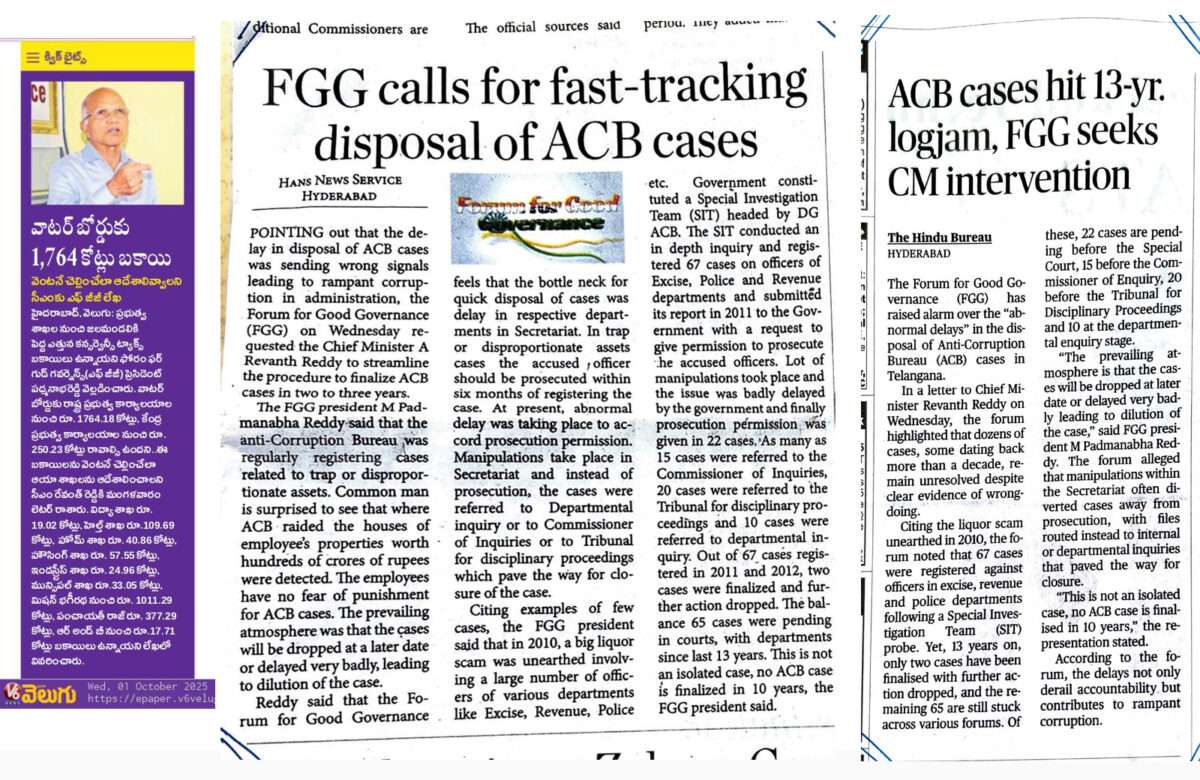
- To the Chief Minister regarding Corruption in administration. Abnormal delay in finalizing A.C.B. cases. Request for quick disposal of A.C.B. cases – on 24-9-2025
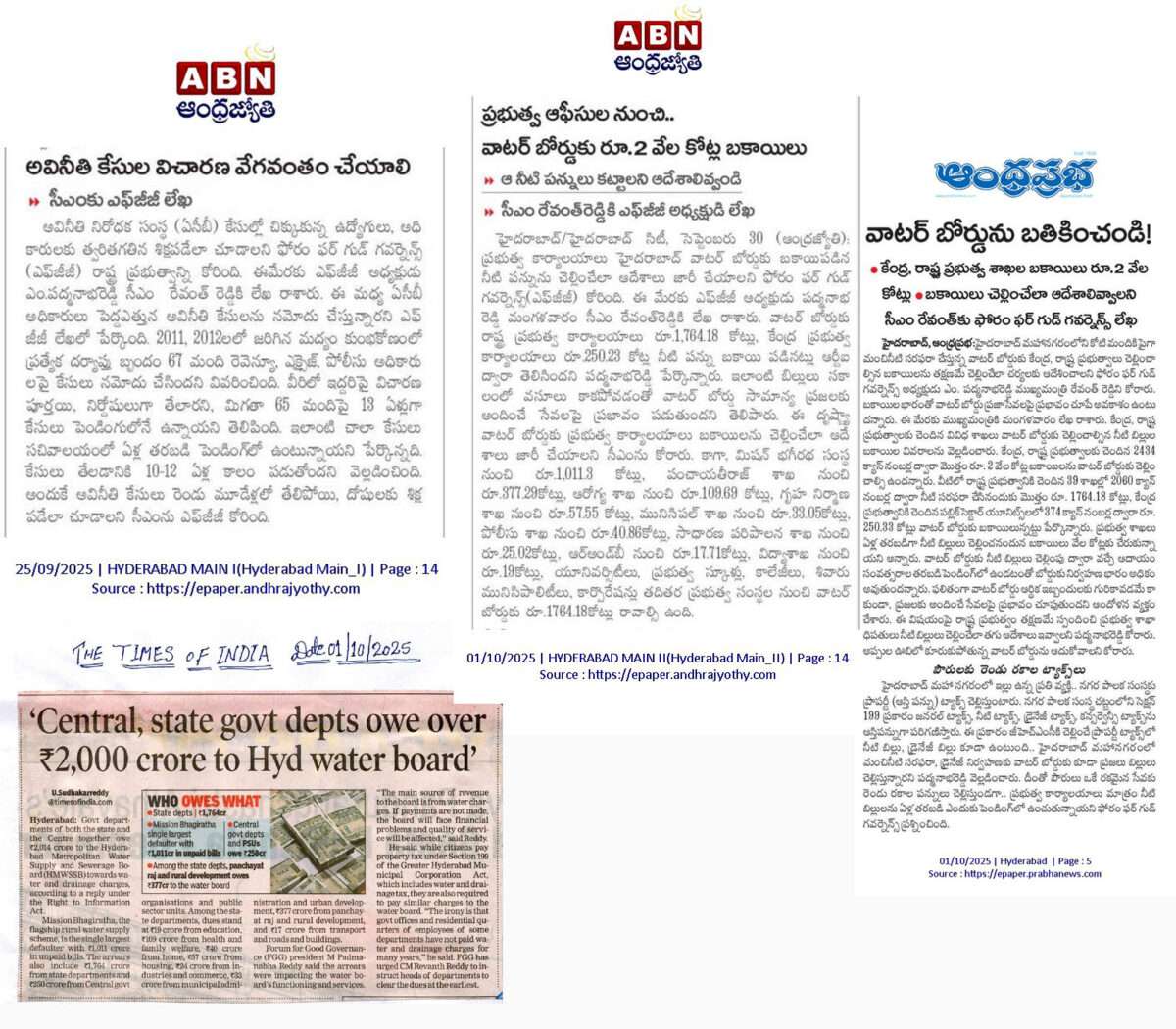
- To the Chief Minister regarding Hyderabad Metro Water Supply and Sewerage Board Non-payment of water charges by Government departments. Request to issue instructions to H.O.D.s to clear pending bills – on 30-9-2025
FGG submitted following RTI letters to various departments in the month of SEPTEMBER 2025
- To the PIO, O/o Prl. Secretary, Finance department regarding Contractors pending bills (Lokayukta complaint) – on 3-9-2025
- To the PIO, O/o Director, Fisheries department, regarding Fish markets – on 3-9-2025
- To the PIO. O/o Commissioner, ESD (MEE SEVA) regarding any A.T.R. received – on 3-9-2025
- To the PIO, O/o Prl. Secretary, HM&FW department regarding fake certificates in Dental Colleges – on 11-9-2025
- To the PIO, O/o Chief Engineer, TR&B department regarding MLAs residences – on 11-9-2025
- To the PIO, O/o Chairman, Pollution Control Board regarding Budget details and minutes of meeting – on 15-9-2025
- To the PIO, O/o Commissioner, Food Safety regarding raids are being conducted in malls etc. – on 27-9-2025
- To the PIO, O/o Commissioner, Food Safety regarding action taken on representation on Durgi Millets – 27-9-2025
- To the PIO, O/o Secretary, Schedule Caste department regarding Overseas Education scholarships – on 27-9-2025
- To the PIO, O/o Director, Urban Bio-diversity, GHMC regarding Gardens – on 27-9-2025
- To the PIO, O/o Prl. Chief Conservator of Forests, Aranya Bhavan regarding PODU – on 27-9-2025
- To the PIO, O/o Chief City Planner, Town Planning, GHMC regarding action taken on representation on unauthorised constructions – on 27-9-2025
- To the PIO, O/o Chief Secretary regarding action taken on representation on State Finance Commission – on 27-9-2025
FGG TIMES
M. Padmanabha Reddy I.F.S.(R) (President)