
FGG TIMES
సుపరిపాలనే ధ్యేయంగా
Vol. No. II | Issue No. 3 | Monthly News Letter | March 2026
IN FOCUS
- APPEAL TO STATE ELECTION COMMISSION
- Classrooms Shape India
- కక్షిదారులను కోర్టుల్లో తప్పనిసరిగా పిలిచే నిబంధన ఉండాలి
- ప్రజల కన్నీళ్లపై విగ్రహాలు కడతారా?
FGG IN NEWS
FGG IN ACTION
IN FOCUS
APPEAL TO STATE ELECTION COMMISSION
Article 243 – K and Article 243 – Z.A gave powers to State Election Commission to conduct FREE and FAIR elections to Panchayats and Municipalities. Recently conducted elections to Local Bodies are Free, no untoward incidences leading to repoll etc. did not occur but Fair elections were a causality. The elections to Panchayats and Municipalities were anything but FAIR.
Elections to Panchayats : There are (12,769) Gram Panchayats in Telangana, out of which about (2,769) Gram Panchayats are small and located in tribal area. In balance 10,000 Panchayats the contesting candidates put together on an average spent Rs. 1 crore and in 10,000 Gram Panchayats close to Rs.10,000 crores were spent. Couple of days before election votes were purchased, liquor and articles were distributed in broad day light. Print and electronic media vividly covered the distribution of money. In some cases, the women resorted to Rasta Roko for not paying money by contesting candidates. The situation has deteriorated so much people are demanding money from candidates openly. Today the position in the state of Telangana is that to contest for Sarpanch post one should be a crorepati. Poor people dare not contest the Panchayat elections. After the results the defeated candidates were seen going house to house with a photo of God and asking the voters on oath, weather they have voted from him, if not return the money. This evidence is enough to book both the candidate and the voter.
Elections to Municipalities :
State Election Commission has issued Model Code of Conduct, prohibiting the following Acts.
i) No candidate to bribe or offer reward in any form to voters
ii) No candidate or party should be allowed to use rest houses, circuit houses or Government accommodation for election propaganda.
iii) Ordinarily, all meetings organized during elections should be treated as election meetings and no Government money should be spent on them. No Government servant should attend any such meeting except those who are incharge of maintenance of law and order or those deployed for security duties.
iv) If a Minister under takes a tour of any area of a district where elections are taking place, such tour shall be deemed to be an election tour. No Government vehicles or any other facility be made available for such tour.
v) No vehicle belonging to Government or local bodies shall be provided to any Minister.
vi) The Minister shall not combine their official visit with electioneering work.
vii) From the time elections are announced by the Commission, Ministers and other authorities shall not sanction grants, shall not announce new schemes, projects or work, shall not lay foundation stones etc. Make any promise of laying of roads, provision of drinking water facilities etc.
All the conditions laid down in model code of conduct were blatantly violated and Election Commission did not take any action.
Forum for Good Governance requests the State Election Commission to kindly take steps to book cases on candidates who bribed the voters and also the voters who demanded money. Print and Electronic media has enough evidence for registering of cases. What is needed is will to take action. We also request the Commission to take steps to control money power and violation of Model Code of Conduct in ensuing M.P.T.C., Z.P.T.C. GHMC elections.
M. Padmanabha Reddy (President)
Forum for Good Governance
Classrooms Shape India
India’s destiny will not be sealed in noisy political rallies or prime-time debates. It will be shaped quietly, steadily, inside classrooms. That is why the National Education Policy 2020 is not just another policy document — it is a structural shift in how India imagines its future.
After 34 long years, India finally replaced the outdated National Policy on Education 1986, acknowledging a simple truth: a 21st-century nation cannot run on a 20th-century education model.
For decades, our system rewarded memorisation over imagination. Marks mattered more than mastery. Students were trained to reproduce answers, not to question them. NEP 2020 decisively breaks from that culture of rote learning. It prioritises critical thinking, creativity, analytical reasoning, and problem-solving. It encourages students not just to learn facts, but to understand ideas — not just to pass exams, but to prepare for life.
One of its most transformative reforms is the 5+3+3+4 curricular structure, replacing the rigid 10+2 system. By formally integrating early childhood education into mainstream schooling, it recognises what research has long proven — foundational learning begins well before formal classrooms. Investing in early cognitive development is not a luxury; it is a necessity.
Equally significant is the emphasis on mother-tongue instruction up to Grade 5. Children grasp concepts better in languages they speak and think in. When a child understands before memorising, confidence replaces fear. Clarity replaces confusion. This is not about rejecting English; it is about strengthening intellectual foundations.
Higher education, too, undergoes a philosophical shift. The introduction of multiple entry and exit options, an Academic Bank of Credits, and multidisciplinary universities acknowledges that careers are no longer linear. Students can pause, pivot, and personalise their academic journeys without being penalised. Education becomes flexible, humane, and responsive.
Perhaps the most pragmatic reform is the integration of vocational education from Grade 6 onwards. Internships, skill exposure, and hands-on training ensure that dignity of labour becomes part of the academic narrative. India’s demographic dividend will remain a slogan unless skills align with opportunity. NEP 2020 attempts to bridge that gap by connecting education with employability and entrepreneurship.
Why does all this matter?
Because the aspiration of becoming a developed nation by 2047 cannot rest on outdated pedagogies. It demands globally competitive youth, empowered women, technologically skilled communities, and strong foundational literacy. It demands inclusion as much as excellence.
NEP 2020 seeks to create equal access through digital learning platforms, teacher training reforms, and institutional autonomy. It envisions universities that innovate, research ecosystems that thrive, and classrooms that nurture curiosity rather than conformity.
But policy on paper achieves little without sincerity in practice. Implementation is the real test. Infrastructure must improve. Teachers must be trained. Institutions must resist the temptation to treat reform as routine compliance.
Education is not merely about degrees or employment statistics. It is about dignity. It is about giving every child — rural or urban, rich or poor — the confidence to dream without limitation.
If India’s future must be bold, its education must be transformative. And transformation begins not in corridors of power, but in the quiet revolution of the classroom. (The author is the Academic Director of a private educational institution)
Priyanka Saurabh
కక్షిదారులను కోర్టుల్లో తప్పనిసరిగా పిలిచే నిబంధన ఉండాలి
న్యాయస్థానాల గురించి చర్చ ఎప్పుడు జరిగినా, అది కేసుల పరిష్కారానికి జరిగే జాప్యంతోనే మొదలవుతుంది. సుప్రీంకోర్టు, రాష్ట్రాల హైకోర్టులు దీనిపై అంతర్గత సమావేశాలు, కేంద్ర, రాష్ట్రాలతో సమావేశాలు నిర్వహిస్తూ ఎప్పటికప్పుడు క్రొత్త మార్గదర్శకాలు వెలువరిస్తున్ననూ, సత్వర న్యాయమనేది అందని ద్రాక్ష పుల్లన అనే నానుడిని తలచుకొని కక్షిదారులు అసంతృప్తితో ఉన్నారనేది నిర్వివాదాంశం. న్యాయవ్యవస్థలోని మరో కోణమేమిటంటే, ఎక్కువ శాతం కక్షిదారులు తమ కేసు స్థితి గతులేమిటనేది తెలుసుకోలేక పోతున్నారు.
ఈ–కోర్టులు అనే ఒక వెబ్ సైట్ ఉందని, సంబంధిత కోర్టు లింకు ద్వారా తమ కేసు స్థితి తెలుసుకోవచ్చుననే విషయం, మామూలు చదువున్నవారు, వృద్ధులు, కంప్యూటర్ పరిజ్ఞానం లేని వారికి తెలియదు. చాలా మంది ఉన్నత చదువులున్న వారికి కూడా తమ కేసు నంబరు, కోర్టు పేరు తెలుసుకోవాలనే ధ్యాస లేదు. కారణాలేవయినా, కొంతమంది న్యాయవాదులు కూడా వారి క్లయింట్లకు సరియైన సమాచారమివ్వటానికి శ్రద్ధ చూపించటం లేదనేది అక్షర సత్యం. కేసు కాగితాలు తయారు చేశామా, క్లయింటు సంతకాలు తీసుకున్నామా, కోర్టులో దాఖలు చేశామా అన్నదే ముఖ్యం. రెండు లేక అంతకు మించి కోర్టులు ఉంటే, తమ కేసుకు కోర్టు కేటాయించిన నంబరేమిటి, ఏ కోర్టు పరిధిలో దాఖలు చేయబడింది, ఏ కోర్టు ఏ రోజు విచారిస్తుంది అనే అంశాలు కక్షిదారుడికి తెలియజేయాల్సిన పూర్తి బాధ్యత న్యాయవాది పైనే ఉంది. ప్రతి కక్షిదారుడు కోర్టులో ఎప్పటికప్పుడు తను దాఖలు చేసిన దావా కాపీలు, డాక్యుమెంట్ల కాపీలు, ఫిర్యాదు కాపీలను తమ న్యాయవాది నుండి డిమాండ్ చేసి తీసుకొని భద్రపరచుకోవాలి. కోర్టు వారు కేసును పిలిచినప్పుడు గమనించి కక్షిదారుడు వెంటనే బహిరంగ కోర్టులో (ఓపెన్ కోర్టు) న్యాయమూర్తి ఎదుట తన హాజరును తెలియజేయాలి. ఎక్కడో కోర్టు ప్రాంగణంలో ఉండి న్యాయవాది పిలుపు కోసం మాత్రమే వేచి చూడాల్సిన అవసరం లేదు. న్యాయమూర్తి ఎదుట హాజరును కోర్టు తప్పుగా భావించదు లేదా ధిక్కారంగా పరిగణించదు. సివిల్ కేసుల్లో అయితే ప్రతి వాయిదాకు కోర్టులో హాజరు కావలసిన అవసరం లేదు. కానీ తన కేసు స్థితి తెలుసుకోవాలంటే లేదా కేసులో తన సంసిద్ధతను తెలియజేయాలంటే లేదా ఎదుటి పక్షం వారు అడిగే అకారణ వాయిదాలకు వ్యతిరేకమనే భావన కలిగించాలంటే సివిల్ కేసుల్లో అవసరానికి తగ్గట్లుగా హాజరైతే కొంత వరకు కేసుల పరిష్కారంలో జరిగే జాప్యాన్ని నివారించవచ్చు. ఈ విషయాలపై న్యాయ సదస్సుల ద్వారా ప్రజలకు అవగాహన కల్పించే విధంగా రాష్ట్ర న్యాయ సేవాధికార సంస్థ, జిల్లా మరియు మండల న్యాయ సేవా కమిటీలకు మార్గదర్శకాలు జారీ చేయవలసిన అవసరం ఎంతైనా ఉంది.
అన్నిటికంటే ముఖ్యమైన విషయం న్యాయమూర్తి కక్షిదారుడికి సత్వర పరిష్కారంతో పాటు న్యాయం జరగడమే కాదు, కోర్టు జరిగేలా చూస్తుందనే భావన కలిగేలా చేయాలి. చాలా మంది దిగువ కోర్టుల న్యాయమూర్తులు సివిల్ కేసుల్లో కేసుతో పాటు కక్షిదారులను పిలవక పోవటం పెద్ద తప్పిదం. బెంచ్ క్లర్క్ కేసును పిలువగానే సంబంధిత న్యాయవాదులు తమ వాదనలను కోర్టుకు నివేదించటం, కోర్టు వాటిని పరిగణనలోకి తీసుకొని కేసును వాయిదా వేయటమో లేక ఏదో ఉత్తర్వు జారీ చేయటమో జరుగుతుంది. అప్పటిదాకా కోర్టు ప్రాంగణంలోనే ఉన్నటువంటి కక్షిదారులకు బహిరంగ కోర్టులో ఏమి జరిగిందో, కేసు వాయిదాకు అసలు కారణమేమిటనే విషయాలు తెలియకుండా పోతుంది.
సివిల్ కేసు, క్రిమినల్ కేసు, అప్పీలు కేసు అనే తారతమ్యం లేకుండా, సంబంధిత న్యాయవాదులు హాజరైనప్పటికిన్నీ, కేసుతో పాటు ఆ కేసులోని కక్షిదారులను కూడా పిలువటం తప్పనిసరి చేస్తూ రాష్ట్ర హైకోర్టు దిగువ కోర్టులకు సర్క్యులర్ జారీ చేయాలి. కక్షిదారుడు హాజరు కావాలా వద్దా అనేది అతడి విచక్షణకే వదలి వేస్తూ అవసరమైన మేరకు కోర్టులు ముందుకు సాగాలి. ఆ నిబంధనలను సరిగ్గా అమలు పరిస్తే కోర్టులు కక్షిదారుల పరోక్షంలో ఉత్తర్వులు జారీ చేస్తున్నాయనే అపవాదుకు ఆస్కారం ఉండదు. పైగా తమ స్వంత క్లయింట్ల సంసిద్ధతను పరిగణనలోకి తీసుకోకుండా, వారి పరోక్షంలో అకారణంగా వాయిదాలు అడిగే న్యాయవాదులకు కళ్ళెం వేయవచ్చు.
సంబంధిత న్యాయవాదుల హాజరుతో నిమిత్తం లేకుండా ప్రతి కేసులో కక్షిదారులను పిలిచినప్పుడే, ఆ కేసుకు సంబంధించి కోర్టులో జరిగే పరిణామాలు వారికి బోధపడతాయి. తాను నియమించుకున్న న్యాయవాది తన కేసుకు ఎంత మేర న్యాయం చేస్తున్నాడనే విషయాన్ని గ్రహిస్తాడు. నిజాయితీగా తన క్లయింటుకు సాయం చేయాలనుకునే న్యాయవాదిపై ప్రజలకు గౌరవం పెరుగుతుంది. కేసు మరుసటి వాయిదా తేదీ, ఆ తేదీ నాటికి తీసుకోవలసిన చర్యలను కక్షిదారులకు తెలియజేయవలసిన బాధ్యత కేవలం వారు నియమించుకున్న న్యాయవాదులదే అనే భ్రమలో న్యాయమూర్తి ఉండకుండా స్వయంగా వారికి తెలియజేసినప్పుడే కోర్టుపై గౌరవం, నమ్మకం పెరుగుతుంది. క్లయింటు రాలేదని న్యాయవాది చెప్పిన తర్వాత క్లయింటును పిలిస్తే హాజరైన సందర్భాలు నా అనుభవంలో కోకొల్లలు. తల వంచుకొని పని చేసుకుంటూ పోకుండా, న్యాయమూర్తి అవసరమైన మేరకు క్రియాశీల పాత్ర పోషించినప్పుడే నిజానిజాలు వెలికి వస్తాయి.
తడకమళ్ళ మురళీధర్,
పూర్వ జిల్లా న్యాయమూర్తి ,
ప్రజల కన్నీళ్లపై విగ్రహాలు కడతారా?
హైదరాబాద్ నగర చరిత్రకు, సంస్కృతికి, సామాన్యుల జీవన విధానానికి మూసి నది ఓ మౌన సాక్షి. ఇప్పుడు ‘సుందరీకరణ’ పేరుతో ప్రభుత్వం చేపడుతున్న చర్యలు ఈ నదిని మళ్లీ ప్రజా చర్చల కేంద్రంగా నిలిపాయి.. అభివృద్ధి లక్ష్యంతో ముందుకు సాగుతున్న ఈ ప్రణాళికలు నిజంగా నగర భవిష్యత్తుకు బాటలు వేస్తున్నాయా? లేక నదీ తీరాల్లో నివసిస్తున్న ప్రజల జీవితాలపై అనిశ్చితి మేఘాలు కమ్మేస్తున్నాయా?
మూసీ సుందరీకరణ పేరుతో ప్రభుత్వం చేపడుతున్న చర్యలు నిజంగా అభివృద్ధి సంకల్పానికి నిదర్శనమా? లేక సామాన్య ప్రజల జీవితాలపై పడుతున్న భారమా? లంగర్ హౌస్ పరిసరాల్లో, బాపు ఘాట్ సమీపంలోని ‘మధు పార్క్ రిడ్జ్’ నివాసితుల ఆవేదన ఈ ప్రశ్నలను మరింత తీవ్రంగా నిలబెడుతోంది.
ఇది ప్రజాస్వామ్య పద్ధతేనా?
ప్రభుత్వ అనుమతులతో, అధికారుల ఆమోదాలతో, పన్నులు చెల్లిస్తూ, విద్యుత్–నీటి కనెక్షన్లు పొందుతూ నిర్మించుకున్న గృహాలు ఒక్కసారిగా ‘బఫర్ జోన్’ పేరుతో అక్రమాలుగా మారిపోవడం ప్రజల్లో అయోమయం, ఆగ్రహం కలిగిస్తోంది. అనుమతులు ఇచ్చింది ప్రభుత్వం.. పన్నులు వసూలు చేసింది ప్రభుత్వం, ఇప్పుడు అక్రమమని ప్రకటించేది కూడా అదే ప్రభుత్వం. పరిపాలనా వైఫల్యానికి బాధ్యత ఎవరూ వహించకుండానే బుల్డోజర్లు ముందుకు సాగితే, అది ప్రజాస్వామ్య పద్ధతేనా? రిటైర్మెంట్ అనంతరం జీవితకాల పొదుపుతో ఫ్లాట్ కొనుగోలు చేసిన వృద్ధ దంపతులకు అది కేవలం ఆస్తి కాదు- ఆశ్రయం, భద్రత, భావోద్వేగ బంధం. ‘బుల్డోజర్ పైనుంచి పోయినా పోము’ అనే వారి మాటల్లో చట్ట విరోధ ధోరణి లేదు. జీవన హక్కుపై ఉన్న ఆత్మగౌరవమే ఉంది. అభివృద్ధి పేరుతో మనుషుల మనోభంగం కలిగితే, ఆ అభివృద్ధి ఎంతవరకు సమగ్రం?
గాంధీ తత్వాన్ని మరవకూడదు!
నది సుందరీకరణ అవసరం లేదని ఎవరూ చెప్పడం లేదు.. నగరాల అభివృద్ధిలో నదుల పునరుద్ధరణకు ప్రాధాన్యం ఇవ్వడం సముచితం. కానీ అసలు సుందరీకరణ అంటే ఏమిటి? ముందుగా నదిలో కలుస్తున్న మురుగు నీటిని అడ్డుకోవాలి. శుద్ధి కేంద్రాలను బలోపేతం చేయాలి. వరద ముప్పును శాస్త్రీయంగా అంచనా వేసి, దీర్ఘకాలిక ప్రణాళిక రూపొందించాలి. కానీ నది ఒడ్డులను పూర్తిగా కాంక్రీట్తో కప్పేయడం వల్ల సహజ ప్రవాహాన్ని దెబ్బతీసే ప్రమాదం ఉంది. ప్రకృతి సహజత్వాన్ని కాపాడకుండా సుందరీకరణ సాధ్యం కాదు. ఈ సందర్భంలో తరచూ ప్రస్తావనకు వచ్చే పేరు మహాత్మా గాంధీ. ఆయన స్ఫూర్తి విగ్రహాల ఎత్తులో కాదు.. విలువల లోతులో ఉంది. పేదరిక నిర్మూలన, సామాజిక న్యాయం, మానవ గౌరవం ఇవే గాంధీ తత్వం. జీవం లేని విగ్రహాల కంటే జీవించే మనుషుల జీవితాలే ముఖ్యమని ఆయన ఆచరణలో చూపించారు. గాంధీ పేరుతో ప్రాజెక్టులు చేపడుతున్నప్పుడు, గాంధీ తత్వాన్ని మరవకూడదు.
హక్కు ఉంటే ఏమైనా చేస్తారా?
‘మా బతుకులను ఆగం చేసి, ఎవరికోసం ఈ అభివృద్ధి? వేరే చోట ఇలాంటి ఇల్లు ఇస్తారని నమ్మకం ఏంటి? ₹4,000 పెన్షన్ ఇస్తామన్నారు.. ఇచ్చారా? మహిళలకు ₹2,500 ఇస్తామని అన్నారు ఒక్కరికైనా అందిందా?” అని ఒక వృద్ధురాలు ఆవేదన వ్యక్తం చేసింది. నిజమే ఈ ప్రశ్నలు కేవలం వ్యక్తిగత బాధ కాదు.. పాలనపై ఉన్న అనిశ్చితికి ప్రతిబింబం. ప్రభుత్వానికి అభివృద్ధి ప్రాజెక్టులు చేపట్టే హక్కు ఉన్నంత మాత్రాన, ప్రజలతో సంభాషణ లేకుండా నిర్ణయాలు తీసుకోవడం సముచితం కాదు. ప్రజల ఆమోదం, పారదర్శకత, న్యాయబద్ధత ఇవే మంచి పాలనకు పునాదులు.. అనుమతులు ఇచ్చిన అధికారుల బాధ్యతను నిర్ధారించకుండా కేవలం నివాసితులపై చర్యలు తీసుకోవడం అసమానతను పెంచుతుంది.
నది శుద్ధి నుండి ప్రారంభించాలి!
పునరావాసం స్పష్టమైన ప్రణాళికతో, సమయపాలనతో, మార్కెట్ విలువకు సరిపడ పరిహారంతో ఉండాలి. ముఖ్యంగా వృద్ధులు, చిన్నపిల్లల విద్య, ఆరోగ్య అవసరాలను సున్నితంగా పరిగణించాలి. త్వరలో జరగనున్న జీహెచ్ఎంసీ ఎన్నికల సందర్భాన్ని పక్కనబెట్టినా, ప్రజల విశ్వాసం కోల్పోవడం ఏ ప్రభుత్వానికీ మేలు చేయదు.. ప్రజాస్వామ్యంలో అభివృద్ధి బలవంతపు ప్రకటన కాదు.. అది పరస్పర నమ్మకంపై నిలిచే ఒప్పందం. మూసీ సుందరీకరణ నిజంగా అవసరమైతే, అది నది శుద్ధి నుంచి ప్రారంభమవ్వాలి కానీ ప్రజల గృహాల కూల్చివేతతో కాదు.. అభివృద్ధి అంటే కాంక్రీట్ నిర్మాణాలు మాత్రమే కాదు.. మనుషుల గౌరవం, భద్రత, భవిష్యత్తుపై నమ్మకం. ప్రభుత్వం గనక నిజంగా సుందరీకరణ కోరుకుంటే, ముందుగా ప్రజల హృదయాలను గెలుచుకోవాలి. కన్నీళ్లపై కట్టిన నిర్మాణాలు శాశ్వతంగా నిలవవు. ప్రజల విశ్వాసంపై నిలిచిన నిర్ణయాలే చరిత్రలో నిలుస్తాయి.
సయ్యద్ రఫీ
FGG IN NEWS
FGG IN ACTION
FGG Submitted representations to various departments in the month of FEBRUARY 2026
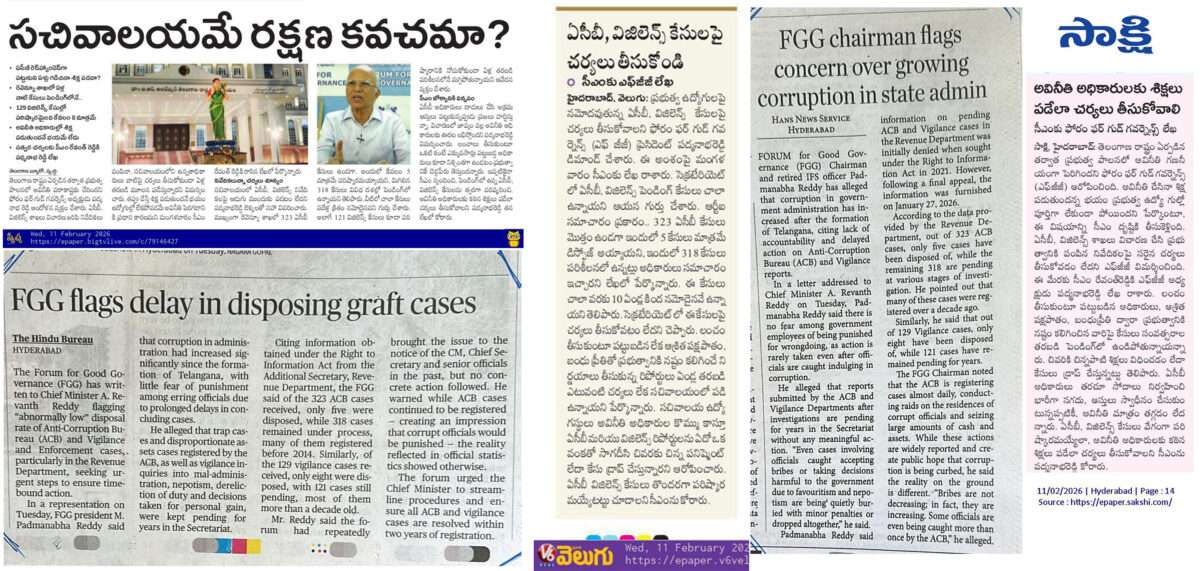
- To the Chief Minister regarding Corruption in administration, Abnormal delay in disposal of A.C.B. and Vigilance cases, Request for quick disposal of A.C.B. and V&E cases – on 10-2-2026
- To the Commissioner, Food Safety regarding Food Adulteration and feeding to milch cattle, Request to take action – on 11-2-2026
- To the Chief Minister regarding Liquor scam case of 2010, Constitution of S.I.T. Abrupt closure of S.I.T, enquiry entrusted to ACB. No action taken on the report of ACB. Request to take steps for quick disposal of cases – on 17-2-2026
- To the Prl. Secretary, Finance department regarding Irregularities in Out sourcing jobs, working of the procedure, Request for inquiry by D.G. V&E – on 23-2-2026
- To the Chief Secretary, regarding Large number of schools without students. Request to examine the issue and take remedial measures – on 23-2-2026
FGG submitted following RTI letters to various departments in the month of FEBRUARY 2026
- To the PIO, O/o Director General, V&E department regarding pending Vigilance reports – on 4-2-2026
- To the PIO, O/o Prl. Secretary, Civil Supplies department, Reg. REP on irregularities in purchase of Paddy – on 18-2-2026
FGG TIMES
Forum For Good Governance
H.No.6-1-69, Flat No.204,
G.K.R. Mansion Saifabad,
Lakdikapool, Hyderabad,
Pin : 500004
Phone: 040 2323 0334
Editorial Board:
M. Padmanabha Reddy I.F.S.(R) (President)
Soma Srinivas Reddy B.E (Secretary)
Interested may send articles/ letters/ News to
E-mail: timesfgg@gmail.com