FGG TIMES
సుపరిపాలనే ధ్యేయంగా
Editor: T. Vivek, Associate Editor: Prof. Raghuram Rao Akkinepally
Vol. No. I | Issue No. 7 | Monthly News Letter | July 2025
IN FOCUS
ప్రత్యేక తెలంగాణ రాష్ట్రంతో ప్రజలకు కలిగిన మేలేంటి ?

1956 లో ఏర్పడ్డ ఆంధ్రప్రదేశ్ రాష్ట్రంలో తెలంగాణ ప్రాంతానికి అన్యాయం జరుగుతున్నదని ప్రత్యేక రాష్ట్రం కావాలని 1969లో ఉద్యమం జరిగింది. చాలామంది ఉద్యమకారులు పోలీసు కాల్పులలో చనిపోయినా ప్రత్యేక రాష్ట్రం ఏర్పాటు కాలేదు. చివరకు విద్యార్థుల బలిదానం, ఉద్యోగస్థుల, ప్రజల సహకారం, చంద్రశేఖర్ రావు గారి బలమైన నాయకత్వంతో జూన్ 2014 వ సంవత్సరంలో తెలంగాణ రాష్ట్రం ఏర్పాటు జరిగింది.
ప్రత్యేక రాష్ట్రం ఏర్పడిన గత 11 సంవత్సరాలలో తెలంగాణ ప్రజలు సాధించిన లాభము ప్రగతి ఏమిటని ఆలోచించాల్సిన సమయం ఆసన్నమైంది. నీళ్ళు, నిధులు, నియామకాలు అన్న నినాదముతో తెలంగాణ రాష్ట్రం ఏర్పడింది. ఈ మూడు విషయాలలో సాధించిన ప్రగతి అంతంత మాత్రమే.
నీళ్ళు : తెలంగాణ రాష్ట్రం ఏర్పాటు జరిగిన తరువాత మొదటగా ఆగష్టు 2014లో పాలమూరు రంగారెడ్డి ప్రాజెక్టు డి.పి.ఆర్ తయారుచేయడానికి ఇంజనీరింగ్ స్టాఫ్ కాలేజి ఆఫ్ ఇండియా వారికి ఇవ్వగా వారు ఒక సంవత్సరంలో తగిన సమాచారం సేకరించి తమ నివేదికను ప్రభుత్వంనకు సమర్పించినారు. ఈ రిపోర్టు ప్రకారము జూరాల ప్రాజెక్టు నుంచి 70 టి.యం.సి.ల నీటిని ఎత్తిపోతల ద్వార తీసుకొని ఉమ్మడి మహబూబ్నగర్, రంగారెడ్డి, నల్గొండ జిల్లాలకు నీరు ఇవ్వవచ్చని, దీనికి అయ్యే ఖర్చు రూ// 32,000 కోట్లు అవుతుందని చెప్పబడింది. అయితే అప్పటి ముఖ్య మంత్రి ఈ డి.పి.ఆర్.ను ఒప్పుకోక, నీటిని జూరాల నుంచి కాక శ్రీశైలం బ్యాక్ వాటర్స్ నుంచి తీసుకోవాలని ప్రాజెక్టు సైట్ను జూరాల నుంచి శ్రీశైలంకు మార్చినాడు. ఈ నిర్ణయం ఎటువంటి సాంకేతిక కారణాలతో కాక కేవలం రాజకీయనాయకుడు తీసుకున్న నిర్ణయం. జి.ఓ. నం. 105 తేది 10-6-2015 నాడు శ్రీశైలం నుంచి నీటిని 5 పంపుల ద్వార ఎత్తిపోయాలని పని 3 సంవత్సరాలలో పూర్తి కావాలని ఇందుకు రూ// 35 వేల కోట్లు ఖర్చవుతుందని పాలనాపరమైన అనుమతులు ఇచ్చి పనులు మొదలుపెట్టినారు. ఆదరాబాదరగా సరియైన కేంద్ర అనుమతులు లేకపోవడం, అలాగే పక్కరాష్ట్రమైన ఆంధ్రప్రదేశ్తో పేచీ మొదలైంది. సరియైన అనుమతులు లేనందున నేషనల్ గ్రీన్ ట్రిబ్యునల్ వారు ప్రాజెక్టుకు సరియైన అనుమతులు లేకుండా పనులు నడుస్తున్నాయి అని రూ// 920 కోట్ల జరిమానా విధించడం, రాష్ట్రప్రభుత్వం సుప్రీమ్కోర్టులో కేసువేసి స్టే తెచ్చుకోవడం జరిగింది. గత పది సంవత్సరాలలో ఈ ప్రాజెక్టుపై రూ// 30 వేల కోట్లు ఖర్చయినా ఒక్క ఎకరానికి కూడ నీరు అందించలేదు. ఈ ప్రాజెక్టు పూర్తి కావడానికి ఇంకా రూ// 15 వేల కోట్లు అవసరం అని అంచనా అయినా పక్క రాష్ట్రం సుప్రీమ్కోర్టులో వేసిన కేసు తేలాల్సిన అవసరముంది. ఈ ప్రాజెక్టు పనులలో పెద్ద ఎత్తున అవినీతి జరిగిందనే ఆరోపణలు ఉన్నాయి.
కాళేశ్వరం ప్రాజెక్టు : లక్ష కోట్ల పైబడి ఖర్చయిన కాళేశ్వరం ప్రాజెక్టు ఏమీ ఫలితం సాధించలేక పోయింది. ఈ ప్రాజెక్టుపై రకరకాల విచారణలు జరుగుతున్నందున దీని గురించి ఇప్పుడు అభిప్రాయం తెలుపుట భావ్యం కాదు. కాని ఒక్కటి మాత్రం నిజం. ఈ ప్రాజెక్టు నిర్మాణంలో పెద్ద ఎత్తున అవినీతి జరిగిందని ఖచ్చితంగా చెప్పగలం. ఈ మధ్య కాళేశ్వరం ప్రాజెక్టులో పనిచేసిన ఇద్దరు ఇంజనీర్ల వద్ద అవినీతి నిరోధక శాఖ వారు వందల కోట్ల అక్రమాస్థులు కనుగొన్నారు. అంటే నిర్ణయాలు తీసుకునే రాజకీయనాయకులు ఇంకా ఎంత అవినీతికి పాల్పడ్డారో ఊహించుకోవచ్చు.
ఎస్.ఎల్.బి.సి. : గత 20 సంవత్సరాలుగా ఈ టన్నెల్ పనులు సాగుతున్నా ఇప్పటివరకు పనులు పూర్తి కాలేదు. కొన్ని చిన్న ప్రాజెక్టులు చేపట్టి పూర్తి చేసినా తెలంగాణ రాష్ట్రంలో భారీ నీటిపారుదల ప్రాజెక్టు మాత్రము ఒక సమస్యగా తయారై, అనుకున్న విధంగా నీళ్ళు తెలంగాణ ప్రజలకు అందుబాటులోనికి రాలేదు.
నిధులు : ఇక రెండవ అంకం నిధులు. ప్రత్యేక రాష్ట్రం ఏర్పడినప్పుడు రాష్ట్రం అప్పు రూ// 80 వేల కోట్లు ఉండగా అది కాస్తా ఇప్పుడు రూ// 7 లక్షల కోట్లకు పెరిగింది. ఇలా అప్పుతెచ్చి చేపట్టిన పనులు ఇంతవరకు ఫలితాలు ఇవ్వడం లేదు. దానితో ఋణభారం పెరిగింది. తెలంగాణ రాష్ట్రానికి ఎచ్చట అప్పు పుట్టడం లేదు అని స్వయంగా ప్రస్థుత ముఖ్యమంత్రి గారు చెప్పడం రాష్ట్ర ఆర్థిక పరిస్థితిని తెలుపుతుంది. ఇక సంక్షేమపథకాల పేరుతో పెద్ద ఎత్తున ఖర్చుచేసిన పింఛన్లు, రైతుబంధు వంటివి పక్కన పెడితే మిగిలిన ఖర్చు అంతా దుబారా ఖర్చు. రాష్ట్రం ఏర్పడ్డప్పుడు మనకు కావలసిన విద్యుత్లో సగము మాత్రమే రాష్ట్రంలో ఉత్పత్తి కావడంతో చాలా ఇబ్బందులు ఉండేవి. అధిక విద్యుత్ ఉత్పత్తి కొరకు రెండు ముఖ్యమైన ప్రాజెక్టులు భద్రాది, యాదాద్రి తీసుకోవడం జరిగింది. ఈ మధ్యనే భద్రాద్రి ప్రాజెక్టు పూర్తి అయినా అధునాతన సాంకేతికతో నిర్మించలేదని, అలాగే బి.హెచ్.ఇ.ఎల్. వారి వద్ద మిగిలిపోయిన పరికరాలు వాడినారని ఆరోపణలు ఉన్నాయి. ఇకపోతే యాదాద్రి ప్రాజెక్టు ఇప్పుడిప్పుడే ఒక యూనిట్లో ఉత్పత్తి మొదలైంది. అయితే రాష్ట్ర అవసరాలకు గత 10 సంవత్సరాలుగా కరెంటు ఇతర రాష్ట్రాల నుంచి అధిక ధరకు కొనుగోలు చేయడంతో రాష్ట్ర విద్యుత్ సంస్థలు 90 వేల కోట్లు అప్పుల ఊబిలో కూరుకు పోయినాయి. ఇక కొన్ని సంక్షేమపథకాలలో పెద్ద ఎత్తున అవినీతి జరిగింది. గొర్రెల పెంపకం పథకం ఇందుకు ఉదాహరణ. బేషజాలకు పోయి రెండు పడకల ఇళ్ళ పేరుతో వేల కోట్లు ఖర్చయినా, అవినీతి, ఆశ్రిత పక్షపాతంతో ఈ పథకం ఎక్కువగా లాభం చేకూర్చలేదు. ఎన్నికలలో లబ్ధి కొరకే అని బాహాటంగా చెపుతూ, దళితబంధు కార్యక్రమం తీసుకొని 4 వేల కోట్ల ప్రజాధనాన్ని ఖర్చు చేసినా పెద్దగా లాభం కలుగలేదు. ఇక మిషన్ భగీరథ మిషన్ కాకతీయ వంటి వాటిలో అవినీతి జరిగిందని ఆరోపణలు ఉన్నా ప్రజలకు మంచినీరు వ్యవసాయానికి సాగునీరు అందింది
నియామకాలు : నియామకాలు కొద్దో గొప్పో జరిగినా ఇంకా జరుగవలసి ఉంది. పబ్లిక్ సర్వీస్ కమీషన్లో ప్రశ్నాపత్రాలు లీకేజి, తప్పుడు ప్రకటనలతో కోర్టు స్టేలు వంటి వాటితో ప్రభుత్వ ఉద్యోగాల నియామకం సరిగా జరగలేదు. అయితే ఇండస్ట్రియల్ పాలసీ సరళం చేయడం, అలాగే విదేశాల నుంచి పెట్టుబడులు రావడంతో కొంతమటుకు ఐ.టి. సెక్టారులో, ఇతర పరశ్రమలలో ఉద్యోగాలు దొరికినాయి.
ప్రత్యేక రాష్ట్రం ఏర్పడ్డ తరువాత తెలంగాణ ప్రజలకు జరిగిన నష్టం : ప్రాజెక్టుల పేరుతో రాష్ట్రాన్ని అప్పులపాలు చేయడం, విచ్చలవిడిగా అవినీతి, అధికార కేంద్రీకృతంతో పాలన భ్రష్టు పట్టిపోవడం, కేంద్రంతో సత్సబంధాలు లేకపోవడంతో కేంద్రం నుంచి సహాయసహకారాలు అందకపోవడం, రాష్ట్రం ఏర్పడ్డ తరువాత రూ// 8 వేల కోట్ల ఆబ్కారీశాఖ వార్షిక ఆదాయం రూ// 40 వేల కోట్లకు పెరిగింది. అంటే తాగేవారి సంఖ్య ఐదు రెట్లు పెరిగింది. కల్తీ కల్లు , మాదకద్రవ్యాలతో ప్రజల ఆరోగ్యం చెడిపోవడం, రకరకాల ఉచితాలతో ప్రజలు సోమరిపోతులుగా తయారి, దానికి తోడు కల్తీకల్లుతో నరాల బలహీనత ఏర్పడి పనిచేసే ఓపిక లేకుండాపోయింది. నేడు తెలంగాణ రాష్ట్రంలో ఇతర రాష్ట్రాల నుంచి వచ్చిన కార్మికులు వ్యవసాయ మరియు గృహనిర్మాణ రంగం వంటి వాటిలో పనిచేస్తున్నారు.
విద్యారంగం : విద్యారంగం మొత్తంగా నిరాదరణకు గురైంది. సంవత్సరాల తరబడి యూనివర్శిటీలలో వైస్ ఛాన్సలర్లు మరియు ఇతర భోదన సిబ్బంది లేక కాలేజి చదువులు కుంటుపడ్డాయి. ఇక ప్రాథమిక విద్య నేర్పే పాఠశాలలు చాలా చోట్ల శిధిలావస్థలో ఉన్నాయి. అలాగే మౌలిక వసతులు ముఖ్యంగా త్రాగునీరు, మరుగుదొడ్లు వంటి సౌకర్యాలు లేక విద్యార్థులు నానా ఇబ్బందులు పడ్డారు. పేదవారు కూడ అప్పో, సప్పో చేసి తమ పిల్లలను ప్రైవేటు పాఠశాలలలో చేర్పించడంతో చాలామటుకు సర్కారి బడులు మూతపడే పరిస్థితి వచ్చింది. 2024లో సమగ్ర శిక్షణ వారు చేసిన సర్వే ప్రకారము తెలంగాణ రాష్ట్రంలో 30,023 ప్రభుత్వ పాఠశాలలు ఉండగా వాటిలో 1,213 పాఠశాలలలో ఒక్క విద్యార్థి కూడ లేడు. ఇక 13,364 పాఠశాలలలో 50 లోపే పిల్లలున్నారు. సుమారు 5,821 పాఠశాలలలో ఏకోపాధ్యాయుడు మాత్రమే ఉన్నాడు. ఈయన ఏదైనా కారణంతో బడికి రాకున్న ఆనాడు పిల్లలకు అప్రకటిత సెలవు. ఈ విధంగా ప్రాథమిక విద్య కుంటుపడింది.
వైద్యరంగం : వైద్యులు, మందుల కొరత, తగిన సిబ్బంది లేక గ్రామీణ ప్రాంతాలలో సర్కారీ దవాఖానాలు చాలావరకు సరియైన సేవలు అందించలేకపోయినాయి. పేదలు కూడ కార్పోరేటు ఆసుపత్రులలో డబ్బు ఖర్చు పెట్టి వైద్యం చేయించుకుంటున్నారు. కొన్ని బస్తీ దవాఖానాలు అంటూ ఆర్భాటం చేసి చాలా ప్రదేశాలలో అవి మూతపడ్డాయి. అలాగే జిల్లాకు ఒకటి చొప్పున సూపర్ స్పెషాలిటీ ఆసుపత్రి భవనాలు నిర్మించినా ఇంకా అవి పనిచేయడం లేదు. హైదరాబాదు నగరానికి నలుదిశలా సూపర్ స్పెషాలిటీ ఆసుపత్రుల నిర్మాణము జరిగినా డాక్టర్లు, తగిన సిబ్బంది లేక అవి భవన నిర్మాణల వరకే నిలిచిపోయినాయి.
గత 11 సంవత్సరాల తెలంగాణ పయనాన్ని పరిశీలించిన, జరిగిన లాభం కంటే నష్టమే ఎక్కవగా జరిగింది. కొత్తగా వచ్చిన ప్రభుత్వం కూడ గత ప్రభుత్వం చేసిన తప్పుల నుంచి గుణపాఠం నేర్చుకోకుండా మితిమీరిన హామీలతో రాష్ట్రాన్ని అప్పుల ఊబిలో నికి నెడుతుంది. రాష్ట్రానికి సంబంధించిన అన్ని నిర్ణయాలు ఢిల్లీలో జరుగుతున్నాయి. ఎన్నికలై 18 నెలలు గడచినా ఇంకా పూర్తిస్థాయిలో మంత్రి వర్గ కూర్పు కాలేదు. చివరకు కొత్తగా వచ్చిన మంత్రుల శాఖలకు కూడ ముఖ్యమంత్రి గారు ఢిల్లీలోని పెద్దల అనుమతి తీసుకోవాల్సి వచ్చింది. ఏ లక్ష్యం కొరకైతే తెలంగాణ సాధించుకున్నామో ఆ లక్ష్యాలు పూర్తి కావడానికి ప్రస్థుత ప్రభుత్వం కృషి చేయాల్సిన అవసరముంది.
M. Padmanabha Reddy
President
Forum for Good Governance

పాలకుల తీరు మారాలి
ఏ కంపెనీ అయినా, బాగా వృద్ధి చెందాలంటే ప్రజల అవసరాలను దృష్టిలో పెట్టుకొని, మారుతున్న కాలానికి అనుగుణంగా, కొత్త ఆలోచనలు, నూతన టెక్నాలజీతో ఉత్పత్తులను అభివృద్ధి చేయాలి. ఇందుకోసం పెట్టుబడులకు బ్యాంకుల నుండి అప్పులు తీసుకోవడం సహజం. అయితే యాజమాన్యాల తప్పుడు అంచనాలు, నిర్ణయాలు, అప్పుల వినియోగంలో లోపాల వలన కొన్ని పరిస్థితులు అనుకూలించకపోతే, అప్పులు భారంగా మారుతాయి. కానీ బాధ్యతగల యాజమాన్యం అప్పుల నుంచి బయటపడేందుకు మంచి వ్యూహాలతో ముందడుగు వేస్తారు .
అప్పులు వ్యక్తిగతంగా అయినా, సంస్థలు అయినా ప్రభుత్వాలు అయినా తాత్కాలిక అవసరాలకు కోసం తీసుకుంటారు. అప్పులు సంక్షేమం అభివృద్ధి కోసం వాడితే బాగుంటుంది. అయితే వాటిని దుర్వినియోగం చేస్తే అవి రాబోయే తరాల భవిష్యత్తును బంధించేవిధంగా ఉంటాయి. అప్పులను తీర్చలేక ఆస్తుల అమ్మకం, కార్యకలాపాల మూసివేత జరుగుతుంది.
ఈ నిజాన్ని ప్రభుత్వాలను నడిపే నాయకులకు తెలుసుకోవాలి. ప్రస్తుత తెలంగాణ రాష్ట్ర ఆర్థిక వ్యవస్థ తీవ్ర సంక్షోభంలో కూరుకుపోయిందని అందరికీ తెలిసిన వాస్తవం. గత బి ఆర్ యస్ ప్రభుత్వం తెలంగాణ అభివృద్ధి, ప్రజల సంక్షేమం కోసం భారీగా అప్పులు చేసింది. ఆ అప్పు వినియోగ విషయంలో పారదర్శకత ,జవాబుదారీతనం లోపించడం వలన తీవ్రమైన అవినీతి ఆరోపణలు ఎదుర్కొని ఆ పార్టీ అధికారము కోల్పోయింది. వాటిని ఎత్తి చూపిన కాంగ్రెస్ పార్టీ రేవంత్ రెడ్డి నాయకత్వంలో అధికారంలోకి వచ్చింది. గత ప్రభుత్వం చేసిన అప్పుల ప్రతి ఫలాలు అందక అప్పుల ఊబిలో కూరుకుపోయిన రాష్ట్ర ప్రభుత్వాన్ని నడపడంలో ప్రస్తుత రేవంత్ రెడ్డి ప్రభుత్వం సతమతం అవుతోంది.
అయితే ఈ గడ్డు ఆర్థిక పరిస్థితుల్లో తెలంగాణ రాష్ట్ర ప్రజలు భవిష్యత్తు కోసం అధికారంలో ఉన్న కాంగ్రెస్ పార్టీ చక్కదిద్దే ప్రయత్నం చేయడం ఒక బాధ్యతగా స్వీకరించాలి లేదా ఆ పార్టీ తన ఉనికిని కోల్పోయే ప్రమాదం ఉంది.
ఎన్డిఎ కూటమి భాగస్వామిగా ఉన్న ఆంధ్రప్రదేశ్, అప్పుల భారాన్ని ఎదుర్కొంటున్నా, కేంద్ర సహకారం వల్ల కొంత ఉపశమనం పొందే అవకాశముంది.
ప్రస్తుత పరిస్థితుల్లో కాంగ్రెస్ పార్టీ అభివృద్ధి మరియు సంక్షేమం కోసం ఖర్చులను తగ్గించి అప్పులను తీర్చే ప్రయత్నం చేయవచ్చు. కానీ కాంగ్రెస్ పార్టీ అధికారంలోకి రావడానికి సాధ్యంకాని వాగ్దానాలు చేసింది ,ప్రజలకు ఇచ్చిన హామీలను నెరవేర్చడంలో కాంగ్రెస్ విఫలమైందని ప్రతిపక్షాలు విమర్శిస్తున్నాయి . రాష్ట్ర ఆర్థిక పరిస్థితి అవగాహన లేక ఆచరణ సాధ్యం కాని హామీలతో అధికారంలోకి వచ్చిన కాంగ్రెస్ పార్టీకి ఇచ్చిన హామీలను అమలు చేయడం ఆ పార్టీకి కష్టమని మొన్నటి వరకు అధికారంలో ఉన్న బిఆర్ యస్ కు తెలుసు,కానీ ప్రతిపక్ష పాత్ర పోషించాలి కదా.
కాంగ్రెస్ ప్రభుత్వం అధికారంలోకి వచ్చిన తర్వాత హామీలిచ్చిన సంక్షేమ పథకాల కోసం చెల్లింపులతో పాటు ఉద్యోగుల జీతాలు మరియు పెన్షన్లు , అప్పుల అసలు మిత్తి చెల్లింపులు చేయడం కొనసాగుతున్నాయి . అయితే గత ప్రభుత్వంలో చేసిన కాంట్రాక్టర్ల పనుల బిల్లులు బకాయిలు , ఉద్యోగుల రిటైర్మెంట్ బెనిఫిట్స్ సొమ్ము వంటి బకాయిలు చెల్లింపుల పై నిర్లక్ష్యం కొనసాగుతోంది.
ప్రస్తుత ప్రభుత్వం చెబుతున్న వివరాల ప్రకారం గత ప్రభుత్వం చెల్లించివలసిన గుత్తేదారులకు ,విద్యుత్ శాఖకు మరియు ఉద్యోగుల రిటైర్మెంట్ బెనిఫిట్స్ కలిపి చెల్లించాల్సిన బకాయిలు సుమారుగా ఒక లక్ష కోట్ల రూపాయలు తక్షణంగా ఉన్నాయి.
లక్ష కోట్లు చెల్లించాల్సిన సొమ్ము మొత్తం గణాంకాల ప్రకారం కేవలము కొంతమందికి మాత్రమే ఉండవచ్చు, కానీ వారి వెనుక లక్షలాది కుటుంబాల జీవనాధారం నిలిచిపోయిన దారుణ వాస్తవం. వ్యవసాయం తర్వాత ఎక్కువ మంది ఉపాధి పొందుతున్న నిర్మాణ రంగానికి సంబంధించిన చిన్న కాంట్రాక్టర్లు, సర్పంచులు, పెద్ద సంస్థలవరకూ అందరూ అప్పులు తీసుకుని పెట్టుబడి పెట్టి ప్రజా పనులు పూర్తి చేసి, ప్రజలకు ఆ పనులను వినియోగంలోకి తెచ్చి, ఇప్పుడు బిల్లుల కోసం చెప్పులు అరిగేలా తిరుగుతున్నారు. మళ్లీ ప్రభుత్వ పని అంటే భయం వచ్చేలా చేశారు. కనీసం వారి పై కనికరం చూపకుండా ఇవి ప్రస్తుత ప్రభుత్వం చేయించిన పనులు కావని ఒక కక్ష సాధింపు ధోరణితో బాధ్యత లేకుండా ఉండడము గమనార్హం . అదే విధంగా ఉద్యోగులు పదవీ విరమణ అనంతరం పొందాల్సిన జీవిత భద్రత సొమ్ముల కోసం నెలల నుండి ఎదురుచూస్తున్నారు. ప్రస్తుత పనిచేస్తున్న ఉద్యోగులు కూడా రాబోయే కాలంలో మా పరిస్థితి కూడా ఇలాగే ఉంటుందని ఆందోళన చెందే అవకాశం లేకపోలేదు . అయినప్పటికీ ప్రభుత్వం మాత్రం స్పందించడంలేదు.
ప్రయోజనం లేని, ప్రాధాన్యత లేని , రిటర్న్స్ లేని పథకాలపై ప్రభుత్వాలు కోట్లాది రూపాయలు ఖర్చు పెడుతున్నారు. పన్నుల రూపంలో ప్రజల నుండి వచ్చిన డబ్బును తిరిగి ప్రజలకు శాశ్వత ప్రయోజనాలు కల్పించేందుకు కాకుండా, ఏ అవసరాలపై ఖర్చు చేయాలో తెలియక కొన్ని శాఖల ఉద్యోగులు ఖాళీగా కూర్చోబెట్టి జీతాలు ఇస్తున్నారు. కేవలం అధికారాన్ని నిలుపుకోవడం కోసం, మళ్లీ ఎలాగైనా అధికారంలోకి రావాలన్న ఉద్దేశంతో ఉచితాల పేరుతో ప్రజాధనాన్ని వృథా చేస్తున్నారు. తమ పనులు తాము చేసుకుంటూ బ్రతికే వారిని సైతం ఉచితాలను ఆశ చూపించి తమ పనుల పై దృష్టి పెట్టకుండా చెడగొట్టారు. ఓట్ల కోసం తమ జీవనోపాధిని నాశనం చేశారు. ఇది వినడానికి కఠోరంగా ఉన్నా పచ్చి నిజం.
ప్రభుత్వాలు తమ ఆదాయాన్ని పెంచుకోవడానికి మద్యం అమ్మి ఇప్పటికీ సగం మంది ప్రజలను తాగుడుకు బానిసలుగా మార్చారు . ఇది మన రాజ్యాంగ విరుద్ధం, ఆర్టికల్ 47 ప్రకారం, ప్రభుత్వానికి ప్రజల ఆరోగ్యాన్ని మెరుగుపరచడం ఒక ప్రధాన బాధ్యత.
ప్రభుత్వాలకు తమ అవసరాల కోసం అప్పు చేసే హక్కు ఉన్నది . దాన్ని ఖర్చు చేయడంలో పారదర్శకత, జవాబుదారీతనం తప్పనిసరి అవసరం. ఈ తరం యువత , ఉద్యోగులు , వ్యాపారవేత్తలు సమర్థవంతమైన పాలన కోరుకుంటున్నారు.
ప్రజలు చెల్లిస్తున్న పన్నులు ప్రభుత్వాలు ఏలా వాడుతున్నారో , అప్పులు దేనికోసం ఎందుకు తీసుకుంటున్నారో ,ఖర్చులపై ప్రజలకు పూర్తి నివేదిక ఇవ్వాలి. నిజమైన ప్రాధాన్యతల కోసమే ప్రజాధనాన్ని వినియోగించాలి. రాజ్యాంగం మనకు కల్పించిన సమాచార హక్కు చట్టం ద్వారా ఇటువంటి ప్రశ్నలు వేయకపోతే, రేపటి తరాలు మనలను క్షమించకపోవచ్చు.
సోమ శ్రీనివాస్ రెడ్డి
సెక్రటరీ ,
ఫోరం ఫర్ గుడ్ గవర్నెన్స్
Farmers frown – State solace
Monsoon is here. The myriad ways it manifests is a reminder of the well-known axiom ‘Indian agriculture is a gamble in monsoon’. Issues concerning farming continue to occupy center-stage in public policy well past seven decades of independence. Policy and legislative interventions taken from time to time have only been quick-fix and knee-jerk such as loan waiver. The core issue of making farming an enterprise and a calling remains a far cry. Creative and practical solutions by experts contained in compendious reports remain confined to closets. In result, farmer continues to frown and the furrows on his forehead grow deeper by the day.
A reconnaissance of farm landscape and asymmetry in ownership of land throws up certain compelling and disconcerting facts. The average operational land holding has increased from 71.01 million in 1970-71 to 146.5 million in 2016. However, the size of holdings decreased from1.08 hectares in 2016-17 to 0.74 hectares in 2021-22 according to NABARD survey leading to the inevitable conclusion that fragmentation of farm land is on the rise rendering it unviable. The survey shows that the number of families taking loans in rural areas has risen from 47.5% to 52 percent unmistakably indicating rising debt burden and financial pressure.
Typically a farmer faces many challenges in pre-harvesting and post-harvesting phases. The fertility of soil, quality of seed, vagaries of monsoon and erratic source of irrigation, crop management, pest control and harvesting comprise challenges in pre-harvesting phase while logistics and selling at remunerative price remain a challenge at the post-harvesting stage. Certain states such as Telangana have undertaken soil testing and issued soil health cards to farmers. However enforcement of seed laws remains lackadaisical and instances of spurious seeds impacting yields resulting in farmers’ distress and in some cases suicides are public knowledge. On the other hand initiatives such as e-NAM and cold chain storage on the post-harvest side have had limited success. The recent farm laws, which were repealed in the face of orchestrated and protracted protests, were meant to eliminate middlemen and empower farmers to organize themselves as FPO (Farmer Producer Organisation) and sell farm produce outside designated market yards. The repeal unarguably was a blow to the interest of the farmers.
In the aftermath of unsuccessful initiative the issue of assuring the farmers a basic and remunerative price has been gaining ground. Notwithstanding the Union government initiative to mitigate the burden of input cost and investment under PM-KISAN and insulate farmers against notified crop failure under PM-FBY (Fasal Bima Yojana), there is a demand for enacting law on MSP (Minimum Support Price) which is currently a prerogative of the political executive. Farmers feel reassured only if MSP is backed by law. While MSP provides a safety net against price fluctuations, stabilize farmers income, reduce financial distress and gives fillip to rural economy the challenges it poses cannot be overlooked.
In a country of our size and demography and dependence on agriculture and output, the combined value of crops estimated at Rs.11 lakh crore, is by any reckoning a stupendous figure and a substantial percentage of annual budgets. To factor this amount in budget as expenditure to buy crops is impossible. In a dynamic and globally connected market economy of the day the mismatch between market demand and crop production could result in oversupply and fall in prices. In the past emphasis on pulses and over production resulted in fall in prices. Further MSP tends to influence crop choices leading to over production of certain crops such as wheat and paddy and impacts production and affordability of other essential grains and pulses leading to imbalance in food basket and nutrition safety.
The need of the day lies in looking into recommendations of MS Swaminathan Commission which suggested C2+50% (C2 refers to imputed cost of capital and rent on the land)and Ashok Dalwai Committee which suggested adherence to Agricultural Land Leasing Act,2016. The Act aims at abolishing exploitative contract relations between land owners and lessees. Further, it is suggested that crops should be categorized into those of national and regional importance. While Union government could guarantee Assured Price (C2 + margin determined by Commission for Agricultural Costs and Prices) for nationally important crops, states shall ensure similar assured price for regional crops. In this context the role of CACP in shaping agricultural price policies, recommendations on MSP and recommendations to farmers to adopt latest technologies to optimize productivity assumes immense importance. The latest introduction of drones in farm operations has the potential to revolutionize agriculture by enhancing efficiency, economy and yields.
Farming in India is fraught with challenges galore. Farming and public policy has always favoured consumers. It is time to reorient our policies to favour the producer. We the consumers owe it to the farmer who against near insurmountable odds raises crops and remains content with average monthly income of about Rs.12,000 as shown by NABARD survey. An ode to his perseverance is the least one can offer only to reduce the deepening furrows on his frowning face.
Vivek (Former Member Telangana State Public Service Commission)
&
Subba Laxmi (Formerly Executive Director FCI)
“డబ్బులు ఖర్చు పెట్టకుండా, ప్రజల విశ్వాసంతో గెలిచి సేవ చేయాలనే దృఢనిశ్చయంతో ఎన్నికల్లో పాల్గొనాలి.”
ఎందుకంటే, డబ్బు ఖర్చు చేసి గెలవడం ద్వారా నిజమైన ప్రజాసేవ సాధ్యం కాదు”.
Combating Corruption for Good Governance and Sustainable Development
Corruption continues to pose a significant barrier to good governance and sustainable development. It undermines institutional integrity, weakens democratic systems, distorts economic growth, and erodes public trust. Disproportionately affecting the poor and marginalized, corruption exacerbates inequality and impedes the fair distribution of resources. Despite widespread recognition of its harmful effects, combating corruption remains a complex and ongoing challenge, requiring a multi-dimensional and systemic approach.
Understanding the Nature and Scope of Corruption
Corruption manifests in many forms—bribery, nepotism, embezzlement, favoritism, and abuse of power—cutting across all sectors, including politics, administration, judiciary, education, and healthcare. It is not limited to high-profile scandals but is often deeply embedded in routine bureaucratic processes. Recognizing corruption as both a cause and symptom of weak governance is crucial for designing effective interventions.
Legal and Institutional Frameworks
India has established a robust legal and institutional framework to combat corruption. The Prevention of Corruption Act, 1988 (amended in 2018) remains the principal legislation targeting bribery and abuse of power. The Lokpal and Lokayuktas Act, 2013 created an independent ombudsman to investigate corruption among public officials. The Central Vigilance Commission (CVC), constituted under the 2003 Act, supervises vigilance activities in central government institutions.
The Prevention of Money Laundering Act, 2002 enables the Enforcement Directorate (ED) to investigate and seize illicit assets, while the Benami Transactions (Prohibition) Act, 1988 (amended in 2016) targets property held under fictitious ownership. The Whistle Blowers Protection Act, 2014 provides limited safeguards for individuals exposing corruption. Further, the Right to Information Act, 2005 enhances transparency by empowering citizens to access government information.
Complementary legal instruments include the Indian Penal Code, Bhartiya Nyaya Sanhita (BNS), and Companies Act, 2013, which address financial fraud and corporate misconduct. Key institutions such as the Central Bureau of Investigation (CBI), ED, and state Anti-Corruption Bureaus (ACBs), alongside the judiciary, play critical roles in enforcement and accountability.
Challenges in Implementation
While India possesses a comprehensive legal architecture, effective enforcement remains a persistent challenge. Institutional independence, political will, and public vigilance are essential for translating legal provisions into action. Many anti-corruption agencies face political interference, resource constraints, and lack operational autonomy. Judicial delays, procedural loopholes, and bureaucratic inertia further weaken enforcement.
Legal Frameworks vs. Political Interference
Despite the existence of strong laws, implementation often remains selective and inconsistent. In several instances, anti-corruption agencies are accused of acting under political influence, targeting opposition figures while ignoring similar offences by ruling party members. This undermines the rule of law, erodes institutional credibility, and weakens democratic accountability.
Lackadaisical Enforcement of Corruption Laws
Despite the presence of strong legislative tools, enforcement mechanisms remain weak. Contributing factors include, the political interference in investigations taken up by agencies such as the CBI, ED and state ACBs, which compromises their autonomy. In addition to the political interference, judicial delays and procedural loopholes that prolong corruption trials and allow the accused to evade accountability. The resource constraints, bureaucratic inertia, and delayed appointments in the institutional watchdog bodies like the CVC and Lokpal, weakens the institutions. Further, inadequate protection for whistleblowers and witnesses also discourages the honest reporting and further weakens the enforcement mechanism. This systemic inefficiency creates an environment where corruption flourishes unchecked, and honest voices are silenced by fear and retaliation.
Misuse of Institutions for Political Vendetta
Perhaps more troubling is the misuse of anti-corruption agencies for political vendetta. When investigations appear timed with elections or major legislative sessions, it raises questions about motive and legitimacy. Such politicization distorts the fundamental purpose of anti-corruption laws, turning them into instruments of suppression rather than justice. This undermines federal principles and damages India’s international image as a democratic and transparent nation.
Combating corruption is essential for promoting good governance and ensuring sustainable development. While laws and institutions form the foundation, their effectiveness lies in fair, impartial, and rigorous implementation. Political neutrality, institutional integrity, and civic engagement are vital to restoring public trust and building a corruption-resistant society. The misuse of anti-corruption frameworks for political gains must end, and efforts should be directed toward building transparent, accountable, and inclusive systems that uphold democratic values and promote equitable development.
The Way Forward: Towards a Holistic Anti-Corruption Strategy
Addressing corruption in all its forms requires more than isolated efforts or short-term campaigns. It calls for a comprehensive, multi-stakeholder strategy that integrates legal, institutional, technological, and social reforms. Given the deeply entrenched and complex nature of corruption, a holistic approach is necessary to ensure transparency, accountability, and integrity across all levels of governance.
A key priority is to grant enforcement agencies statutory and functional autonomy, free from political or executive interference. Investigations and prosecutions, especially in high-profile cases, must be conducted without bias and under regular judicial scrutiny to prevent misuse and ensure fairness. Judicial oversight enhances credibility and instills public confidence. Political neutrality in the enforcement of anti-corruption laws is essential—no case should be influenced by political affiliations or pressures.
Whistleblowers, civil society organizations, and the media play a vital role in exposing corruption and promoting accountability. Therefore, strong legal safeguards must be established to protect whistleblowers and investigative journalists from retaliation. Civil society must be empowered, not stifled, and media freedom must be preserved to act as an independent watchdog. Coordination between central and state governments, rather than confrontation, is essential for harmonizing anti-corruption efforts nationwide.
Key strategies in this fight include:
- Transparency and Access to Information:
Public access to information reduces discretion in decision-making and enhances accountability. Laws such as the Right to Information (RTI), coupled with digital governance and online service delivery, should be strengthened. However, these systems must be accessible and inclusive to ensure they benefit all sections of society.
- Citizen Engagement and Civil Society Empowerment:
An alert, informed public and an active civil society are crucial for identifying and challenging corruption. NGOs, journalists, and concerned individuals must be encouraged and protected. Strong whistleblower protection laws and support mechanisms are vital to sustain citizen involvement.
- Political and Electoral Reforms:
Corruption in politics remains a major barrier to good governance. Reforms must focus on transparency in political financing, capping campaign expenditures, and curbing criminalization of politics. The Election Commission must have enhanced powers to enforce electoral laws impartially and penalize violations effectively.
- Institutional Integrity and Independence:
Institutions such as the judiciary, auditing bodies, and investigative agencies must be insulated from political interference. Their effectiveness depends on operational autonomy, professionalism, and transparency in functioning.
- Ethics and Value-Based Education:
A long-term cultural shift is essential for eradicating corruption. Promoting ethics, civic responsibility, and integrity through school curricula can build a foundation for future generations to uphold public morality and resist corrupt practices.
- Leveraging Technology:
Digital tools like e-governance platforms, online grievance redressal, e-procurement, and AI-based fraud detection reduce human discretion and increase transparency. Addressing the digital divide is crucial to ensure equal access and prevent new forms of exclusion.
- Individual Responsibility:
While institutional reforms are crucial, individual behavior shapes the culture of corruption. Citizens must refrain from offering bribes, report unethical practices, and actively participate in democratic processes. Collective vigilance begins with individual action.
Conclusion
Combating corruption is not merely a legal or administrative challenge—it is a societal imperative fundamental to securing good governance, social justice, and sustainable development. While India has put in place a comprehensive legal and institutional framework, its success ultimately depends on consistent, impartial enforcement and a strong political commitment to uphold the rule of law. Ending the misuse of anti-corruption mechanisms for political ends, empowering watchdog institutions, and fostering civic engagement are essential to restoring public trust. A culture of integrity must be nurtured through transparency, education, ethical leadership, and active citizen participation. Only through a holistic, coordinated, and sustained approach can India build a resilient, corruption-free society that ensures equitable growth and democratic accountability for all.
– Dr. M. Dhananjay Naik
స్వంత రాష్ట్రాలకు హైకోర్టు న్యాయమూర్తుల తిరుగు బదిలీలు
ఈ మధ్య కాలంలో సుప్రీంకోర్టు చేపట్టిన హైకోర్టు న్యాయమూర్తుల బదిలీల్లో కొన్ని అనూహ్య పరిణామాలు కన్పిస్తున్నాయి. ఏ కారణం చేత ఒక రాష్ట్ర హైకోర్టు న్యాయమూర్తిని వేరొక రాష్ట్ర హైకోర్టు న్యాయమూర్తిగా బదిలీ చేశారనేది బయటి వారికి తెలియదు. కేంద్ర, రాష్ట్ర ప్రభుత్వ ఉద్యోగుల మాదిరిగా వీరికి వ్రాత పూర్వక బదిలీ నిబంధనలు లేవు. సుప్రీంకోర్టు ఏర్పాటు చేసిన తేదీ 11-08-2021 నాటి మెమొరాండం ఆఫ్ ప్రొసీజర్ ప్రకారం హైకోర్టు న్యాయమూర్తుల నియామకాలు, బదిలీలు “ప్రజా ప్రయోజనం” (public interest) దృష్ట్యా జరుగుతుంటాయి. సుప్రీంకోర్టు ప్రధాన న్యాయమూర్తిని సంప్రదించిన పిదప, రాష్ట్రపతి బదిలీలు చేస్తారని రాజ్యాంగంలోని ఆర్టికల్ 222 చెప్తుంది. కానీ నిజానికి సుప్రీంకోర్టు రాజ్యాంగ ధర్మాసనం వెలువరించిన తీర్పుకు కట్టుబడి మాత్రమే బదిలీలు జరుగుతాయి. ఒక రాష్ట్ర హైకోర్టు న్యాయమూర్తిని వేరొక హైకోర్టుకు బదిలీ చేసే ప్రక్రియ సుప్రీంకోర్టు ప్రధాన న్యాయమూర్తితో కూడిన కొలీజియం ప్రారంభిస్తుంది. కొలీజియం చేసిన బదిలీ సిఫారసు కేంద్ర ప్రభుత్వం ద్వారా రాష్ట్రపతికి చేరుతుంది. రాష్ట్రపతి కేవలం తుది నోటిఫికేషన్ /ఉత్తర్వు మాత్రమే జారీ చేస్తారు.
ఒక రాష్ట్ర హైకోర్టు నుండి బదిలీ చేసే ప్రతిపాదనకు ముందు సంబంధిత న్యాయమూర్తి నుండి ఏ రాష్ట్రాలకు బదిలీకి ఇష్టపడుతున్నాడో సుప్రీంకోర్టు ప్రధాన న్యాయమూర్తితో కూడిన కొలీజియం వివరణ తీసుకోవాలని మెమొరాండం ఆఫ్ ప్రొసీజర్ లో పేర్కొనబడింది. అంటే ఏదేని హైకోర్టు న్యాయమూర్తి ఒకసారి వేరొక హైకోర్టుకు బదిలీ అయినాడంటే అది అతని/ఆమె సమ్మతితోనే జరిగిందని మనం భావించవచ్చు. సంబంధిత న్యాయమూర్తి ఇచ్చిన సమ్మతికి కొలీజియం కట్టుబడి ఉండాల్సిన పని లేదు. అయితే ప్రతి హైకోర్టు నుండి ఎంత శాతం మంది న్యాయమూర్తులను బదిలీ చేయాలి, ఎంత కాలం పిదప బదిలీ చేయాలి అనే నిబంధనలు లేవు. ఒక హైకోర్టు ప్రధాన న్యాయమూర్తి లేదా న్యాయమూర్తిని ఎన్ని సార్లయినా, ఒకటి కంటే ఎక్కువ హైకోర్టులకు కూడా బదిలీ చేయవచ్చు. అటువంటి పరిస్థితుల్లో ఎటువంటి కారణాలు కూడా నమోదు చేయబడటం లేదు.
ఒక హైకోర్టు న్యాయమూర్తిపై ఏదేని అధికార దుర్వినియోగం లేదా అవినీతి ఆరోపణలు సుప్రీంకోర్టు కొలీజియం దృష్టికి వస్తే కూడా బదిలీ చేసిన సంఘటనలు ఉన్నాయి. అయితే ఇక్కడే సమసిపోని సమస్య. కేవలం బదిలీతో సరి పెట్టడం ఎంతవరకు భావ్యం. ప్రాథమికంగా ఆరోపణల్లో నిజం ఉన్నదని భావిస్తే, తప్పనిసరిగా అంతర్గత కమిటీచే విచారణ జరిపించాలి. ఆరోపణలను అంతర్గత కమిటీ నిర్ధారిస్తే సిబిఐ ద్వారా కేసు నమోదు చేసి క్రిమినల్ చర్యలు చేపట్టే విధానం ఉండాలి. తీవ్ర ఆరోపణలపై బదిలీ అయిన న్యాయమూర్తులను స్వంత రాష్ట్ర హైకోర్టుకు ఎటువంటి పరిస్థితుల్లో తిరిగి బదిలీ చేయరాదు.
గత సుప్రీంకోర్టు కొలీజియం ద్వారా తెలంగాణ మరియు ఆంధ్రప్రదేశ్ హైకోర్టుల నుండి ఇతర రాష్ట్ర హైకోర్టులకు బదిలీ అయిన కొంత మంది న్యాయమూర్తులను తిరిగి పేరెంట్ హైకోర్టుకు బదిలీకై రాష్ట్రపతికి ప్రస్తుత సుప్రీంకోర్టు కొలీజియం ఇటీవలే సిఫారసు చేసింది. వారిని తెలంగాణ మరియు ఆంధ్రప్రదేశ్ హైకోర్టుల నుండి గతంలో ఎందుకు బదిలీ చేశారో, తిరిగి వారిని పేరెంట్ హైకోర్టుకు బదిలీకై ఎందుకు సిఫారసు చేశారనేది కారణాలు నమోదు కానందున, న్యాయవ్యవస్థతో సంబంధమున్న వారే కాకుండా సామాన్య ప్రజానీకం ఎవరికి తోచినట్లు వారు ఊహించుకునే అవకాశం లేకపోలేదు. ఇదిలా ఉండగా తెలంగాణ పేరెంట్ హైకోర్టుగా ఉన్నటువంటి ఒక ప్రధాన న్యాయమూర్తి ఇప్పటికే మొత్తంగా నాలుగు సార్లు నాలుగు వేర్వేరు రాష్ట్రాలకు బదిలీ చేయబడినట్లు తెలుస్తుంది. చట్టం కింద సమానత్వం, పారదర్శకత, సహజ న్యాయసూత్రాలకు పట్టం కట్టే సుప్రీంకోర్టు ఈ విషయంలో పారదర్శకతకు ప్రాముఖ్యత ఇవ్వలేదేమో అనే భావన కలుగుతుంది. గత సుప్రీంకోర్టు కొలీజియం ద్వారా బదిలీ చేయబడ్డ న్యాయమూర్తులు చాలా మంది ఎలాగైతేనేమి ప్రస్తుత కొలీజియం ద్వారా తిరిగి పేరెంట్ హైకోర్టులకు బదిలీకై రాష్ట్రపతికి సిఫారసు చేయబడ్డారు. పేరెంట్ హైకోర్టులకు సిఫారసు చేయబడ్డ హైకోర్టు న్యాయమూర్తుల తిరుగు బదిలీలు అన్నీ కూడా మెమొరాండం ఆఫ్ ప్రొసీజర్ లో పేర్కొనబడినట్లు “ప్రజా ప్రయోజనం” కొరకు అంటే “మెరుగైన పరిపాలన కోసం” (for better administration) జరిగిందనే భావించవచ్చునా !
ఒక న్యాయమూర్తిని ఎంత కాలానికి బదిలీ చేయాలనే సమయ నిబంధన లేనందున, మొదటి బదిలీ, తిరిగి పేరెంట్ హైకోర్టుకు తిరుగు బదిలీ రెండూ కూడా ప్రజా ప్రయోజనం లేదా మెరుగైన పరిపాలన కోసం జరిగాయనే భావించాలి. లేదా సంబంధిత న్యాయమూర్తి చేసుకున్నటువంటి అనివార్య కారణాల అభ్యర్ధనపై పేరెంట్ హైకోర్టుకు తిరుగు బదిలీ అయి ఉంటుందని భావించాలి. ఏది ఏమైనా కొంత సమతుల్యత లేదా పారదర్శకత లోపిస్తుందని అనిపిస్తుంది.
తడకమళ్ళ మురళీధర్ ,
విశ్రాంత జిల్లా జడ్జి,
శ్రీశైలం ఎడమగట్టు కాలువ టన్నెల్పై ప్రభుత్వ నిర్లక్ష్యం
శ్రీశైలం ఎడమగట్టు కాల్వ పథకం శ్రీశైలం ప్రాజెక్టు ఎగువభాగంలో 30 టి.యం.సి.ల నీటిని తోడిపోసి, నల్గొండ జిల్లాలోని 3 లక్షల ఎకరాల ఆయకట్టుకు సాగునీరు, హైదరాబాదు నగరానికిన త్రాగునీరు ఇవ్వడానికి 1990 లో ప్రతిపాదించబడింది.
కాని శ్రీశైలం ఎగువభాగం నుండి నీటిని తోడటానికి ఎత్తైన నల్లమల కొండలు అడ్డుగా ఉన్నందున దాదాపు 46 కి.మీ. సొరంగం ద్వార నీటిని తీసుకువచ్చి డిండి ప్రాజెక్టు తరువాత కాలువల ద్వార సాగునీరు ఇవ్వడానికి పథకం రూపొందించారు. నాగార్జునసాగర్ కాలువల ఆధునికీకరణ ద్వార లభ్యమయ్యే 30 టి.యం.సి. మిగులు జలాలు, ఈ పథకానికి వినియోగించుకొనుటకు, కేంద్ర జలసంఘం అనుమతి లభించింది.
కాని, ఇంత పొడవైన, 9.2 మీ. వ్యాసము గల సొరంగం నిర్మించే సాంకేతికత, మనదేశంలో లేనందున ప్రభుత్వం జర్మనీ ప్రభుత్వ సాంకేతికతతో టన్నెల్ బోరింగ్ మెషిన్ ( TBM ) సహకారంతో చేయవచ్చని, మన ఇంజనీర్లను జర్మనీ పంపి TBM పై అవగాహన కల్పించడమే కాక TBM కొనడానికి సిద్ధపడింది. అయితే ఈ సొరంగం నిర్మాణానికి చాలా సమయం పడుతుందని,ప్రత్యామ్నయ మార్గంగా నాగార్జునసాగర్ ఎగువభాగం నుండి ఎత్తిపోతం ద్వార అక్కంపల్లి వరకు తెచ్చి, సొరంగం పూర్తయిన తరువాత వచ్చే శ్రీశైలం నీటిని అనుసంధానం చేయవచ్చని 1996లో ఎత్తిపోతల పథకం ప్రారంభించి 2000 సంవత్సరంలో పూర్తి చేయడం జరిగింది. ఈ ఎత్తిపోతలకు 18 M.W శక్తిగల పంపులను ఉపయోగించి 100 మీ. ఒకే లిఫ్టులో ఎత్తిపోయడం ఒక రికార్డు. ఈ పథకం ఖర్చుతో కూడుకున్నా సాగునీరు, హైదరాబాదుకు త్రాగునీరు ఇవ్వడం జరుగుతున్నది. శ్రీశైలం ఎడమగట్టు కాలువ సొరంగం పనులు 25-8-2006న రూ// 1925 కోట్లతో చేపట్టడం జరిగింది. నాలుగు సంవత్సరాలలో ఈ సొరంగం పనులు పూర్తి చేయాలనే ప్రణాళికతో TBM ద్వార మొత్తం 44 కి.మీ. సొరంగం రెండువైపుల నుండి మొదలుపెట్టి పూర్తి చేయాలని కార్యాచరణ రూపొందిచారు.
పని విలువ ప్రస్థుత అంచనాల ప్రకారం రూ// 4637 కోట్లకు పెరిగింది, దాదాపు 20 సంవత్సరాల తరువాత పూర్తయిన పని విలువ రూ// 3000 కోట్లు. Inlet వైపు నుండి 13.9 కి.మీ. Outlet వైపు నుండి 20.4 కి.మీ. అంటే 34.3 కి.మీ. సొరంగం మాత్రమే పూర్తై ఇంకా 9.6 కి,మీ. పూర్తి కావలసి ఉంది.
ఈ సొరంగం పనులు పూర్తయి ప్రస్తుతం ఉన్న SLBC కాలువలకు అనుసంధానం చేస్తే,సాగర్ జలాలు ఎత్తిపోయడం ఆపి, గ్రావిటీ ద్వార ఆయకట్టుకు సాగునీరు, హైదరాబాద్ నగరానికి త్రాగునీరు ఇవ్వడం వలన ప్రభుత్వానికి కొన్ని వందల కోట్ల ఆదా జరుగుతుంది. ప్రభుత్వ వివక్ష మరియు ఈ ప్రాజెక్టు పట్ల నిర్లక్ష్యం వలన, ప్రభుత్వ ఖజానాకు ఎంతో నష్టం కలిగిందని చెప్పక తప్పదు.
ప్రస్తుతం SLBC ఎత్తిపోతల పథకం PA పల్లి మం! పుట్టంగండి తండా నుండి సాగర్ జలాలను 18*4 M W పంపులతో నిర్మించిన ఎత్తిపోతల పథకానికి, ప్రతి యేటా ప్రభుత్వం, విద్యుత్ మరియు నిర్వహణ ఖర్చులకు దాదాపు రూపాయలు 250 కోట్లు వెచ్చిస్తున్నారు. టన్నెల్ పూర్తయితే ఎత్తిపోతల ఖర్చులు ఆదా కావడమేగాక నగరానికి శ్రీశైలం నుండి గ్రావిటీ ద్వారా తాగునీరు అందించవచ్చు.
ప్రస్తుతం వేసవికాలంలో నగరానికి తాగునీరు తేవడానికి HMWSSB వారు సాగర్ నుండి అట్టడున నీరు కూడా తెస్తున్నారు.
శ్రీశైలం నుండి వస్తే నేరుగా ప్రాజెక్ట్ నీటిని గ్రావిటీ ద్వారా తేవచ్చు.
ఇన్ని ఉపయోగాలు ఉన్న ఈ టన్నెల్ ప్రాజెక్ట్ ప్రభుత్వ వివక్షకు గురై, ప్రజాధనం వృధాఅయినా పూర్తిచేయకపోవడం గమనార్హం.
యం. బుచ్చయ్య
డిప్యూటి ఛీఫ్ ఇంజనీరు (రిటైర్డ్)
మెంబరు
ఫోరం ఫర్ గుడ్ గవర్నెన్స్
Agriculture in India
Agriculture and farmer remain to be economic backbone of India. Agriculture is the largest industry in India and ranks second in global agricultural production. It contributes 20% to India’s GDP and employs 60% of the population. The average annual rainfall in India is about 115 inches but it ranges from 50 to 160 inches. 75%of annual rainfall is received in a short span of 100 days (June to Sept) due to southwest monsoon.
Fortunately, 52% of India’s land is arable, making it the second-largest producer in global food production. However, 49% of India’s dry land falls within semi-arid zone which receiving only 50 mm of rainfall annually. Despite this, these regions contribute to 44% of India’s total food production. In 2023-24, India’s total food production reached 332 million tons but 70% of its vegetable oil requirements are imports. India suffers from post-harvest losses of about 74 million tons every year in turn 20% of the food output never reaches the human stomach.
80%of farmers are small and marginal farmers with less than two hectares of land. In 2021-22, the average monthly income of a household (family of 5 members) was Rs 13661/. However only 33% of this income came from agriculture. While 57% came from other sources hence farmers depend on 2-3 more income sources
Government Agricultural Subsidies
To support farmers, the Indian government provides various subsidies, including: Fertilizer subsidies, Credit facilities, Crop insurance, Agricultural infrastructure development, Minimum support price (MSP), state and central government cash incentives to farmers through direct digital deposit and export subsidies. Data on input subsidies in India indicates that the support for fertilizers, irrigation, and power amounts to $48 billion annually. Research suggests that input subsidies have significantly benefited farmers and contributed to the growth of the agricultural sector. Production and incomes in the agricultural sector are influenced by various factors, with power subsidies being the most effective component. The fertilizer subsidy program serves as a cornerstone of India’s food security strategy.
Farmer and Agricultural Challenges
Challenges Faced by Farmers
Surveys indicate that most of the farmers reported crop failures due to droughts, cyclones, irregular rains, incessant rains during harvest, pest attack, spurious pesticides, price fluctuations mainly during harvest season and unavailability of fertilizer at right time. To cope with these setbacks, many farmers are forced to take loans from informal sources, leading to debt burden leading to inability to repay loans. Over 1,20,000 suicides in India occurred during last 10Y (2013-2022). In 2022 alone, 11,270 farmers and farm labourers were reported to have committed suicide.
Role of Government:
Since 77% of rainfall is received in a short span of 100 days, requires conservation of rain water through various storage techniques and to improve of storage capacity of irrigation projects affected by accumulation of silt. Encourage cultivation of oilseeds through incentives so that imports of oilseeds are reduced. Initiation of more millet cultivation, millets is the most suitable choice for the semi-arid zone of the country. Improvement of cold storage facilities to reduce the post-harvest losses of perishable agricultural commodities.
Advancement of technology and skill development in allied agricultural sectors to increase the livelihood support to the large (78%) group of small land marginal farmers whose livelihood from agriculture is only 33%. Regular upgradation of MSP of agricultural products to uplift the farmers. Govt has to make a roadmap on which the welfare of agriculture and farmers can be achieved. Govt has to ensure that our agricultural policy and research bring a positive change in the lives of small and marginal farmers. The need of scientific approach is to evolve pest-resistant and high yielding crops. Need of the hour is policy reforms for sustainable agriculture and to address the problems of farmers.
Dr. C Vijaya Kumar Reddy
Member
Forum for Good Governance
“అన్యాయం జరిగిందని నిశ్శబ్దంగా చూసి కూర్చోవడం కూడా అన్యాయమే”
– దాన్ని ప్రశ్నించాలి, చట్టాన్ని ఆశ్రయించాలి. అన్యాయం గురైన బాధితుడికి మద్దతు ఇవ్వాలి”
FGG IN NEWS
FGG IN ACTION
FGG Submitted representations to various departments in the month of JULY 2025
- To the Commissioner, State Election Commission regarding request to consider NOTA as fictional electoral candidate for coming local body elections – on 16-6-2025
- To the Chief Minister regarding Illegal constructions on the banks of Gandipet lake – Zanwada village, Shankarpally Mandal in violation of O.Ms. No. 111. – on 17-6-2025
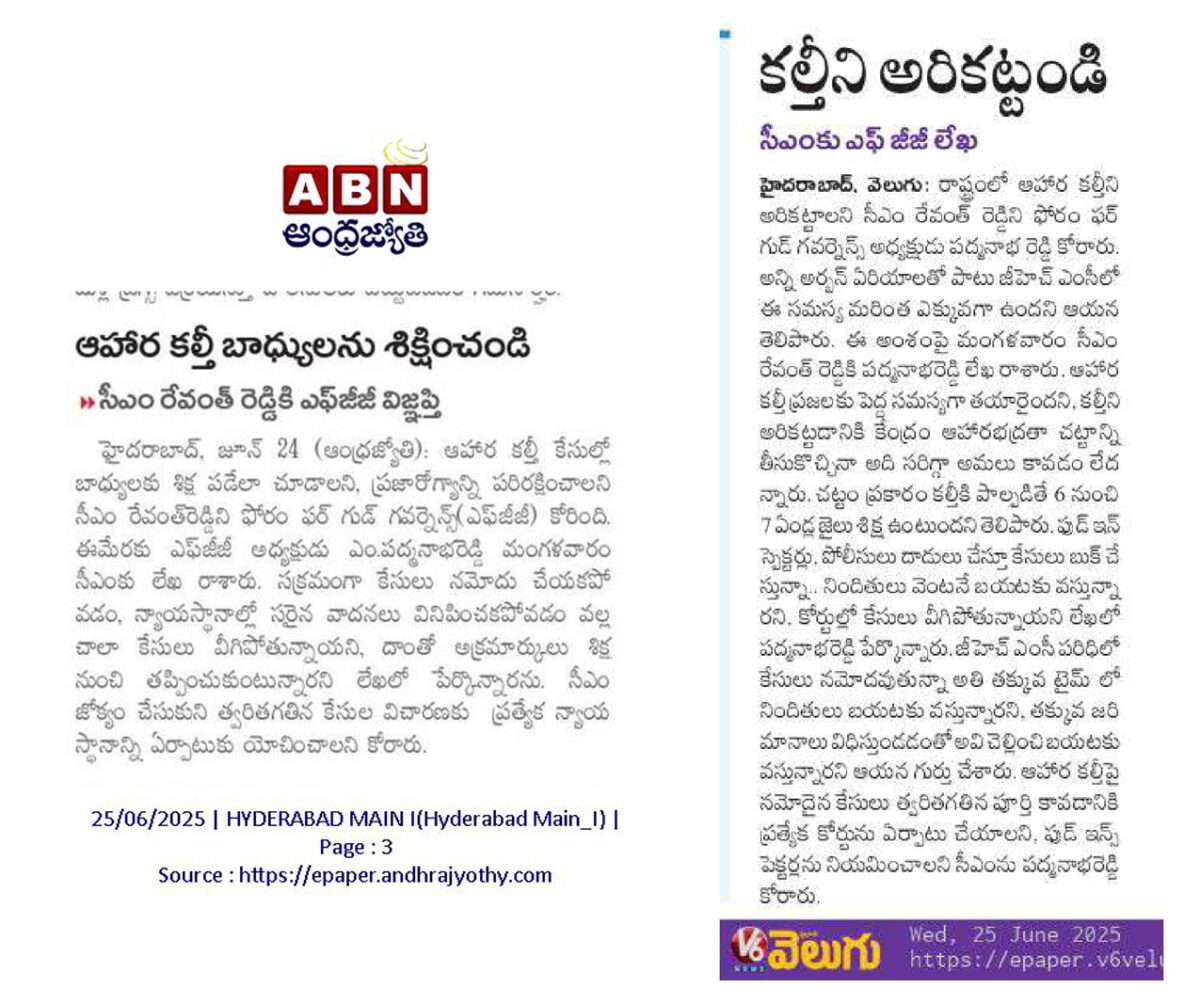
- To the Chief Minister regarding Prosecution of cases. Cases not properly pursued in the Court leading to acquittal or let off with minimum punishment. Request to order for review of Food Adulteration cases – on 24-6-2025
- To the Commissioner, School Education regarding School management demanding advance term fee for issue of T.C. as per a newspaper report request to inquire. – on 26-6-2025
FGG submitted following RTI letters to various departments in the month of JULY 2025
- To the PIO, O/o Commissioner, I & PR department regarding Advertisements – on 2-6-2025
- To the PIO, O/o Chief Planning Officer regarding C.D.P. funds – on 16-6-2025
- To the PIO. O/o Commissioner, School Education regarding Best Available School Schemes – on 26-6-2025
- To the PIO, O/o Commissioner School Education, regarding Aashram Patasalas – on 26-6-2025
- To the PIO, O/o District Forest Officer, Nizamabad regarding PODU – on 27-6-2025
- To the PIO, O/o Commissioner, Tribal Welfare department regarding PODU – on 27-6-2025
- To the PIO, O/o District Forest Officer, Kamareddy regarding PODU – on 27-6-2025
- To the PIO, O/o District Forest Officer, Bhadradri Kothagudem regarding PODU – on 27-6-2025
- To the PIO, O/o Commissioner, I & PR department regarding Magazine – on 30-6-2025
- To the PIO, O/o Chief Planning Officer, Nalgonda regarding request for further information on MPLADS – on 30-6-2025
FGG TIMES
M. Padmanabha Reddy I.F.S.(R) (President)