

FGG TIMES
సుపరిపాలనే ధ్యేయంగా
Editor: T. Vivek, Associate Editor: Prof. Raghuram Rao Akkinepally
Vol. No. I | Issue No. 1 | Monthly News Letter | January 2025
About us
Most of us are convinced that State is a result of social contract meant to address issues of the citizen and society. However, the State has failed to provide us with acceptable standards of governance because of opportunistic, motivated or on occasions, even reckless behaviour on the part of the political executive and indifference or irresponsibility or convenience on the part of the public servants. Many of us are distressed and some of us are even angry at the state of affairs but do not know how to go about mending matters. Almost all of us agree that unless the widespread frustration is contained and our energies channelled into a people’s movement, to stem the decline. there is every chance that subversive forces would overtake, leaving us with a polity that will have all the trappings of democracy but not its spirit.
To transform the frustrations of people into a corrective movement, we need an organization, and a well articulated agenda for meaningful action. Forum for Good Governance (FGG) seeks to provide this. The Forum is a not-for-profit, non-political organization and seeks to provide a platform for all well meaning, public-spirited citizens to come together, voice their concerns and agitate for their resolution.
The Forum believes that given a direction, our people have the capacity to overcome the problems posed by a self-serving and corrupt bureaucracy, a judiciary that seems to thrive in its autonomy, but does not want any accountability and a political class that has all the cleverness to win elections, but not the wisdom to lead! Pro-active people’s movements only can ensure good governance and people oriented polity.
Forum’s Objectives
For securing good governance at all levels, the Forum seeks to :
– Resist the State abdicating its primary responsibility in providing good quality education and health Services for all.
– Build public opinion for electoral reforms which are overdue.
– Work for establishing a politically neutral police force accountable to the community.
– Strive for enabling various constitutional and autonomous institutions of the State to function effectively.
– Promote awareness of the citizens’ rights in relation to institutions of the State.
– Enable people to resist corrupt practices in administration.
– Campaign for the much-needed decentralization and reforms in administration.
– Bring about systemic improvements that would make for transparency in administration and
– Struggle for legal and judicial reforms that would ensure quick and affordable justice.
Activities
– Keeping vigilance over all the institutions of governance.
– Exposing corruption in administration and recommending ways to check it.
– Educating people to make eff active use of the right to information.
– Promoting debate, discussion and mobilize public opinion for reforms in governance and polity.
– Educating and organizing elected representatives for empowerment of both Municipal and Panchayati Raj bodies as laid down in the constitution.
– Bringing the issues bearing on environment into focus.
– Mobilizing public opinion on all issues bearing on public interest.
– Coordinating with civil society organizations working for similar objectives.
– Acting as resource centre for grass-roots organizations with similar objectives.
– Create awareness among voters not to sell their vote for liquor or money.
Our Journey
One of the critical challenges facing our nation today is the lack of internal democracy within political parties. Present political parties operate without internal democratic frameworks, which directly affects their ability to govern the country in democratic ways. However, in the face of these challenges, civil society organizations have stepped up to play a vital role in holding the government accountable and promoting democratic values. Still, many citizens have lost faith in the judiciary as cases get delayed and justice is often denied. In response to this environment, a group of concerned retired civil servants, judges, and social activists formed the Forum for Good Governance on October 19, 2009.
The forum was founded by several eminent leaders, including:
1. Late Justice Reddappa Reddy – Retired High Court Judge of Andhra Pradesh, who served as the President of FGG.
2. Late M. V. Krishna Reddy – Philanthropist and Vice President.
3. Dr. Rao Chelikani – Social activist and Vice President.
4. M. Padmanabha Reddy – Retired IFS Officer, Secretary.
5. S. Srinivas Reddy – Director of APSA, Joint Secretary.
6. Late Dr. D. Karunakar Reddy – Retired Medical Officer, Treasurer.
7. C. Anjaneya Reddy – Retired IPS Officer, Executive Member.
8. J.V. Sharma – Retired IFS Officer, Executive Member.
9. Late L. Lohith Reddy – Social Activist, Executive Member.
10. L. Krishna Bhoopal Rao – Retired IFS Officer, Executive Member.
11. A. V. Narayana – Retired IPS Officer, Executive Member.
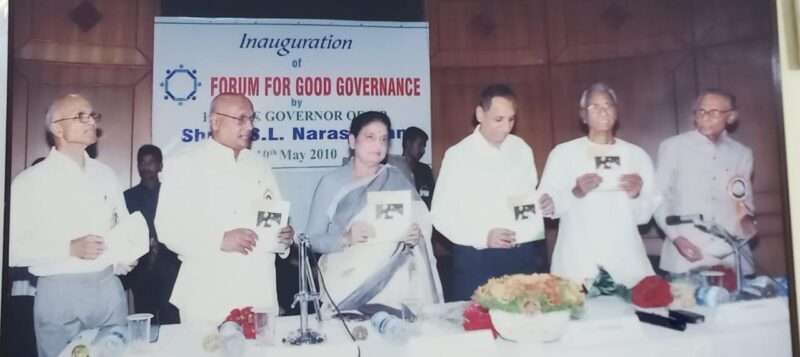
Inauguration of Forum For Good Governance in October 2009
M. Padmanabha Reddy I.F.S. (R), C. Anjaneya Reddy I.P.S. (R), V.S. Rama Devi Former Governor of Tamilnadu, H.E.H The Governor of Andhra Pradesh E.S.L. Narasimhan, A. Lakshmana Rao Former Chief Justice of Allahabad High Court, D. Reddappa Reddy Former Judge of High Court
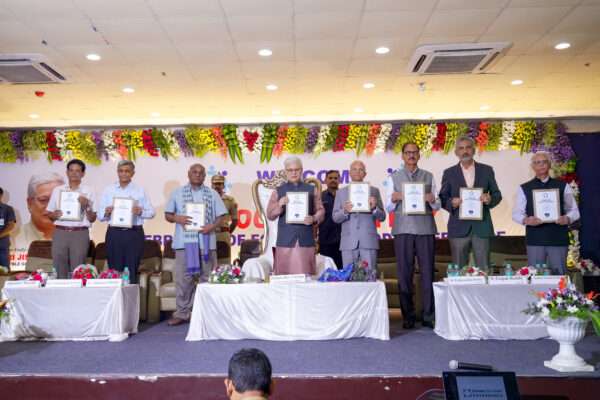
15 Years Foundation day Celebration of Forum For Good Governance in October 2024
A. Murali I.A.S (R), Dr Jaya Prakash Narayana I.A.S (R), C. Anjaneya Reddy I.P.S.(R), H.E.H The Governer Jishnu Dev Varma, M. Padmanabha Reddy I.F.S (R), S. Gopal Reddy I.P.S (R), Soma Srinivas Reddy FGG (Secretary), T. Vivek Former Member, TGPSC
Forum for Good Governance was chosen to reflect the organization’s mission of promoting transparency, accountability, and ethical leadership in government institutions. & Good Governance & emphasizes responsible, fair, and effective administration that prioritizes citizens & welfare and ensures justice for all.
In Focus
Free or Freedom?
Welfare and democracy go hand in hand. The avowed objective of state is to provide succour to the deprived and the needy. However, government of the day is stretching itself beyond its means in utter disregard of the consequences. State governments are vying with each other in announcing what unmistakably look like ‘free’ in the name of welfare. These free schemes are invariably named after leaders of the past or present of respective political party in power in the state or the union government. To stave off any likely criticism they are semantically couched in cultural and emotive terms. The race for such schemes reaches its peak particularly about election time. At the time of writing this piece elections to local bodies in Telangana and to Delhi Assembly are on the anvil. Not surprisingly political parties in fray are competing with each other with what has popularly come to be known as ‘freebies’. In the race for offering freebies BJP which has been averse to the very idea of ‘revdi’ (free) too has yielded to the competitive ‘welfarism’ and gave up what many had understood it as an ideological abnegation. As a case in point, BJP announced 300 units of free power to Delhi voters over Aam Aadmi Party’s 200 free power units. There are many such extravagant ‘freebies’ across the states in the country which are implemented either partially are fully regardless of the consequences for the economy, fiscal prudence and development of the state and country. States such as Himachal Pradesh, Karnataka and Telangana which have made such impractical, unsustainable and financially unviable promises are struggling to keep the promises.
Given the narrow and short-term political gains such promises yield, it must be said that government of the day should act as a Trust and those who hold the reins of power must be reminded that they are mere trustees of public funds. Any recklessness on part of the government adversely impacts development in general, civic and social infrastructure in particular. Quality of citizen’s life becomes a casualty. Public money spent on unproductive schemes and not backed by fiscal prudence or not aimed at empowering the citizens nor creating social capital is bound to prove disastrous. The growing debt burden of states implementing such unproductive schemes should inform and nudge us to choose what we want. Countries which have followed the ‘free’ road have found themselves in a bottomless pit. Public utilities of such countries have been taken over by the lenders for loan default. Political sovereignty of such debt-ridden countries is anything but a fiction.
As the most populous nation brimming with demographic dividend we should make right choices; choices which offer a better quality of civic and social life and promise a better future. The time is now. As informed citizens we have a responsibility to create and spread this awareness. The hard fought and won freedom cannot be traded for a few freebies. It shall be our steely resolve to shun things that come which are not earned. After all how free can one be without freedom!!!!
-T.Vivek
(Former Member, Telangana State Public Service Commission)
సుపరిపాలనతో నిజమైన అభివృద్ధి సాధ్యం
ఫోరం ఫర్ గుడ్ గవర్నెన్స్ ని ప్రారంభించి 2024 అక్టోబర్ 19 నాటికి 15 సంవత్సరాలు పూర్తి అయ్యింది. చిత్తశుద్ధి, దీర్ఘకాల దృక్పథం, రాజీలేని పోరాటం, వాస్తవాల ఆధారంగా విషయాల పరిశోధన, సమగ్రంగా అధ్యయనం చేసి, పౌరసమాజం ఏవిధంగా మంచి మార్పుకి దోహదం చేయగలదు అని లోతుగా ఆలోచించి దానికి తగ్గట్టు ఫోరం కృషి చేస్తుంది.
ప్రజాస్వామ్యం నిలవాలి అంటే కేవలం ఎన్నికలు చాలవు. ప్రజలు పాలనలో భాగస్వాములు కావాలి. తమ ఉమ్మడిసేవలకు సంబంధించిన అంశాల మీద దృష్టిని పెట్టాలి. నిరంతరం జాగురూకులై ఉండాలి. స్థానికంగా ఎక్కడికక్కడమార్పుల కోసం నాంది పలకాలి. విస్తృతస్థాయిలో మార్పుల కోసం గొంతు విప్పి సంఘటితం కావాలి. సంఘటితంగా పరిజ్ఞానంతో మందిహితం కోసం గొంతు విప్పటం ప్రజాస్వామ్యంలో మార్పుకి మార్గం
రాజ్యాంగ రచనప్పుడు అంబేద్కర్ ఒక మాట స్పష్టంగా చెప్పారు. ఒక్కసారి మనకు ఓటు హక్కు వచ్చాక, రాజ్యంగహక్కులు లభించాక, పౌరసమాజం చేసే పోరాటాలు శాంతియుతంగా, చట్టబధ్దంగా, ఇతరుల స్వేచ్ఛకి ఏ రకమైన ఆటంకమూ లేని రీతిలో జరగాలి. అంతేగాని, వలసపాలన కాలంలోలోగా పరాయి వాళ్ళ మీద పోరాటం కోసం చేపట్టిన హర్తాళ్ళు, బంద్లు, రాస్తారోకోలు, రైల్రోకోలు, ప్రజాస్వామ్యానికి చేటు చేస్తాయి. ఈ ఆలోచనని పూర్తిగా ఆకళింపు చేసుకొని నిరంతరం ఆ లక్ష్యానికి కార్యక్రమాలు నడుపుతున్న సంస్థ ఫోరం ఫర్ గుడ్ గవర్నెన్స్.
సుపరిపాలన అంటే ఏమిటి ?
కేవలం స్వేచ్చాయుతంగా ఎన్నికలు జరిగి, నిజాయితీగా ఓట్లను లెక్కించి, నెగ్గినవాళ్ళు శాంతియుతంగా అధికారంలోకి వస్తే, అంతమాత్రం చేత అది పూర్ణ ప్రజాస్వామ్యం కాజాలదు. ప్రజాస్వామ్యానికి ఎన్నికలు, శాంతియుతంగా అధికార మార్పిడి అవసరం కానీ అవి చాలవు. నిజమైన ప్రజాస్వామ్యంలో పౌరుల స్వేచ్ఛ, ఇతరుల స్వేచ్ఛకు ఆటంకం కలగని రీతిలో విస్తరించాలి. అధికారం వికేంద్రీకృతమై పౌరులకు వీలైనంత చేరువగా, పారదర్శకంగా, ప్రజలకు అర్థమయ్యే రీతిలో నిర్ణయాలు జరగాలి. ఆ రకమైన పరిపాలనలో పౌరుల నిరంతర భాగస్వామ్యం ఉండాలి. అప్పుడే ప్రజలు వేసే ఓటుకి, పౌరుల కుటుంబాల భవిష్యత్తుకి మధ్య సంబంధం ఓటర్లకు అర్థమవుతుంది. అప్పుడే మనం కట్టే పన్నుకి, మనకు అందే సేవలకి మధ్య బంధం బలపడుతుంది. అప్పుడే అధికారం, జవాబుదారీతనం పూర్తిగా ఏకీకృతమవుతాయి. మన కేంద్రీకృత పరిపాలనలో ఈ లక్షణాలు చాలా తక్కువ. ఇక ఆధునికయుగంలో, అందునా ప్రజాస్వామ్యంలో చట్టబద్ధపాలన అత్యంత కీలకం. బడితె ఉన్నవాడిడే బర్రె అయినట్లయితే, అధికారం ఉన్నవారు ఏ శృంఖలాలు లేకుండా చట్టాన్ని చేతుల్లోకి తీసుకుంటుంటే, సంపన్నుడికి, బలవంతుడికి ఓ చట్టం, సామాన్యుడికి, బీదలకి మరో చట్టం అయినట్లయితే అది ప్రజాస్వామ్యం కాజాలదు. అలాంటి చట్టబద్ధ పాలనకి, మనం చాలా దూరంలో ఉన్నాం. అన్నిటినీ మించి ప్రజాస్వామ్యంలో పొరపాట్లను తేలిగ్గా సరిదిద్దుకునే ఏర్పాట్లు కావాలి. ఈ స్వయం దిద్దుబాటు శక్తి ప్రజాస్వామ్యానికి మూలం. నిరంకుశత్వానికి, ప్రజాస్వామ్యానికి మధ్య ఉన్న తేడా అదే.
మన ప్రజాస్వామ్యం ఏర్పడి 74 సంవత్సరాలు పూర్తయినా, మన జాతి నిర్మాతలు కలలుగన్న వ్యవస్థ ఇంకా రూపుదిద్దుకోలేదు. ఇప్పటివరకూ మనం సాధించిన విజయాలు గొప్పవి. దుర్భర దారిద్య్రం, అవిద్య, ప్రపంచంలో ఎక్కడా లేని రీతిలో అపారమైన వైవిధ్యం – కులం, మతం, ప్రాంతం, భాష వగైరా వీటన్నిటినీ అధిగమించి మనం స్వేచ్ఛని, దేశ ఐక్యతని, సమాజంలో శాంతిని కాపాడుకోగలిగాం. అలాగే మనలో ఎన్నికల్లో ఎన్ని అవకతవకలున్నా, స్వేచ్చగా ఓటేస్తున్నాం. శాంతియుతంగా ప్రభుత్వాన్ని మార్చుకోగలుగుతున్నాం. ఇన్ని భాషల మధ్య, సయోధ్యని సాధించటం గాని, వందలాది సంస్థానాలను
శాంతియుతంగా దేశంలో విలీనం చేయటంగానీ ప్రపంచ చరిత్రలోనే అపూర్వమైన విజయాలు. అయితే, ఈ దేశంలో ప్రతి బిడ్డకీ, పుట్టిన పుట్టుకతో నిమిత్తం లేకుండా, కులమతాలకు అతీతంగా అందరికీ సమానమైన స్వేచ్చలు ఉండాలంటే బీదరికాన్ని నిర్మూలించాలంటే, ప్రతి పౌరుడికి, మహిళకి ఆనందమయ జీవితాన్ని అందించాలంటే మన రాజకీయంలో, పరిపాలనలో, వ్యవస్థలో కీలకమైన మార్పులు కావాలి. ప్రతి ఎన్నికలో ప్రజలు ఓటు ద్వారా మార్పు కోసం తమ ఆకాంక్షను వ్యక్తం చేస్తున్నారు. కానీ జడత్వానికి అలవాటుపడిన రాజకీయ పార్టీలు, ప్రతినిధులు, పరిపాలనా యంత్రాంగం తీరు వల్ల ఆటగాళ్ళు మారుతున్నారు గాని ఆట నియమాలు మారటం లేదు.
రాజకీయ పార్టీల్లో అంతర్గత ప్రజాస్యామ్యం, డబ్బుతో, కులమతాలతో ఓటర్లని ప్రలోభపెట్టని విధానంలో సమర్థులని, ప్రజాసేవ తత్పరత గలవారిని నాయకత్వంలో కూర్చోబెట్టే ఎన్నికల వ్యవస్థ ఏర్పాటు, జవాబుదారీతనంతో కూడిన పూర్తిఅధికార వికేంద్రీకరణ, ప్రతి బిడ్డకీ డబ్బుతో నిమిత్తం లేకుండా అత్యున్నత ప్రమాణాల విద్య, ప్రతి కుటుంబానికీ సమర్థంగా అందే మంచి ప్రమాణాల ఆరోగ్యం, ప్రజలందరికీ సకాలంలో వేగంగా నిష్పాక్షికంగా న్యాయాన్ని అందించే వ్యవస్థ, చట్టబద్ధపాలన, శరవేగంగా మారుతున్న ప్రపంచంలో వచ్చే తరాల భవిష్యత్తుకి భరోసా ఇచ్చే విధానాల రూపకల్పన, అమలు – ఇవన్నీ మన ముందున్న పెను సవాళ్ళు.
విజ్ఞత గల పౌరులంతా ఆలోచించినప్పుడే సంఘటితంగా గొంతు విప్పినప్పుడే రాగద్వేషాలకి, ఈసునసూయలకి దూరంగా దూరదృష్టితో ఆలోచించినప్పుడే, నిరంతర జాగురూకత ద్వారానే ప్రజాస్వామ్య ఫలాలను అందుకోగలం. అందుకే, ఫోరం ఫర్ గుడ్ గవర్నెన్స్ వంటి సంస్థలు వందలాదిగా వేళ్ళూనుకోవాలి. భవిష్యత్తు పట్ల విశ్వాసంతో సమాజం పట్ల మమకారంతో, మంది హితం కోసం నిరంతరం కృషి చేయాలి.
ఒక వ్యవస్థలో మార్పులు మనం కోరుకున్నంత వేగంగా రాకపోవచ్చు. కానీ పౌరులకి అవగాహన పెరిగినప్పుడు, అనుభవం ద్వార ఎటువంటి మార్పులు ఎందుకు అవసరమో అర్థమైనప్పుడు ఆ మార్పులు అనివార్యంగా వస్తాయి. గతంలో ఏ తరంలోనూ చూడని అద్భుత సాంకేతిక పరిజ్ఞానం ఈ వేళ మనందరికీ అందుబాటులో ఉంది. ఓ వంక గతానుభవాన్ని దృష్టిలో ఉంచుకొని తేవలసిన మార్పుల కోసం పక్షపాతాలకు అతీతంగా పోరాడి ఆ మార్పుని సాధించటం, మరోవైపున నిరంతర జాగురూకత ద్వార అధికారంలో ఉన్నవాళ్ళ మీద నిఘావేయటం పౌరసమాజం కీలక బాధ్యతలు.
ఇందులో భాగంగానే మా ఆలోచనలు అభిప్రాయాలు అలాగే పాలనలో జరిగే తప్పోప్పులను ప్రజలకు తెలుపడానికి ఫోరం ఫర్ గుడ్ గవర్నెన్స్ టైమ్స్ (TIMES) అనే న్యూస్ లెటరు మొదలుపెట్టినాము. దీనిని ప్రజాస్వామ్య వాదులందరూ సహృదయంతో స్వీకరించి వారి సలహాలు, సూచనలు అందించవలసినదిగా కోరుతున్నాము.
M. Padmanabha Reddy – Retired IFS Officer
Bulk Drug Manufacture in India – Problems & prescription

Addressing the 40th Foundation Day [January 5, 2025] of the Department of Scientific and Industrial Research at Dr Ambedkar International Centre here, Union Minister Dr. Jitendra Singh, Minister of State (Independent Charge) for Science and Technology, Earth Sciences (Independent Charge), MoS PMO, DoPT Personnel, Public Grievances and Pensions, Atomic Energy, Space, announced the indigenously developed drug “Paracetamol” , commonly used in pain, fever etc, by the Council of Scientific and Industrial Research (CSIR) which is affiliated to the Ministry of Science & Technology, Government of India. This may be considered as a creditable achievement in bulk drug manufacturing in our country.
The world relies on India’s pharma industry—the world’s third-largest by production volume—for its medicinal needs, with nearly 8 per cent of all pharma products by volume being produced in the country. In the past nine years, the Indian pharma industry has grown steadily at a CAGR of 9.43 per cent and its size could increase to $130 billion by 2030, predicts the Department of Pharmaceuticals, Government of India
Despite such strong numbers, India’s import dependence on China remains alarmingly high—as much as 90-100 per cent for some critical components like raw materials, excipients and organic solvents etc. that go into manufacturing high-selling drugs such as paracetamol, penicillin, ibuprofen and vitamin B12 etc. Another nuance is that Covid-19 has provided India a chance to revamp its pharma industry and switch from primarily producing generics to manufacturing higher-margin licensed drugs. Amid this backdrop, the Indian government had introduced several schemes, including PLI (Production Linked Incentive), to boost domestic manufacturing as a step towards AatmaNirbharta (self-reliance) by focusing on production of high-value pharmaceuticals and high-end medical devices.
Further a recent report in The Economic Times (January 16, 2025) indicates that Indian electronics, solar, and EV sectors face delays due to China’s export restrictions on key inputs and machinery, which may be a response to India’s curbs on Chinese investments. The same may reflect on pharma imports from China too in near future, which could potentially be a shocker to the sector.
Based on these tricky issues, it is essential to develop a robust policy on domestic manufacture of bulk drugs, intermediates and other essential requirements. The Government needs to address the key challenges faced by the bulk drug industry which include inadequate Government support and API focused infrastructure, complexity in getting approvals for setting up a manufacturing plant, slow pollution clearances, high cost and low availability of utilities, complex regulatory and tax structure and price control regime.
Further it can be suggested that the research institutions / laboratories involved in bulk drug synthesis may be encouraged to take up the challenge so as to come up with new / alternative methods. We have a good number of such institutions like Central Drug Research Institute (CDRI), Lucknow, National Chemical Laboratory (NCL), Pune, Indian Institute of Chemical Technology (IICT), Hyderabad, NIPERs and IITs etc.
A concerted effort form all these initiatives can bring about achieving the Athmanirbhar Bharat in short future.
Prof. Raghuram Rao Akkinepally,
Former Director, NIPER, Mohali, Punjab.
FGG IMPACT
FGG is a non-profit organization supported by its members and well-wishers. We invite you to join hands with us in strengthening the forum and working towards better governance. We especially call on the younger generation to contribute their energy and ideas to help meet the current challenges of governance.
Forum for Good Governance was constituted with well-articulated agenda for meaningful action. In our pursuit we used R.T.I. extensively, obtained information analyzed and submitted representations. In case of non-response from Government, Courts were approached by filing P.I.Ls. Voter awareness programmes,
exposing the criminal antecedents of contesting candidates for State Legislature and House of people were also taken up.
CITIZEN'S SPEAK
I am Samala Phani Kumar, a 2023 graduate student of RGUKT Basar. I am writing to request your urgent assistance concerning a critical issue I have encountered with RGUKT Basar. I have faced significant difficulties in obtaining responses to my Right to Information (RTI) applications submitted to the university. Despite numerous attempts to contact the university officials via email and phone, I have not received any acknowledgment or feedback.
The issues I am experiencing are as follows:
1. Non-Response to RTI Applications: I have submitted two RTI applications to RGUKT Basar, which remain unaddressed to date.
2. Absence of RTI Board: It has come to my attention that RGUKT Basar may not have a functioning RTI Board, which is essential for managing RTI queries and appeals. This absence has significantly hindered my ability to obtain a response.
3. No Concerned Authority: I have been unable to identify or reach any appointed authority at RGUKT Basar who can address my RTI concerns or handle appeals.
4. Central Information Commission: I have contacted the Central Information Commission, but they have indicated that the matter does not fall within their jurisdiction, leaving me without a clear course of action.
Sincerely,
Samala Phani Kumar
FGG NEWS
PRESENT EXECUTIVE BODY
M. Padmanabha Reddy, I.F.S.(R) S. Gopal Reddy, I.P.S.(R) Soma Srinivas Reddy, B.E P. Bhaskar Reddy N. Sridevi T. Vivek Former Member, TGPSC Capt. M. Suresh Reddy (Retd. IAF) C. Vishnuvardhan Reddy V. Arvind Reddy M. Venkata Rao, C.T.O.(R) P.K. Jha, I.F.S. (R) M. Nikhil Reddy, M.B.A.(F)
President Vice President Secretary Joint Secretary Treasurer Committee Member Committee Member Committee Member Committee Member Committee Member Committee Member Committee Member
FGG LIFE MEMBERS
1. Anugu Laxman 2. Avinash Malviya 3. S. Balaji 4. N. Bhanu Kiran 5. M. Buchaiah 6. G. Dhanpal Reddy 7. T. Gopal Rao 8. J. Govardhan Reddy 9. Ch. Hanmantha Reddy 10. P. Hemanth Kumar Yadav 11. K. Jitender Reddy 12. Kakarlapudi Raju 13. Dr. Kanthala Madhusudhan Reddy 14. L. Karunakar Reddy 15. B. Keshava Rao 16. Y. Kiran 17. Kovvru Ramulu 18. A. Krishna Reddy 19. Dr. K. Krishna Reddy 20. L. Lakshmi Narayana 21. Dr. K. Laxma Reddy 22. Madhu K Reddy 23. Dr. M. Madhusudhan Reddy 24. A. Mahender 25. P. Maheswar Reddy 26. T. Mallesh 27. T. Mallikarjuna Reddy 28. B. Manmadha Reddy 29. M. Manmohan Reddy 30. C.S. Manoranjan Raj 31. Mantosh Mandal 32. Dr. Mrs. K. Meera Reddy 33. Dr. P. Mohan Rao 34. A. Nagendra 35. Y. Nageswara Rao 36. K. Narasimha Reddy 37. P.V. Narayan Reddy 38. A.V. Narayana 39. M. Narsi Reddy 40. Dr. M. Panduranga Rao 41. D. Panduranga Reddy 42. M. Parthasarathy 43. Pasham Vidhya 44. D. Prabhakar Reddy
45. Ch. D.V. Prasad
46. M.B.N.V.V. Prasad
47. V.S. Prasad Sastry
48. Dr. S. Pratap Reddy
49. GR. Purushotham
50. G. Radha Krishna
51. Prof. Raghuram Rao Akkinepally.
52. D. Raja Reddy
53. C. Rajender Reddy
54. Dr. N. Ram Reddy
55. E. Ram Reddy
56. Prof. Dr. B. Ramana Naik
57. P. Ramgopal Reddy
58. Lt. Col. V.S. Rao
59. Rasheeda Thabassum
60. S. Ravi Krishna Swami
61. V. Ravinder Reddy
62. S. Ravindranath
63. L.N. Reddy
64. Prof. O.R. Reddy
65. D. Satish Reddy
66. S. Satyam Reddy
67. Dr. I. Satyanarayana
68. Dr. D. Shanker
69. G. Shyam Prasad
70. N.S. Sree Ramulu
71. Sri Rekha
72. M. Srinivas
73. C. Srinivas Rao
74. B.S. Srinivasan
75. N. Surender Babu
76. M. Surender Singh
77. Syed Rafi
78. Prof. T. Tirupati Rao
79. Upender Reddy
80. Dr. N. Varshith Reddy
81. G. Venkat Reddy
82. Dr. C. Vijaya Kumar Reddy
83. Dr. Vuppunutula Muralidhar Reddy
84. V.N. Yadagiri
85. E. Yesudass
FGG TIMES
M. Padmanabha Reddy I.F.S.(R) (President)