FGG TIMES
సుపరిపాలనే ధ్యేయంగా
Vol. No. I | Issue No. 12 | Monthly News Letter | December 2025
IN FOCUS
Positing the voter in unanimous poll
By the time the reader gets to see this article the first phase of Gram Panchayat Sarpanch elections would have almost arrived. Typically elections entail participation of three parties to the process – the voter, candidate and the agency conducting it with voter placed centre-stage. Elections at the village level are constitutionally mandated taking democracy to the grass-roots. Over the years village level elections have gained salience and in some cases disproportion to the size of the village and the number of voters presumably due to proximity to urban areas and their potential to exert economic influence in terms of employment opportunities and development potential. In other cases rivalry among political parties and their cadres at village level make elections hotly contested notwithstanding the fact that Sarpanch elections are a non-party affair.
Over the years the process of electing a candidate from among the contestants has undergone genetic mutation leaving the voter out of the entire process. Contesting candidates have adopted a convergence and collusive model or in some cases coercive model to ‘achieve’ consensus. One often hears a jarring expression ‘auctioning’ of Sarpanch post robbing the voter his right to participate and exercise his choice to elect his representative, a subversion of election process and negation of electoral democracy. As if to lend legitimacy to this devious process, which is bereft of sanctity, governments have been offering monetary incentives to such villages. Inasmuch as such auctioning and the resultant unanimous election eliminates the key player – the voter – the entire process of election seems like a charade. What is worrisome is that such unanimous elections are on the rise and there seems to be a new found zeal in village level elections. One may not oppose unanimous election per se provided it is transparent and an informal consensus prevails in the village. But the harsh reality is that the voter is largely is missing in the picture.
As if to remedy the situation and in a knee-jerk response to apply brakes to the growing tendency the State Election Commission (SEC) has put in place certain procedure. In a circular issued by the Commission, Monitoring Cells are tasked to check auctions, inducements, coercions and intimidations and such practices which vitiate free and fair elections as envisaged under section 211 of the Panchayat Raj Act 2018. The procedure entails that Returning Officer shall obtain a Declaration Form from withdrawing candidate confirming his withdrawal is voluntary and free from undue influences. The District Election Officer (Collector) based on the report of Monitoring Cell shall issue ‘Clearance’ / ‘No Ojection’ on the same day of withdrawal. In doing what it intends to do the SEC seems to fast-track the process of ‘Unanimous election’ ostensibly to meet the requirement under Rule 15 of the PR Act which only says that the result shall be declared without ‘unreasonable delay’. One can only surmise compulsions of the Commission in specifying ‘same day’ time limit.
There is no denying that electoral democracy has taken roots in our country. Voters particularly at the village and sub-urban level turn out in good numbers and display a great deal of enthusiasm to participate in elections. However, when contesting candidates converge, collude or coerce others and achieve consensus it has the effect of eliminating the key player, the voter, from the process. The disconnect by no stretch of reason can be accepted and approved as representative democracy. Even as we wish unanimous election as an ideal form of election for a variety of reasons, the process must in some form reckon the average voter. It may be useful to explore convening ‘Gram Sabha’ to ratify the election of ‘Unanimous candidate’ as an option to bring the average voter into the process to lend a veneer of democracy to the electoral process. Should the procedure warrant amendment to the Act or Rules one should not shy away from doing so to serve the cause of democracy in letter and spirit.
Are we inclined?
T.Vivek
(E.C.Member FGG &Former Member TSPSC).
కేసుల ముసుగులో చట్టాల దుర్వినియోగం
షెడ్యూల్డ్ కులాలు లేదా షెడ్యూల్డ్ తెగలకు చెందిన వారిని ఆ కులాలు లేదా ఆ తెగలకు చెందని వారు కులం పేరిట ఉద్దేశ పూర్వకంగా అవమానించడం, బెదిరించడం లేదా దూషించినట్లయితే షెడ్యూల్డ్ కులాలు, షెడ్యూల్డ్ తెగల (అత్యాచారాల నిరోధక ) చట్టం, 1989 ప్రకారం వారికి వ్యతిరేకంగా సెషన్స్ జడ్జి హోదాతో కూడిన ప్రత్యేక న్యాయస్థానం చట్టపరమైన చర్యలు చేపట్టి విచారణ చేస్తుంది. బాధితుల తరపున వాదించటానికి కనీసంగా న్యాయవాదిగా ఏడు సంవత్సరాల అనుభవమున్న వ్యక్తి ప్రత్యేక పబ్లిక్ ప్రాసిక్యూటర్ ఉంటారు. పై కులాలు, తెగలపై జరిగే నేరాలను నిరోధించడానికి మరియు బాధితులకు ఉపశమనం మరియు పునరావాసం కల్పించడానికి మనం రాజ్యాంగం ఏర్పరచుకున్న నాలుగు దశాబ్దాల పిదప ఈ చట్టం తేవాలనే ఆలోచన ప్రభుత్వాలకు తట్టింది. ఈ చట్టం క్రింద నేర తీవ్రతను బట్టి నిందితుడికి ఆరు నెలల జైలు శిక్ష నుండి జీవిత ఖైదు మరియు జరిమానా వరకు విధించే ఆస్కారముంది. కేసు విచారణ ప్రక్రియ పెండింగు లో ఉండగానే నిందితుడి చర, స్థిరాస్తిని జప్తు చేసి, తుది తీర్పులో నిందితుడిపై విధించిన జరిమానా లేదా పరిహారాన్ని ఆ జప్తు చేసిన ఆస్తి నుండి సులభంగా రాబట్టుకునే అధికారం ప్రత్యేక సెషన్స్ కోర్టుకు ఉంది.
ఈ కులదూషణ లేదా అవమానం బాహాటంగా, నలుగురిలో జరిగి ఉంటేనే, అంటే ప్రత్యక్ష సాక్షుల సమక్షంలో జరిగినట్లయితేనే, ఆ నేరం ఈ చట్టం పరిధిలోకి వస్తుందని సుప్రీం కోర్టు నిర్ద్వందంగా పేర్కొంది. నాలుగు గోడల మధ్య లేదా ఎటువంటి కుల ప్రస్తావన లేకుండా దూషిస్తే ఆ నేరం ఈ చట్టం పరిధిలోకి కాకుండా ఇతర చట్టాల పరిధిలోకి వస్తుంది. ఎస్సీ కులం వారు ఎస్టీ తెగ వారిని దూషించినా లేదా ఎస్టీ వారు ఎస్సీ వారిని దూషించినా ఈ చట్టం వర్తించదు; సాధారణ ప్రజానీకానికి వర్తించే చట్టాలే వర్తిస్తాయి. ఈ చట్టం అమలుకై ప్రతి జిల్లా కేంద్రంలో ఒక ప్రత్యేక న్యాయస్థానం నెలకొల్పబడింది.
ఇదిలా ఉండగా ఈ మధ్య కాలంలో ఈ చట్టం విపరీతంగా దుర్వినియోగం అవుతుందని ఉన్నత న్యాయస్థానాలు తమ తీర్పుల ద్వారా పేర్కొన్న సందర్భాలు అసంఖ్యాకం. ప్రభుత్వాలు అందించే ఉపశమనం లేదా ఆర్ధిక పరిహారం కొరకు తప్పుడు ఫిర్యాదులు దాఖలు చేసి ప్రభుత్వం నుండి వేల రూపాయలు పరిహారం పొందిన వారిపై జరిమానాలు విధించి, తీసుకున్న పరిహారం తిరిగి చెల్లించాలని ఆదేశాలు జారీ చేసిన ఉదంతాలు లేకపోలేదు. తమ ప్రయోజనం కోసం ప్రభుత్వాలపై ఒత్తిడి తెచ్చి మోసపూరితంగా ఆర్ధిక ప్రయోజనం పొందే దురుద్దేశంతో ఈ చట్టాన్ని ఒక సాధనంగా ఉపయోగించ లేరని కర్ణాటక హైకోర్టు పేర్కొంది. కేవలం ప్రథమ సమాచార నివేదిక దాఖలు చేసినంత మాత్రాన బాధితుడు/బాధితురాలికి పరిహారం చెల్లించరాదని, కేసులో నిందితుడు శిక్షింపబడిన తర్వాతే పరిహారం చెల్లించాలని అలహాబాద్ హైకోర్టు తీర్పిచ్చింది. మరో కేసులో చట్టాన్ని దుర్వినియోగం చేశారని ఢిల్లీ హైకోర్టు ఫిర్యాదు దారుపై 20 లక్షల రూపాయలు జరిమానా విధించింది . అందుకున్న పరిహారాన్ని తిరిగి చెల్లించాల్సిందిగా తప్పుడు ఫిర్యాదు చేసిన బాధితుడిని ఢిల్లీ హైకోర్టు ఆదేశించింది. ఎస్సీ, ఎస్టీ చట్టం క్రింద ఆరోపణలు ఎదుర్కొంటున్న నిందితుడు మరియు బాధితుడు ఒక కేసులో రాజీ చేసుకున్నారు; తద్వారా ప్రథమ సమాచార నివేదికను కొట్టివేసిన ఢిల్లీ హైకోర్టు బాధితుడు ప్రభుత్వం నుండి చట్టం క్రింద అందుకున్న పరిహారాన్ని తిరిగి ప్రభుత్వానికి చెల్లించాలని ఆదేశించింది. ప్రభుత్వం అందించే పరిహారం రాబట్టుకునే దురుద్దేశంతో అబద్దపు ఫిర్యాదు దాఖలు చేసిందని పేర్కొంటూ లక్నోలోని ఒక ప్రత్యేక న్యాయస్థానం ఒక మహిళకు మూడున్నర సంవత్సరాల జైలు శిక్ష విధించింది. బాధితుడి తండ్రి ఇతర కులానికి చెంది, కేవలం తల్లి మాత్రమే ఎస్సీ కులానికి చెందినంత మాత్రాన, నిందితుడిపై కులదూషణ ఆరోపణ చెల్లదని కర్ణాటక హైకోర్టు పేర్కొంది. కుల ప్రాతిపదికన నేరం జరుగనప్పుడు భారత శిక్షాస్మృతిలోని సంబంధిత సెక్షన్ల క్రింద మాత్రమే చార్జిషీట్ దాఖలు చేయాలని దర్యాప్తు అధికారులకు సూచనలిస్తూ సుప్రీంకోర్టు, ఇతర హైకోర్టులు తమ తీర్పుల్లో పలుమార్లు పేర్కొన్నాయి. కులం పేరుతో బాధితులైన వారికి సరియైన న్యాయం, ఉపశమనం, పరిహారం అందజేయాలనే ఉద్దేశంతో ఈ చట్టం అమలులోకి తీసుకరాబడింది కానీ కుల ప్రాతిపదిక లేని ఫిర్యాదులు, చట్టాన్ని దుర్వినియోగపరచే వారి కోసం ఎటువంటి ప్రయోజనాలు కల్పించలేదు. ఒక ప్రజా ప్రయోజన వ్యాజ్యం పరిష్కరిస్తూ, ప్రతి బాధ్యతా రహితమైన మరియు అర్థరహిత వాదనలో ఒక అమాయక బాధితుడు ఉంటాడని, అతని వైపు నుండి ఎటువంటి తప్పు లేకుండా చాలా కాలం ఆందోళన, భయం, అశాంతిని అనుభవిస్తాడని చారు కిషోర్ మెహతా వర్సెస్ ప్రకాష్ పటేల్ అనే కేసులో సుప్రీంకోర్టు ఆవేదన వ్యక్తం చేసింది.
షెడ్యూల్డ్ కులాలు, షెడ్యూల్డ్ తెగల (అత్యాచారాల నిరోధక ) చట్టాన్ని, భారత శిక్షాస్మృతి లోని సెక్షన్ 498Aని మరియు ప్రజా ప్రయోజన వ్యాజ్యం (PIL) క్రింద కల్పించబడిన అవకాశాన్ని కొతమంది తమ స్వప్రయోజనాల కోసం దుర్వినియోగం చేస్తూ న్యాయస్థానాలను ఒక సాధనంగా వాడుకునేందుకు ప్రయత్నిస్తున్నారనటంలో ఎటువంటి సందేహం లేదు. ప్రజా ప్రయోజన వ్యాజ్యమంటూ దాఖలు చేసిన రిట్ పీటీషన్లలో రాజకీయం తప్ప ఎటువంటి ప్రజా ప్రయోజనం లేదని పేర్కొంటూ భారీ జరిమానా విధించిన కేసులు లేకోపోలేదు. ప్రభుత్వం అందించే పరిహారాన్ని ఆశించి పైన పేర్కొన్న మొదటి రకం అబద్దపు కేసులు, వ్యక్తిగత కక్షలు తీర్చుకోడానికి రెండవ రకం కేసులు, రాజకీయ కక్షలు తీర్చుకోడానికి మూడో రకం కేసుల విషయంలో అంతిమంగా దుర్వినియోగాన్ని నివారించడానికి, అమాయకుల విశ్వాసాన్ని కాపాడటానికి న్యాయస్థానాలు ఎప్పటికప్పుడు నిర్దిష్ట ఆదేశాలు జారీ చేస్తున్నాయి.
తడకమళ్ళ మురళీధర్ ,
Retired District Judge,
Polls and Promises
As another election season approaches, India once again witnesses the familiar churn of promises, spending, and political maneuvering. Polls bring with them a sudden surge of attention, activity and theatrics. Yet beneath the surface, a deeper concern persists: elections are becoming less about public service and more about securing power at any cost.
Campaigns today are marked by extravagant expenditure. From door-to-door distribution of inducements to the circulation of liquor and cash, the emphasis often shifts from policies to persuasion. In some constituencies, allegations of syndicate-style dealings and coordinated pressure to withdraw nominations only reinforce the public perception that elections are being steered by money and manipulation rather than merit.
Once the results are declared, the contrast is striking. Leaders who were highly visible during the campaign quickly become inaccessible. Security layers grow thicker as public interaction becomes minimal. Promises made with great confidence on the campaign trail fade into silence. To avoid scrutiny over unfulfilled commitments, elected representatives often distance themselves from the very people they pledged to serve.
A troubling mindset takes root: the belief that a seat has been “bought,” and therefore the priority becomes recovering expenses and accumulating wealth. Public funds, commissions, and welfare schemes turn into opportunities for profit, not instruments of development. Instead of functioning as public representatives, many behave as if they are public rivals.
Five years pass, and the cycle begins anew. Old failures are explained away, fresh promises are scripted, and elaborate narratives are woven to regain trust. The more convincingly a candidate promises, the greater the chance of securing another term. The electorate is left to choose between promises that may never materialize and leaders who have mastered the art of political reinvention.
The pattern is clear: elections have become periodic rituals where promises are abundant, accountability is scarce, and public welfare often takes a back seat.
India’s electoral ecosystem demands serious reform—greater transparency in funding, stronger enforcement of electoral laws, and a renewed emphasis on ethical leadership. Democracy cannot thrive on transactions. It must rest on trust, service, and responsibility. India deserves leaders who view public office not as an investment to be recovered, but as a duty to be fulfilled. Only when this shift occurs will polls restore their purpose and promises regain their meaning.
– Syed Rafi (EC Member, FGG)
స్థానిక అవసరాలకు ఈ ఎన్నికలే పరిష్కారం !
మన దేశంలో కేంద్రప్రభుత్వం, రాష్ట్ర ప్రభుత్వాలు ఉన్నా స్థానిక అవసరాలు గుర్తించి ఆ సమస్యలకు పరిష్కారం కనుగొనే అవగాహన, కానీ సమయం గానీ వాటికి ఉండవు. స్థానిక సమస్యలు ఒక ప్రాంతంలో ఒక్కో రకంగా ఉంటాయి. ఈ స్థానిక సమస్యలను, అవసరాలను తీర్చడంలో స్థానిక ప్రభుత్వాలు ప్రముఖమైన పాత్రను పోషిస్తాయి. ప్రజాస్వామ్య విజయం అధికార వికేంద్రీకరణపై ఆధారపడి ఉంటుంది.
అధికార వికేంద్రీకరణకు స్థానిక ప్రభుత్వాలు ఉపకరిస్తాయి. మనదేశంలోని స్థానిక సంస్థలను ప్రధానంగా రెండురకాలుగా విభజించవచ్చు. అవి గ్రామీణ స్థానిక ప్రభుత్వాలు, పట్టణ, నగర స్ధానిక ప్రభుత్వాలు.. మూడంచెల గ్రామ పంచాయితీ వ్యవస్థ గ్రామీణ స్థానిక ప్రభుత్వ సంస్థలకు ఉదాహరణ. పట్టణాలలో మునిసిపాలిటీలు, నగరాల్లోని నగరపాలక సంస్థలు పట్టణాలు ఈ వ్యవస్థ క్రిందికి వస్తాయి.
పంచాయితీరాజ్ వ్యవస్థ పూర్వాపరాలు :
గ్రామ పంచాయితీలు, పంచాయితీ సమితులు, జిల్లా పరిషత్లతో కూడిన మూడంచెల గ్రామీణ స్థానిక ప్రభుత్వ సంస్థల వ్యవస్థను ఏర్పాటు చేయాలని కేంద్ర ప్రభుత్వం చేత నియమించబడిన బల్వంతరాయ్ మెహతా కమిటీ 1957 సిఫార్సు చేయడం జరిగింది. ఈ సిఫార్సులను అనుసరించి రాజస్థాన్ ప్రభుత్వం 1957 అక్టోబర్ 2న మొట్టమొదటగా పంచాయితీరాజ్ వ్యవస్థను ప్రవేశపెట్టింది. ఆ తర్వాత ఉమ్మడి ఆంధ్రపదేశ్ రాష్ట్రంలో 1959లో అక్టోబర్ 11వ తేదిన పంచాయితీరాజ్ వ్యవస్థను ప్రవేశపెట్టింది. ఆ తరువాత అన్ని రాష్ట్రాలు , కేంద్రపాలిత రాష్ట్రాలు పంచాయితీరాజ్ వ్యవస్థను ప్రవేశపెట్టాయి.
నేటికీ 95 కోట్లమంది గ్రామాల్లోనే :
1977లో అశోక్ మెహతా కమిటీ గ్రామపంచాయితీలో జిల్లా పరిషత్తులతో కూడిన రెండంచెల స్థానిక ప్రభుత్వాలను ఏర్పాటు చేయాలని సూచించింది. ఈ సిఫార్సులు అమలుకు నోచుకోలేదు. గ్రామ స్వరాజ్యాన్ని గ్రామ పంచాయితీల ద్వారా సాధించాలన్న జాతిపిత మహాత్మగాంధీ ఆశయం ఈనాడు నగరీకరణ పెరిగినప్పటికీ ఇంకా సుమారు 95 కోట్ల మంది భారతీయులు గ్రామాల్లో నివసిస్తున్నారు. వీరిలో సుమారు 45% మంది ప్రజలు వ్యవసాయం చేస్తున్నారు. ఈ కారణంగా గ్రామీణ ప్రభుత్వాలైన పంచాయితీరాజ్ వ్యవస్థకు ప్రాముఖ్యం ఉంది.
73వ రాజ్యాంగసవరణతో రాజ్యాంగ ప్రతిపత్తి :
పంచాయితీ రాజ్ అంశం రాజ్యాంగంలోని ఆదేశిక సూత్రాలలో చేర్చడం జరిగింది. ఆదేశిక సూత్రాలలోని అంశాలను ప్రభుత్వాలు విధిగా పాటించాలన్న నియమం లేదు. ఈ కారణంగా మనదేశంలో పంచాయితీరాజ్ వ్యవస్థ కొంత నిరాదరణకు గురైంది. 1992 సంవత్సరంలో అమలులోకి వచ్చిన 73వ రాజ్యాంగ సవరణ పంచాయితీరాజ్ సంస్థలకు రాజ్యాంగ ప్రతిపత్తిని కల్పించి జవసత్వాలను ఇచ్చింది. 73వ రాజ్యాంగ సవరణను అనుసరించి ప్రతి గ్రామపంచాయితీలో అనివార్యంగా గ్రామసభ సమావేశాలను సంవత్సరంలో కనీసం రెండుసార్లు నిర్వహించాలి. గ్రామంలోని ఓటర్లందరూ గ్రామసభలో సభ్యులు. గ్రామసభ, గ్రామస్థాయి శాసనసభ వలె పని చేయాలి. సంక్షేమ, అభివృద్ధ్ది కార్యక్రమాల లబ్ధిదారుల ఎంపికలో ఈ సభ ప్రధాన పాత్రను పోషిస్తుంది. అయితే, దురదృష్టవశాత్తు ఈ గ్రామసభ సమావేశాలు మొక్కుబడిగా మారాయి అన్న విమర్శ ఉంది.
అధికారులే “ స్థానిక” పాలకులు :
తెలంగాణ రాష్ట్రంలోని 12,769 గ్రామపంచాయితీలతో పాటు 539 మండల ప్రజా పరిషత్ల పాలక వర్గ గడువు 2024 ఫిబ్రవరి 1తో ముగిసినా స్థానిక సంస్థల్లో బీసీలకు 42% రిజర్వేషన్ అంశం పెండింగ్లో ఉన్న కారణంగా పంచాయితీ ఎన్నికల అంశం కొంత గందరగోళానికి గురైంది. పంచాయితీ రాజ్ వ్యవస్థకు ఎన్నికలు నిర్వహించని కారణంగా ఆ సంస్థలు పూర్తిగా అధికారాలు అధికారుల చేతుల్లోకి వెళ్ళాయి. ఈ కారణంగా గ్రామీణులు ప్రజా ఆరోగ్యం, త్రాగునీరు, పారిశుద్య సమస్యలతో సతమతం అవుతున్నారు. స్థానిక సంస్థలకు పాలక వర్గాలు లేకపోవడం వలన గత 20 నెలలుగా కేంద్రం నుండి రావాల్సిన రూ// 3,000 కోట్లు నిధులు ఆగిపోయాయి. దీంతో గ్రామీణ అభివృద్ధి నిధులు లేక సమస్యలు ఎదుర్కొంటోంది.
బీసీ రిజర్వేషన్ రహిత ఎన్నికలు :
తెలంగాణ హైకోర్టు 42% బీసీ రిజర్వేషన్పై తన తీర్పును వెలువరించింది. ఈ తీర్పు వల్ల కొత్త రిజర్వేషన్ విధానం అమలులోకి రాకపోవడంతో, రాబోయే స్ధానిక సంస్థల ఎన్నికలను పాత రిజర్వేషన్ ప్రకారం నిర్వహించాల్సిన పరిస్థితి ఏర్పడింది. ఇక మరో ముఖ్య విషయం పంచాయితీ ఎన్నికలు మార్చి నెలాఖరు కంటే ముందు నిర్వహించకపోతే, కేంద్ర ప్రభుత్వం నుంచి రావాల్సిన రూ// 3,000 కోట్ల నిధులు నిలిచిపోయే అవకాశం ఉంది. అంటే రాష్ట్రానికి లభించాల్సిన నిధులు వినియోగానికి అనర్హం కావడం వల్ల అభివృద్ధి కార్యక్రమాలకు తీవ్ర ఇబ్బందులు ఎదురయ్యే అవకాశం ఉంది. అందువల్ల రాష్ట్ర ప్రభుత్వం ఎన్నికల షెడ్యూల్ను త్వరితగతిన విడుదల చేసింది.
డా. పి. మోహన్రావు
ఫోరం ఫర్ గుడ్ గవర్నెన్స్ మెంబరు
Bharosa: A Pillar of Trust in the Fight Against Sexual Abuse
A Decade of Dedicated Service
“Children are the nation’s treasure.”
Such a beautiful saying — and a powerful reminder of what our children should mean to us. But what is today’s reality? Children are being victimised at every stage. Their innocence is stolen through child labour. Their purity is violated through the horrors of child sexual abuse. Their tender minds are overwhelmed by relentless screen addiction. Their childhood is distorted by exposure to unnecessary and harmful content long before they are ready. And whose duty is it to undo this damage, to lift this curse we have placed on our own children?
It is our responsibility — as a society, as adults, as guardians of the next generation.
In 2023, the National Crime Records Bureau (NCRB) data showed that at least 6,113 crimes against children were reported in Telangana — that works out to roughly 17 children becoming victims every single day. This marks a steep increase compared to 2017, when there were 3,580 cases; over six years (2017–2023), crimes against children in the state rose by about 71%. In 2023, offences registered under the Protection of Children from Sexual Offences Act (POCSO) — i.e. sexual crimes — and crimes involving kidnapping/abduction formed 84% of all crimes against children in Telangana.
Among POCSO victims in 2023, almost 99.8% were abused by someone familiar to them — family members, neighbours, employers or acquaintances, including online contacts. In 2024–25, Telangana reportedly led the country in child-labour rescues. Out of the total rescues across India, the highest number came from Telangana. Many of these children were found working in hazardous sectors: spas, auto-workshops, mechanical shops, poultry farms, and even in contexts involving prostitution, pornography, or sexual exploitation.
Given these grim statistics, there is an urgent need to address this issue with immediacy and care. In an effort to enhance child safety, several initiatives have been implemented across various cities. In 2016, the Hyderabad City Police, recognizing the importance of protecting the childhoods of younger generations and understanding the need for empathetic support for child victims of sexual abuse, introduced an innovative system for assisting such victims. This initiative is known as the Bharosa Centre.
To establish the centre, a society was initially formed under the Women and Child Welfare Department, with its secretary serving as Chairperson and key stakeholders as members.
What is Bharosa?
Bharosa,” meaning trust, confidence, or belief in Hindi and Telugu. It’s the name of a robust support mechanism established by the Hyderabad City Police to build trust within the system for victims of sexual abuse [1]. This initiative provides comprehensive, integrated services all under one roof, ensuring victims do not have to navigate multiple agencies during their recovery and pursuit of justice [1].
The “One-Stop Centre” consolidates essential services designed to ensure the victim’s safety, security, health, and future well-being. These services include:
- Police Services
- Prosecution Services
- Medical Services
- Psychological Services:Counselling and Therapy
- Rehabilitation Services:Includes victim compensation, assistance for education, skill development, and other support
- Referral Services
- Child Welfare Committee Sittings:Facilitating shelter and other necessary support
By co-locating all these critical services, the Bharosa Centre aims to protect vulnerable victims from the added trauma and risks associated with running “from pillar to post” to secure necessary support.
The Bharosa Centre operates through a coordinated staffing model that maximizes support for victims. This synergistic approach involves two distinct teams working in harmony: dedicated police personnel and professional staff recruited directly by the Bharosa Society.
This integrated system fosters seamless coordination between the teams, creating an efficient and supportive environment. Bharosa’s model minimizes re-traumatization by consolidating police, medical, and legal procedures so children need share their traumatic experiences only once with trained, sensitive professionals.
Bharosa stands as an effective model of a well-operated system, fulfilling its promise to provide trust, confidence, and belief to victims. A central administrator, present since the centre’s inception, has observed nearly 7,000 cases of sexual abuse involving victims of both genders.
The centre processes an average of 688 cases annually. While Bharosa initially handled domestic violence cases, they were later redirected to the Centres for Development and Empowerment of Women, allowing Bharosa to focus exclusively on its current mandate: cases of sexual abuse. This specialization ensures that all resources and expertise are dedicated to victims of sexual abuse, delivering on the centre’s core mission.
Based on this idea, Bharosa Centres were established across all police units in Telangana. Today, 29 centres provide comprehensive support to victims of sexual abuse. However, a few challenges persist:
Challenges of Bharosa:
Limited Resources & Trained Personnel: As Bharosa staff are recruited through the society and are not permanent employees, the centre faces disruptions in workflow whenever a staff member resigns or takes long leave (such as maternity leave).
Timeliness & Inter-agency Coordination: For the system to function effectively, seamless coordination among police, medical teams, forensic labs, Child Welfare Committees, social-work departments, and welfare offices is essential. Delays at any stage can re-traumatize the child or compromise evidence.
Victim Response:
Due to the social stigma surrounding sexual offences—combined with the fact that offenders are often close relatives or well-known individuals—victims are fearful and hesitant to disclose the truth. This often leads to repeated victimization and low reporting of offences. During trial, accused persons frequently attempt to influence the victim’s family, pressuring the victim to turn hostile. As a result, many cases end in acquittal.
“While continuous efforts are made by the state to reduce crime and ensure the welfare of women and children, it is ultimately up to us as a society to cultivate a responsible mindset and act ethically when such incidents occur.
Even with the hard work and legal support provided under initiatives like the Bharosa Support Centre, the conviction rate remains concerningly low, with fewer than 40 convictions secured per year. Out of nearly 500 cases registered annually under the Protection of Children from Sexual Offences (POCSO) Act, approximately 460 results in acquittal. These outcomes are frequently attributed to out-of-court settlements, and victims or their parents subsequently turning hostile during trial proceedings.”
Where are we erring? Is the fault in the system, or in our society? The numbers clearly show that society must act not only during moments of acute crisis but also afterwards—when continued responsibility, such as speaking the truth in a court of law, is essential.
While we appreciate the efforts of institutions like the Bharosa Centre and advocate for their replication across the state, there is an urgent need to educate society as a whole. We must learn to rise to the occasion, to offer the support that is required, and to ensure that every victim can find bharosa—trust and reassurance—within the community in which she lives.
Dr. Lavanya NJP
Deputy Commissioner of Police
Women and Child Safety Wing,
Hyderabad City Police
పంచాయితీ ఎలక్షన్లు -ఒక ప్రహాసనమా ?
ప్రజాస్వామ్యం పరిపుష్టం కావాలంటే అట్టడగునుండే ఆ వ్యవస్థ ఉపయోగాలను ప్రజలందరూ అర్థంచేసుకొని దానిలో భాగస్వాములవ్వాలని, గ్రామాలనుండే నాయకత్వ లక్షణాలను ప్రజలందరూ అలవారుకొని స్వయంపాలనా దిశలో మరలడానికే గ్రామ పంచాయతీ వ్యవస్థ పుట్టుకొచ్చింది. ఆ మాటకొస్తే ఇండియన్ సొసైటీస్ యాక్ట్, విద్యార్ధి సంఘాల ఎన్నికల ఉద్దేశమూ అదే. ప్రజలందరికీ స్వయంపాలనావాంఛ, శక్తియుక్తులు ఆదిలోనే అలవాడినప్పుడు పై స్థాయిల్లో ప్రజాపాలన అత్యంత సులభతరమవుతుంది. మరి అంతా గొప్ప యోచనతో ఉద్దేశింపబడిన స్వయం పాలన అట్టడుగు నుండే పరిహాసింపబడుతుంటే ఇక ప్రజారాజ్యం కుహనా వ్యవస్తే అవుతుంది.? ప్రస్తుతం పాఠశాలలు, కళాశాలల్లో యూనియన్లు లేవు. కొన్ని పెద్ద పెద్ద కార్మిక సంస్థల్లోకూడా యూనియన్ ఎలక్షన్లు నిషేదించారు.
ప్రస్తుతం జరగబోయే పంచాయతీ ఎలక్షన్లు కూడా ఏదో హై కోర్ట్ నిర్దేశించిందని, కేంద్ర ప్రభుత్వంనుండి వచ్చే నిధులు కోల్పోతామనే తప్ప, పంచాయతీ ఎలక్షన్లద్వారా గ్రామ ప్రజల్లో ప్రజాస్వామ్య విలువలు ప్రబలాలని, మహాత్మా గాంధి కలలుగన్న గ్రామస్వరాజ్యం వికసించాలని ఎక్కడా అనిపించదు.
ఏ కారణం మీద ఎలక్షన్లు జరిగినా అది ఎంతో కొంత మంచికే అన్నది నిర్వివాదం. చట్టంలో కొన్ని స్పష్ట్ఛమైన నిర్దేశాలుండబట్టే ఇదైనా సాధ్యమైంది. ఎన్నో రోజులబట్టి ఆలస్యమయినా చేతికందిన ఈ మహదవకాశాన్ని అద్భుతంగా వాడుకుంటే ఎంత బాగుంటుంది?
ఎవరూ పుట్టుకతోనే నాయకులు కాలేదు. గతంలో ఎంతోమంది గొప్ప గొప్ప నాయకులు గ్రామాలనుండే వచ్చారు. ఏమో, ఏ మూలనుండి గొప్ప వ్యక్తులు గొప్ప ఆలోచనలతో బయటకు రాబోతున్నారో ఎవరికీ తెలుసు? అబ్దుల్ కలాం, అన్నాహాజారే, ప్రస్తుత ప్రధాన మంత్రి నరేద్ర మోడీ, ముఖ్యమంత్రి రేవంతరెడ్డి గార్లు పట్టణాలనుండి వచ్చిన వారు కారే? వాళ్ళు ప్రముఖులవటానికి ముఖ్య కారణం వాళ్లలోనే నిప్పు ఉంది, నిప్పల్లో దూకే ధైర్యం ఉంది. అవి ఎంత ఉంటే వాళ్ళు అంత శక్తిశాలు లవుతారు. కావాల్సిందల్లా తమ శక్తి యుక్తులను మంచికే ఉపయోగించాలనే దృఢ సం కల్పమే. ప్రజాస్వామ్యం నిప్పు లాంటిది. దానితో ఆటలు ప్రమాదకరం. దాన్ని చులకన చేస్తే అదే మనని దగ్ధం చేస్తుంది. ప్రతిది మనమే అనుభవించి నేర్చుకోవక్కర లేదు. ఆలా నేర్చుకోవాలంటే జీవితకాలం సరిపోదు. ప్రపంచ దేశాల్లో జరిగే సంఘటనలు రోజూ చెబుతూనే వున్నాయి, మనం ఎంత అప్రమత్తంగా ఉండాలో.
ఇంతకు చెప్పేదేమిటంటే, గతంలో, ఇప్పుడు కూడ కొద్ది మంది నిష్ణాతులు వాళ్లకు ఏమాత్రం అవసరం లేకున్నా గ్రామభివృద్దే వాళ్ళ పరమార్థంగా గొప్ప వ్యాపాకాలను, ఆర్ధిక వనరులను పక్కన బెట్టి కేవలం గ్రామభివృద్ధికి తొడ్పాడాలనే సదుద్దేష్యంతో వ్యవస్థలో అతి చిన్న పదవి అయిన సర్పంచ్ పదవికి పోటీ పడుతున్నారు. అటువంటి వారు గతములో ఎన్నో సాధించారు, రేపూ సాధించి తీరుతారు. పంచాయతీ ఓటర్లు చేయాల్సిందల్లా వాళ్లకు వెన్నంటి నిలబడటమే, అదీ మన గ్రామభివృద్ధికే. గ్రామం బాగుంటేనే మనమూ బాగుంటాము. దేశమూ బాగుంటుంది. సరిఅయిన అభ్యర్థిని గుర్తిచటం చాలా సులభం. మనందరికీ దేవుడిచ్చిన జ్ఞానచక్షవును కొంంచెం తెరుస్తే చాలు. ఎవరైనా నేను సరిఅయిన అభ్యర్థిని గురించలేకపోయానంటే అది పూర్తిగా అబద్ధమే.
ఇక, ప్రభుత్వం వారు చేయవలసిన ఒకే ఒక్క ముఖ్యమైన పని ఏమిటంటే, ఎలాగూ పార్టీ రహితంగా ఎన్నికలు నిర్వహిస్తున్నప్పుడు, ఆ గ్రామ ప్రజలను ఎన్నికల ప్రక్రియను పూర్తిగా ఆస్వాదించనీయటమే. ఏకగ్రీవాలను అస్సలు ప్రోత్సాహించవద్దు. అవి చట్ట స్ఫూర్తికే వ్యతిరేకం. ఏకగ్రీవాలు, వేలంపాటలు, కిడ్నాపులవంటి వాటన్నిటి వెనుకాల ఉండేది అవినీతి, డబ్బుల పంపకమే. అక్కడ మొదలయ్యే డబ్బుల పంపకం అన్ని ప్రధాన ఎన్నికల్లో ప్రబలి తీరుతుంది. ఎన్నికలు అయిపోతాయి. కానీ అప్పుడు పుట్టిన వైషమ్యాలు మాత్రం ఎప్పటికీ సమసిపోవు. ఇoకొక అతి ముఖ్యమైన విషయం, ఎలాగైతే చట్ట సభల ఎన్నికల్లో నూరు శాతానికి దగ్గరగా వోటింగ్ జరిగినప్పుడు, ఆ ఎన్నికను ఆపేస్తారో, గ్రామపంచాయతీ ఎన్నికల్లో కూడా ఏకగ్రీవాలు, వేలంపాటలు, కిడ్నపులు బహిర్గతమయినప్పుడు ఆ ఎన్నికను మాత్రం ఆపివేసి, ఒక హై పవర్ కమిటీతో విచారణ జరుపుతామని ముందే హెచ్చరిస్తే, ఎవరైనా మళ్ళీ ఏకగ్రీవమనే మాట ఎత్తుతారా? ఏవిషయంలోనైనా కఠినంగా ఉండాల్సించోట కఠినంగానే ఉండాలి. కొన్ని గ్రామాలకు అధిక సహాయం చేయాలనే అనుకుంటే వేరే మార్గాలే లేవా? మార్పు, మార్పు అంటుంటాము, అది గ్రామాలనుండే మొదలు కాకూడదా? ప్రజలు మంచి పౌరులుగా ఉండాలంటే పాఠశాలల్లోనే బీజాలు పడాలి. మన ఎన్నికల ప్రక్రియ ఉపయోగకరంగా ఉండాలంటే పంచాయితీ ఎన్నికల్లోనే అది ప్రస్పుటమవ్వాలి.
దయచేసి అందరూ ఒక్కసారి ఆలోచించండి.
జి. శ్యామ్ ప్రసాద్
ఫోరం ఫర్ గుడ్ గవర్నెన్స్ మెంబరు
CITIZEN'S SPEAK
In the news letter the two articles on India’s civil service and Rera were interesting. Civil service reform is long pending. Recruitment of specialists is a very valid point.
Sri. P. Parthasaradhy,
Sr. Scientist, ICRISAT.
FGG IN NEWS
FGG IN ACTION
FGG Submitted representations to various departments in the month of NOVEMBER 2025
- To the Chief Electoral Officer regarding Jubilee hills by-poll, Conduct of Face to Face
- meeting with contesting candidates – on 3-11-2025
- To the Election Observer, Jubilee hills elections regarding Jubilee hills By-Election, Political parties indulging in distribution of Pressure Cookers and Mixes to lure the voters Request to order for inquiry and take suitable action – on 3-11-2025
- To the DGP, Telangana regarding – Lack of response from Police stations especially District and Mandal level – Request to instruct for proper response to R.T.I. Act applications from S.H.O.s – on 3-11-2025
- To the Prl. Secretary, Civil Supplies department regarding Irregularities in purchase of Paddy, Request for inquiry – on 6-11-2025
- To the Commissioner, School Education department regarding Bad condition of schools in Medak district, request for repair – on 6-11-2025
- To the Election Observer regarding Jubilee hills election irregularities, parties purchasing votes – Request for inquiry – on 8-11-2025
- To the Chief Secretary, Govt. of Telangana regarding Central Empowered Committee – Misuse of Forest Rights Act (FRA) resulting in illegal distribution of lakh of acres of forest lands – on 8-11-2025
- To the Prl. Secretary, MA&UD department regarding Illegal constructions on the banks of Gandipet Lake – Zanwada village, Narsingi Municipality – Request to take action – on 10-11-2025
- To the Prl. Secretary, School Education department regarding Release of report on School Education by Education department – on 10-11-2025
- To the Chief Secretary, Government of Telangana regarding Grafts in R.T.A. – Request for inquiry – on 10-11-2025
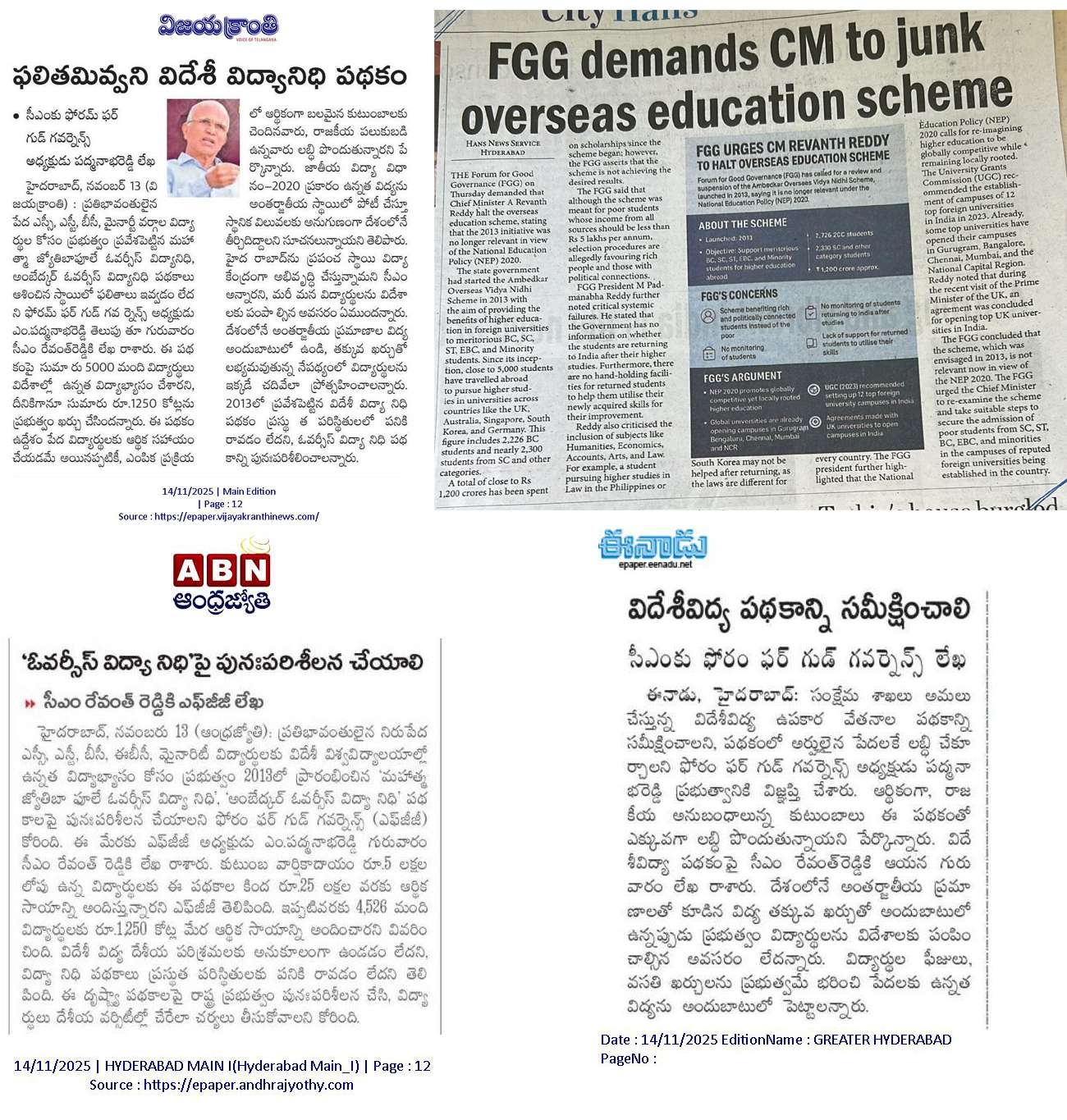
- To the Chief Minister, Telangana regarding Financial Assistance to poor students of S.C., S.T., B.C., E.B.C. and Minority Communities for pursuing Higher studies abroad – Request to review the scheme – on 13-11-2025
- To the Prl. Secretary, School Education department regarding School Education – Not promoting the eligible candidates – No transfers for years together effecting the
- working of the department – Request to attend the issues – on 14-11-2025
- To the Prl. Secretary, Environment, Forest, Science & Technology department regarding
- Request for ban on Single Use Plastics in Telangana – on 21-11-2025
- To the Prl. Secretary, School Education department, regarding Lack of School building in Tribal Tanda of Nandiwada village Kamareddy district, Request to complete the incomplete school building – 22-11-2025
- To the Chief Minister, Telangana regarding Corruption in administration – Abnormal delay in disposal of ACB cases – Request to streamline the process – on 24-11-2025
- To the Commissioner Endowments department regarding Sri Raja Rajeshwara Swamy temple Siricilla – Theft of 14 items need for preparation of Prasadam – Request for inquiry – on 25-11-2025
- To the Chief Minister, Telangana regarding Monkey menace – Damage to crops and houses – Request to take suitable action to prevent problems from monkeys – on 25-11-2025
- To the Prl. Secretary, PR&RD department, regarding Panchayat elections – Rs. 10 lakhs grant to Gram Panchayats where unopposed election are held – Statement by Hon’ble Minister for Agriculture – Request for clarification – on 26-11-2025
- To the Vice Chairman & Managing Director, TS RTC regarding T.C. buses – Rash driving by drivers leading to fatal accidents – Request to issue suitable instructions to R.T.C. drivers for safe driving – on 26-11-2025
- To the Chief Minister, Telangana regarding Medical and Health department – Appointment of Doctors and supporting staff – on 28-11-2025
FGG submitted following RTI letters to various departments in the month of NOVEMBER 2025
- To the PIO, O/o Commissioner, Tumkunta Municipality regarding services to citizens on 8-11-2025
- To the PIO, O/o Commissioner, Industries department regarding shifting of industries -on 10-11-2025
- To the PIO. O/o Director General, ACB, regarding cases disposed of during last 5 years – on 10-11-2025
- To the PIO. O/o Director General, ACB, regarding cases disposed of in Courts for last 2 years – on 10-11-2025
- To the PIO. O/o Director General, ACB, regarding cases registered against Badru Naik – on 10-11-2025
- To the PIO, O/o Commissioner, Transport department regarding cases registered against Badru Naik – on 10-11-2025
- To the PIO, O/o Secretary, Agri. & Co.op. department regarding REP on Chitrapuri lands – on 11-11-2025
- To the PIO, O/o Secretary, Schedule Caste Development Corporation, regarding REP on Dalita Bandhu – on 11-11-2025
- To the PIO, O/o Director, Minorities Welfare department, regarding. Shadi Mubarak scheme – on 11-11-2025
- To the PIO, O/o Spl. Chief Secretary, Animal Husbandry, Dairy Development & Fisheries department regarding REP on NCDC scheme – on 14-11-2025
- To the PIO, O/o Prl. Secretary, MA&UD department regarding REP on HRDCL – on 14-11-2025
- To the PIO, O/o Commissioner, Prohibition & Excise department regarding REP on Adulterated Toddy – on 14-11-2025
- To the PIO, O/o Zonal Commissioner, GHMC, Moosapet, KPHB regarding residential blocks – on 14-11-2025
- To the PIO, O/o Commissioner, Prohibition & Excise department regarding Adulterated Toddy – on 14-11-2025
- To the PIO, O/o Secretary, MA&UD department regarding 111 G.O. – on 14-11-2025
- To the PIO, O/o Thasildar, Maheshwaram Mandal, regarding Nagaram lands – on 14-11-2025
- To the PIO, O/o Prl. Secretary, Health Medical & Family Welfare department regarding Warangal hospital – on 14-11-2025
- To the PIO, O/o Metropolitan Sessions Judge regarding Special Courts – on 15-11-2025
- To the PIO, O/o Commissioner, Civil Supplies department regarding cases booked on rice mills – on 17-11-2025
- To the PIO, O/o Prl. Secretary, GAD regarding REP on Secretariat lands – on 21-11-2025
- To the PIO, O/o Prl. Secretary, BC Welfare department regarding Overseas Education -on 21-11-2025
- To the PIO, O/o Commissioner, Schedule Caste Development Corporation regarding Overseas Education – on 21-11-2025
- To the PIO, O/o Prl. Secretary, MA&UD department regarding REP on unauthorized constructions – on 21-11-2025
- To the PIO, O/o Asst. Controller, Legal Metrology department, Nalgonda regarding cases disposed of in Kodad and Choutuppal – on 26-11-2025
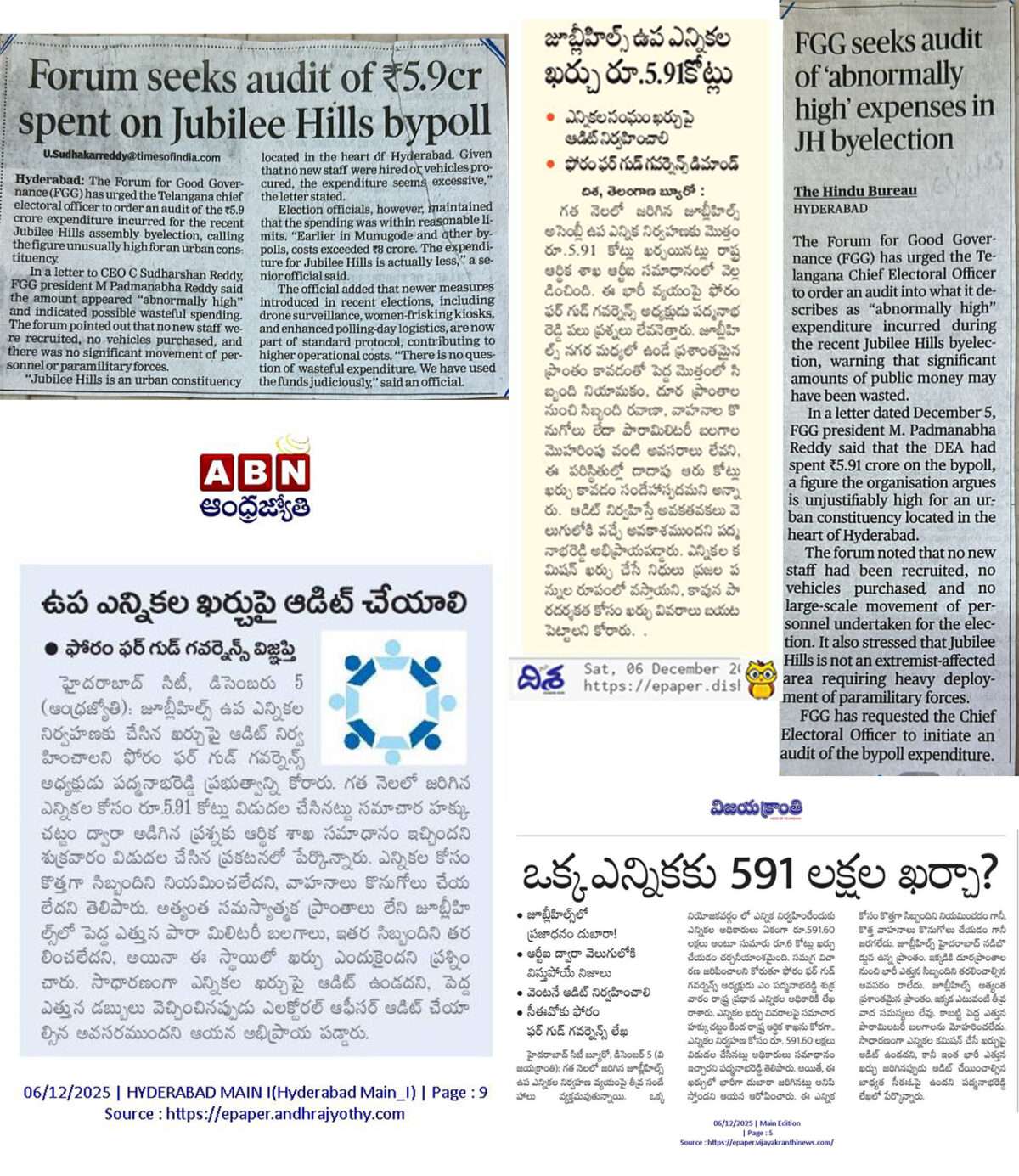
- To the PIO, O/o Prl. Secretary, Finance department regarding Jubilee hills election expenditure – on 26-11-2025
- To the PIO, O/o Prl. Secretary, Planning department regarding Special Development Funds – on 26-11-2025
FGG TIMES
M. Padmanabha Reddy I.F.S.(R) (President)